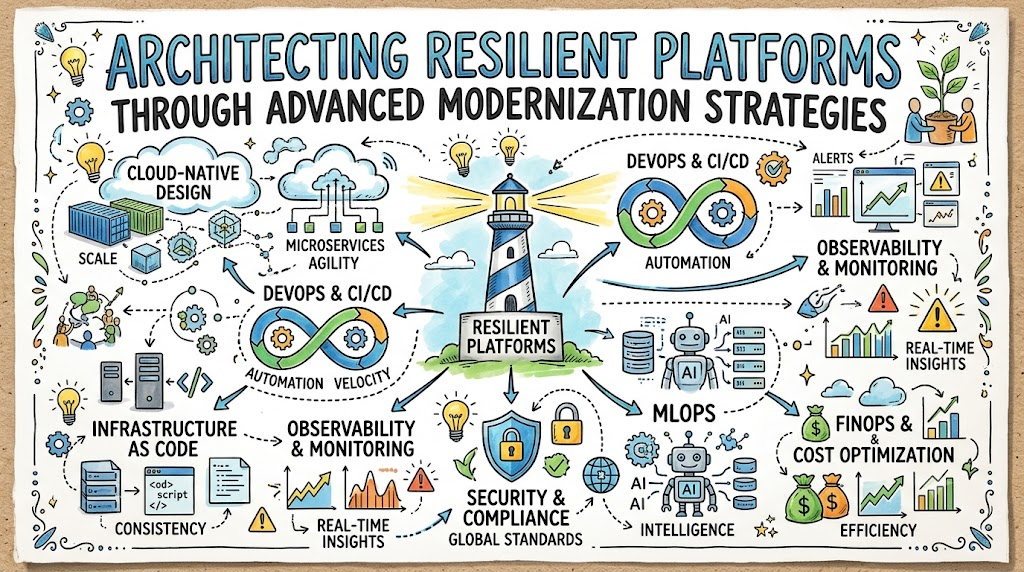
Modern enterprises constantly struggle with unstable software delivery chains that hinder product agility. When infrastructure management relies on manual configuration, system instability and unpredictable deployment timelines inevitably follow. Relying solely on larger engineering teams rarely solves these structural performance bottlenecks. Forward-thinking enterprises deploy a specialized DevOps Consulting Company like Cotocus to reconstruct their delivery pipelines and establish sustainable operational systems.
Optimizing Continuous Integration and Environment Automation
Dependable automated delivery pathways safely accelerate the journey from initial code contribution to live production software. Implementing robust CI/CD Pipeline Consulting solutions helps development teams isolate build failures instantly by triggering comprehensive test suites during code commits. This structured process addresses integration challenges before they disrupt downstream environments.
To expand on this foundation, organizations embrace Infrastructure Automation Consulting to govern server setups through version-controlled code blueprints rather than manual configuration steps. This programmatic methodology completely eradicates configuration drift across development, staging, and production frameworks.
Moving beyond basic templates, companies utilize GitOps Consulting Services to establish Git repositories as the definitive source of truth for current infrastructure states. This method provides an audit trail for every single platform modification.
Because tools alone cannot drive cultural change, enterprises combine technological upgrades with comprehensive DevOps Corporate Training. Providing tailored DevOps Training for Companies helps internal engineering teams master automation best practices, ensuring long-term self-sufficiency.
Streamlining Container Ecosystems and Multi-Cluster Orchestration
As engineering organizations break down old monolithic applications into agile microservices, they require reliable container runtime platforms. Applying expert Kubernetes Consulting Services helps organizations handle containerized workloads efficiently while maintaining auto-scaling capabilities and zero-downtime application deployments.
Because production cluster administration demands highly specialized technical skillsets, organizations invest in thorough Kubernetes Corporate Training. This focused instruction prepares system administrators to troubleshoot complex container networks, manage persistent storage layers, and maintain reliable architectures under heavy production traffic.
Executing Secure Cloud Migrations and Platform Strategy
Moving legacy database workloads and core business systems into distributed architectures requires diligent structural planning to prevent downtime. Targeted Cloud Migration Services provide the step-by-step technical blueprints necessary to transition corporate data stores without affecting everyday business processes.
Simultaneously, leveraging comprehensive Cloud Consulting Services allows organizations to control cloud spending, improve security controls, and maximize infrastructure performance.
Following successful cloud transitions, technology leaders prioritize developer velocity by investing in Platform Engineering Consulting. This operational approach creates customized internal developer platforms that offer self-service infrastructure provisioning, allowing software teams to ship features without encountering administrative friction.
Implementing Proactive Security and Site Reliability Controls
Waiting until the end of a release cycle to test system security inevitably delays product launches. Transitioning to DevSecOps Consulting Services incorporates automated vulnerability detection and compliance tracking directly into the initial build workflows.
To reinforce this collaborative operational model, specialized DevSecOps Corporate Training shows security personnel and software developers how to share ownership of application safety.
In parallel with security alignment, maintaining platform availability requires data-driven site operational frameworks. Utilizing SRE Consulting Services enables teams to deploy mathematical performance metrics that monitor platform behavior.
This rigorous approach to Site Reliability Engineering Consulting turns standard operational teams from reactive firefighters into proactive system optimizers who keep customer-facing systems stable.
Integrating Advanced Data Pipelines and Autonomous Operations
Sophisticated business software demands continuous, high-performance data processing frameworks. Deploying DataOps Consulting Services introduces agile delivery methodologies to active data streams, boosting data accuracy while shortening analytics cycles.
When these pipelines incorporate advanced machine learning models, enterprises utilize MLOps Consulting Services to automate model deployment and production tracking.
Finally, companies integrate AIOps Consulting Services to add predictive machine learning mechanisms directly into core IT monitoring systems, helping operations teams intercept platform anomalies before they affect users.
Essential Operational Definitions
- Infrastructure as Code (IaC) — Programmatic management of physical or virtual computing infrastructure through structured definition files.
- Continuous Integration (CI) — Automated merging and verification of code updates from multiple programmers into a central repository.
- Continuous Deployment (CD) — Automated delivery of validated code updates straight into final production environments.
- Containerization — Lightweight operating-system-level virtualization that runs applications inside isolated runtime environments.
- Microservices — An architectural pattern that builds large applications from a suite of small, autonomous services.
- Observability — The practice of analyzing external outputs like logs and metrics to deduce the internal state of a platform.
- Idempotence — A characteristic of automation scripts where repetitive executions produce the exact same system state.
- Shift-Left Security — Inserting automated vulnerability testing into the earliest phases of software creation.
These core practices reinforce one another, creating a reliable foundation where automation supports scalability, containerization enables microservices, and observability guarantees continuous insight.
Comparing DevOps and Site Reliability Engineering
Many businesses confuse delivery acceleration with reliability engineering, which creates conflicting performance goals for engineering teams. Dissecting the exact responsibilities of each operational field clarifies team objectives.
| Operational Facet | DevOps Paradigm | Site Reliability Engineering (SRE) |
| Primary Goal | Cultural movement boosting feature delivery speed and software quality. | Engineering system applying software solutions directly to IT operations. |
| Operational Phase | Emphasizes the creation, integration, and deployment stages. | Emphasizes post-deployment availability and live production stability. |
| System Ownership | Shares rollout obligations between development and infrastructure staff. | Controls application availability, request latency, and infrastructure capacity. |
| Common Failure | Creating local automation silos while overlooking production stability metrics. | Enforcing extreme uptime rules that stall important feature releases. |
| Practical Scenario | Configuring an automated script to run unit tests on every code change. | Deploying automated self-healing triggers to resolve server alert spikes. |
Conflating these two distinct practices compromises engineering focus because teams try to maximize feature velocity and enforce absolute system stillness at the same time. Establishing explicit operational boundaries allows organizations to accelerate release cadences while ensuring high system availability.
Enterprise Implementation Scenarios
- Digital Retail Corporation — Suffered regular system crashes during high-volume promotional campaigns; integrated automated pod scaling via container orchestration; managed a four-fold traffic increase with zero downtime.
- Commercial Financial Institution — Dealt with slow manual compliance reviews that delayed software updates; integrated automated security scanners into active build pipelines; cut compliance validation time down to minutes.
- Healthcare Logistics Platform — Encountered bugs caused by configuration discrepancies across testing servers; codified the entire global server infrastructure into version-controlled blueprints; removed environment variation completely.
- Automotive Distribution Enterprise — Feared database downtime during major data center migrations; deployed a multi-stage replication model with zero-downtime sync tools; moved forty terabytes of core operational assets without business disruption.
Frequent Implementation Pitfalls
- Treating automation as a tool-buying checklist instead of a cultural transformation, which simply wraps inefficient manual processes in expensive software licenses.
- Neglecting continuous staff education during major cloud platform changes, creating a costly, permanent reliance on outside technical contractors.
- Postponing security reviews until the final deployment stage, forcing expensive architectural re-engineering right before launch dates.
- Over-engineering early infrastructure layouts with overly intricate microservices before production workloads require that level of separation.
- Failing to implement clear service level objectives, leaving operations teams without the metrics needed to balance release velocity and uptime.
- Automating broken legacy pipelines without refining the workflow first, which accelerates the generation of system errors.
Progressive Execution Strategy
- Codify Automation Fundamentals — Eliminate manual configuration by writing declarative infrastructure blueprints and launching foundational continuous integration tracks.
- Standardize Container Workloads — Package business applications into secure containers and deploy orchestration tools to govern service discovery and clustering.
- Embed Security and Availability Metrics — Inject vulnerability scanning into active deployment chains and use strict error budgets to manage platform uptime.
- Deploy Intelligent Systems Overlays — Introduce machine learning analytics and unified data tracking to create self-correcting infrastructure environments.
Choosing a Qualified Digital Transformation Partner
Navigating massive structural infrastructure changes demands comprehensive technical familiarity with both legacy systems and modern cloud-native architectures. Aligning your business with an established Digital Transformation Consulting Company helps your organization embrace correct patterns while avoiding costly deployment mistakes.
The system architects at Cotocus design, scale, and secure high-performance software delivery channels for complex enterprises. They combine practical engineering consulting with custom corporate training models, giving internal engineering teams the skills to manage modern cloud platforms autonomously. Their comprehensive service lineup addresses the space between development speed and infrastructure stability, allowing your business to accelerate release velocity with absolute certainty.
FAQ Section
- How do automated infrastructure workflows eliminate configuration drift?Declarative, version-controlled source files define every single server parameter, network path, and storage volume in the ecosystem. Automation tools constantly compare live environments against these blueprints, instantly resetting unauthorized modifications. This continuous synchronization ensures that all testing and production environments remain identical over time.
- Why do enterprises require structured training during large cloud migrations?Moving complex applications to cloud environments completely changes traditional operational habits, security perimeters, and resource spending models. Without tailored internal instruction, engineers apply outdated on-premises methodologies that cause security risks and budget overruns. Targeted training gives staff members the skills to control cloud costs and maintain system health independently.
- What separates continuous integration from continuous deployment?Continuous integration focuses on automatically assembling and testing newly submitted code modifications to confirm project stability. Continuous deployment takes that process further by automatically sending those verified updates straight into live production environments without requiring human authorization. Integration concludes at the testing phase, while deployment delivers the code to customers.
- In what ways do site reliability engineering metrics protect corporate revenue?Unplanned application downtime immediately causes lost sales, hurts user trust, and violates service legal contracts. Reliability engineering uses data-driven metrics to track platform health, allowing engineers to fix performance drops before they cause total outages. This preventative methodology ensures high availability for business-critical customer systems.
- When must an organization upgrade from standard DevOps to specialized DevSecOps?Enterprises need to execute this upgrade immediately when handling confidential consumer data, meeting strict compliance rules, or accelerating release frequencies. Reviewing security settings only after production rollouts creates massive deployment bottlenecks and exposes infrastructure to cyber risks. Introducing security tests early in the pipeline protects the full development loop automatically.
Summary of Modernization Priorities
Balancing automated delivery paths, secure cloud layouts, and capable internal engineering teams allows modern enterprises to achieve sustainable operational agility. Companies must systematically eliminate manual server setups to safeguard deployment predictability and maintain their competitive edge in demanding corporate markets. To analyze your existing release workflows and design a scalable infrastructure platform, visit the Cotocus portal and schedule a comprehensive architectural consultation today.