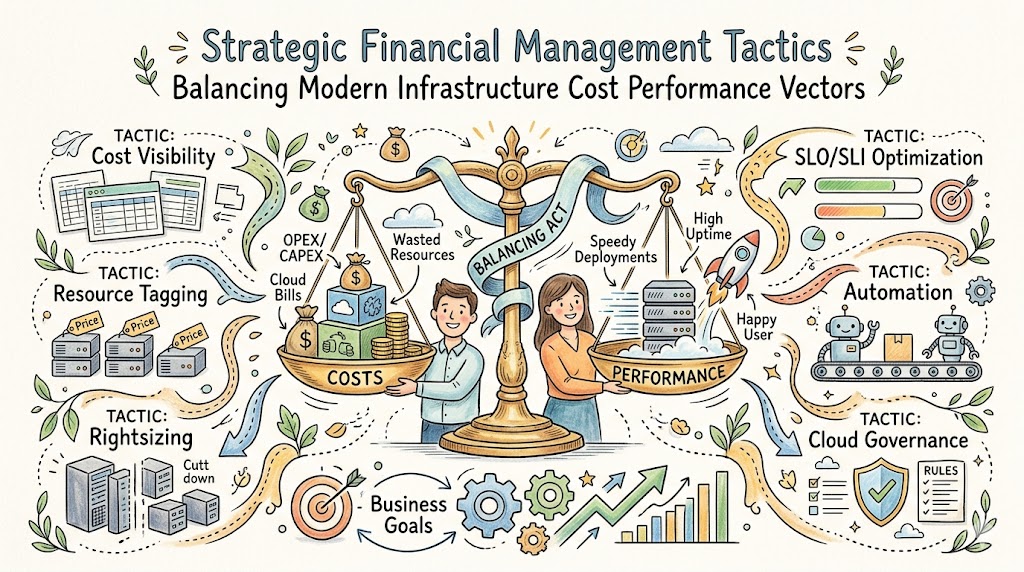
Imagine waking up to a sudden notification that your primary cloud infrastructure environment suffered a massive cost spike overnight. A misconfigured development cluster silently spun up hundreds of high-performance instances without any budget guards in place. This operational bottleneck strains your financial resources and places an immediate wall between engineering capability and corporate profitability. Traditional infrastructure management often treats financial accountability as an afterthought, leading to massive waste and unpredictable monthly billing cycles.
Modern technology teams rely heavily on cloud-native architectures to scale applications dynamically across global markets. However, tracking expenditures in these microservice-driven landscapes becomes incredibly difficult without structured cost governance frameworks. Applying precise financial management strategies allows companies to tie cloud spending directly to business value metrics. This detailed guide explores how integrating financial accountability with real-time cloud operations maximizes engineering velocity while keeping operational budgets completely predictable and highly optimized.
Throughout this comprehensive handbook, we will dissect the cultural transformations, core principles, and architectural guidelines required to build an efficient financial operations methodology. We will unpack tracking performance signals, managing systemic business waste, and implementing robust automated guardrails across complex cloud platforms. Readers will gain actionable insights into balancing application stability with cost performance metrics across large-scale systems.
Transitioning toward a mature cost-conscious engineering culture demands structured guidance and access to professional industry material. To build deep expertise in these advanced cloud governance strategies, teams can explore specialized career tracks and educational platforms. Discover the comprehensive operational pathways available through Finopsschool to accelerate your organizational cloud management mastery today.
The Origin of Systems Infrastructure
The Early Industrial Bottlenecks
Traditional technology operations relied heavily on physical data centers where hardware procurement cycles took months to execute. During this era, system administrators managed local servers manually while accounting teams tracked static capital expenses separately. Because engineering metrics and financial goals remained completely disconnected, organizations frequently over-provisioned hardware assets to handle rare traffic spikes.
This separation created massive communication gaps and severe operational bottlenecks across corporate structures. Engineers routinely launched services without understanding the underlying cost implications of their architectural decisions. Consequently, financial leaders struggled to forecast quarterly technology budgets, which regularly led to unexpected fiscal friction and delayed project timelines.
Moving Toward Unified Workflow Automation
As virtualization technology matured, organizations shifted their infrastructure footprints from physical hardware into dynamic cloud environments. This migration allowed teams to provision virtual instances and storage assets instantly using simple API calls. Nevertheless, the extreme ease of launching virtual infrastructure introduced unprecedented levels of decentralized spending and resource sprawl.
To address these inefficiencies, leading tech companies began unifying engineering workflows with automated tracking systems. Merging procurement oversight with real-time system administration allowed businesses to monitor resource utilization actively. This structural integration transformed corporate infrastructure, turning static physical hardware management into an agile software-driven discipline.
Global Expansion Across Commercial Ecosystems
Furthermore, as global enterprises adopted multi-cloud architectures, the need for standardized operational management models grew exponentially. Fast-growing software companies realized that unmanaged cloud spending directly lowered corporate profit margins and reduced investment capital. Thus, structured cost-optimization frameworks rapidly spread from elite Silicon Valley enterprises into mainstream commercial ecosystems worldwide.
Today, small startups and multinational financial entities alike implement unified cloud management rules to remain competitive. Operating in a modern digital economy requires continuous synchronization between engineering output, system performance, and financial parameters. These global frameworks now form the core operational foundation for any enterprise running large-scale workloads in public clouds.
Defining Strategic Operations Management
The Core Operational Structure
The foundational architecture of modern operations requires a continuous flow of data between development environments, infrastructure platforms, and finance systems. Automated telemetry agents collect resource consumption metrics from every active container, database, and load balancer. Afterwards, parsing engines process these raw data streams to assign specific resource costs to precise business units.
[Cloud Infrastructure Platforms] ---> [Automated Telemetry Agents]
                                                 |
                                                 v
[Corporate Finance Dashboards]   <--- [Data Parsing Engines]
This structural loop ensures that cost visibility remains transparent across all levels of an organization. By integrating financial tracking into the central deployment pipeline, teams identify expensive anomalies before they impact the bottom line. This architecture shifts financial monitoring from a retrospective end-of-month review to a continuous real-time diagnostic process.
Daily Tasks of Systems Coordinators
Systems coordinators execute a wide variety of practical tasks daily to maintain an optimal balance between cost and performance. They spend substantial time reviewing automated cloud usage reports and identifying underutilized compute resources. Additionally, these specialists configure automated scheduling policies that gracefully shut down non-production environments during off-peak hours.
Moreover, coordinators collaborate directly with software development squads to right-size container instances before major application updates launch. They also analyze historical traffic patterns to purchase long-term cloud reservation commitments strategically. Through constant adjustments, these professionals ensure the business never pays for idle infrastructure capacity.
Localized Control vs. Broad System Architecture
Managing modern environments requires a careful balance between local component tracking and broad multi-system architecture. Granular component control focuses on optimizing individual items, such as a single database disk or a localized cache cluster. While this micro-level cleaning improves specific tasks, it can overlook broader systemic systemic cost factors.
| Operational Focus | Granular Component Control | Broad System Architecture |
| Primary Scope | Individual database disks, specific micro-caches, single clusters | Enterprise multi-cloud environments, global network data paths |
| Tracking Method | Localized metric logging and isolated resource utilization alerts | Consolidated cross-billing engines and system telemetry |
| Optimization Target | Micro-level component efficiency and localized processing speeds | Holistic system cost efficiency and structural layout optimization |
Conversely, managing broad system architecture means analyzing how complex data networks interact across multiple cloud regions. Systemic optimization ensures that data transfer paths remain cost-effective and that global storage layouts do not generate unnecessary cross-region networking fees. Mature operations teams combine both viewpoints to keep individual components and the entire global infrastructure running efficiently.
The Efficiency Mindset
Successfully adopting these operational methods requires a major cultural shift toward an efficiency-driven engineering mindset. Rather than viewing cloud budgets as strict limitations that slow down innovation, developers treat cost efficiency as a core architectural feature. This philosophical transformation encourages teams to design lean, elegant code that naturally minimizes compute cycles.
Ultimately, long-term system reliability and financial sustainability remain completely interdependent. A system that scales out of control financially is just as broken as a system that crashes under heavy user traffic. Instilling this mindset across engineering departments ensures that teams build robust, high-performance software that respects corporate financial boundaries.
The 7 Core Principles of Key Benefits of FinOps for IT and Cloud Operations
1. Embracing Risk and Managing Variability
Building modern cloud infrastructure requires accepting the fact that absolute perfection remains structurally impossible. Compute demands fluctuate constantly, and completely eliminating variable spending would require restrictive locks that destroy developer agility. Instead, teams learn to embrace risk by establishing flexible boundaries that accommodate natural cloud variability.
Managing this variability involves setting dynamic cloud spending guardrails rather than static, unyielding budgets. Organizations use intelligent anomaly detection systems to identify genuine cost departures while allowing safe, expected traffic variations. This balanced approach protects the production environment from catastrophic budget overruns without hindering necessary system performance during peak operational hours.
2. Establishing Service Level Objectives (SLOs)
Operational teams must define measurable targets for systemic success by setting clear, value-driven Service Level Objectives. These metrics must balance the technical performance users expect with the realistic costs of maintaining that level of availability. For example, aiming for five-nines of uptime often requires expensive redundant infrastructure that may not fit the product’s actual business needs.
By linking cost boundaries directly to performance objectives, organizations make intentional decisions about infrastructure investment. Engineers analyze user satisfaction trends alongside cloud spending data to discover the point of diminishing returns for reliability. This collaborative practice ensures that every dollar spent on system redundancy provides measurable value to the end user.
3. Eliminating Toil and Manual Processes
Manual infrastructure adjustments and repetitive operational tasks represent significant drains on engineering efficiency. Spending valuable development time manually shutting down idle servers or sorting through complex spreadsheets creates operational friction. Teams must prioritize identifying this repetitive work and creating automated software systems to engineer it away.
Eliminating this manual toil frees up engineers to focus on higher-value platform optimizations and structural innovations. Organizations build custom automated workflows that automatically flag resource waste and implement self-healing cleanup policies. This programmatic approach ensures that cloud optimization scales effortlessly without requiring constant manual intervention from operations teams.
4. Monitoring & Observability Across the Pipeline
Maintaining clear visibility across the entire cloud pipeline prevents dangerous financial blind spots from developing over time. Teams deploy unified monitoring systems that capture hardware performance data alongside real-time cost attribution metrics. This combined observability approach links physical resource usage directly to financial expenditures inside the central dashboard.
When a specific microservice experiences a sudden spike in traffic, engineers instantly see the exact financial impact of that operational change. This immediate feedback loop allows squads to iterate rapidly on performance tuning and software architecture adjustments. Continuous end-to-end monitoring ensures that infrastructure costs remain completely transparent, clear, and manageable.
5. Automation Over Manual Coordination
Scaling modern cloud workflows requires software-driven automation solutions rather than manual human coordination. Relying on manually managed requests between finance teams and infrastructure engineers slows down deployment speeds and introduces human error. Instead, organizations implement smart infrastructure-as-code policies that automatically enforce financial boundaries during the build phase.
Automated guardrails can block the deployment of non-compliant, high-cost assets before they ever enter the live environment. Similarly, automated auto-scaling systems adjust resource capacity downward based on real-time application demands. Relying on programmatic systems allows organizations to scale their operations securely while keeping overhead lean.
6. Release Engineering and Deployment Stability
Consistent and predictable deployment strategies are essential for maintaining both application stability and cost control. When software teams use chaotic, unstandardized deployment methods, they frequently leave orphaned staging environments and broken cloud assets behind. Implementing structured release engineering workflows ensures that every piece of infrastructure follows a clean, documented lifecycle from creation to deletion.
Using canary deployments and automated rollback policies helps prevent unstable code versions from triggering expensive infrastructure scaling loops. Furthermore, automated cleanup tools ensure that temporary testing environments are completely removed as soon as deployment validation finishes. This disciplined approach to release management prevents cost leaks and maintains a clean, stable cloud environment.
7. Simplicity in Network Architecture
Keeping network paths clean and minimal directly reduces unexpected infrastructure failures and complex data fees. Complicated multi-region setups with unnecessary data hops increase application latency and cause significant cloud networking costs. Engineers must design straightforward data paths that minimize cross-availability-zone traffic and leverage localized caching networks.
Streamlining network architecture makes it much easier for operations teams to map, monitor, and optimize data routing expenses. Removing redundant network paths simplifies troubleshooting during major system outages and clarifies billing data. Simple infrastructure environments are inherently more stable, cheaper to maintain, and significantly easier to protect.
Key Operational Concepts You Must Know
SLA vs. SLO vs. SLI — Explained Simply
Understanding cloud efficiency requires mastering the distinct relationships between Service Level Agreements, Objectives, and Indicators. These three metrics form the operational foundation for tracking user satisfaction alongside infrastructure costs.
- Service Level Indicator (SLI): The precise, quantitative measure of system performance captured in real time, such as database query latency.
- Service Level Objective (SLO): The target target target target target target performance level defined by the team, representing the ideal balance between operational cost and system reliability.
- Service Level Agreement (SLA): The formal commitment made to end users, outlining financial or legal penalties if system performance drops below the agreed threshold.
Error Budgets — The Game Changer for Operational Risk
An error budget represents the total amount of systemic instability an application can tolerate before impacting user satisfaction. Calculated directly as the difference between perfect uptime and the chosen SLO, this metric serves as an effective operational guide. When a system retains a healthy error budget, development teams can safely introduce new features and experiment with cost-saving architectures.
Conversely, if the error budget runs out due to system instability, all non-essential feature deployments stop immediately. The team then shifts its entire focus toward fixing system reliability issues and optimizing infrastructure layouts. This automated balancing mechanism aligns development velocity with system safety, preventing teams from chasing unrealistic uptimes that inflate cloud costs.
Toil — The Silent Productivity Killer in Infrastructure
Toil refers to repetitive, manual, and non-creative operational work that scales directly with the size of an infrastructure environment. Examples include manually cleaning up server logs, resetting developer passwords, or updating cost spreadsheets. Left unmanaged, toil consumes engineering time, causes employee burnout, and blocks strategic optimization efforts.
Total Engineering Time
[=================== Toil (60%) ===================][==== Innovation (40%) ====]
                                      |
                                      v (Target Goal)
[== Toil (10%) ==][==================== Innovation (90%) ====================]
Organizations must track toil metrics closely and commit to engineering automated solutions whenever repetitive tasks exceed thirty percent of a team’s workload. Automating these everyday tasks allows businesses to scale operations smoothly without needing to hire a proportional number of administrators. Eliminating toil is a vital step toward creating a highly efficient, self-healing cloud infrastructure.
Incident Management & Postmortems
When unexpected cloud outages or cost anomalies occur, organizations must respond with structured, blameless incident management procedures. The primary goal during a live incident is restoring normal system operations quickly to minimize financial and operational damage. Once the environment stabilizes, teams hold a comprehensive, blameless postmortem meeting to understand the structural root causes of the issue.
Blameless postmortems focus entirely on fixing systemic flaws rather than assigning individual human blame. If an engineer accidentally launched an expensive database cluster, the postmortem examines why the platform permitted that action without budget confirmation. This supportive culture encourages transparency, allowing teams to turn costly errors into valuable opportunities for long-term systems improvement.
Capacity Planning
Modern capacity planning focuses on forecasting resource growth and preparing cloud infrastructure ahead of shifting user demands. Traditional operations relied on buying physical hardware ahead of time, but cloud environments require a dynamic approach to scaling resources. Teams analyze historical application data, seasonal sales cycles, and marketing plans to predict future compute requirements accurately.
This predictive planning helps companies arrange volume discount agreements with cloud vendors long before demand spikes arrive. Advanced capacity planning prevents emergency over-provisioning when user traffic suddenly climbs. Matching infrastructure growth with actual business demand allows enterprises to protect system performance while avoiding waste.
The Four Golden Signals of Pipeline Performance
To maintain a healthy, cost-optimized system, operations teams must continuously track the Four Golden Signals of infrastructure performance. Monitoring these core metrics provides a clear view of system stability and cloud efficiency.
- Latency: The total time it takes for a system to process requests, highlighting code performance and resource constraints.
- Traffic: The overall demand placed on the system, measured by network requests per second or concurrent user sessions.
- Errors: The rate of requests that fail across the infrastructure, identifying software bugs or system capacity bottlenecks.
- Saturation: The total utilization of system resources, showing exactly how much head-room remains before performance degrades.
Platform Implementation vs. Culture — What’s the Real Difference?
The Philosophy Difference
Many organizations struggle to distinguish between implementing specific cloud management platforms and building a true cost-aware cultural philosophy. Buying expensive optimization software does not automatically make an enterprise cost-efficient if development behavior remains unchanged. Platforms provide the data visibility and automated tools, but culture guides how engineers use that data daily.
A mature operational philosophy shifts accountability downward, making individual development squads responsible for the financial impact of their code. Instead of relying on a centralized finance department to catch overspending, engineers actively design resource efficiency into their daily work. Combining technical tools with a strong cost-conscious culture is essential for achieving long-term cloud efficiency.
Roles & Responsibilities Compared
Understanding day-to-day duties across a modern organization requires defining how separate teams manage cloud efficiency. Responsibilities shift based on whether a group focuses on central governance frameworks or localized product delivery.
- Central Governance Engineers:
- Design corporate cloud governance guidelines and automated cost-tracking dashboards.
- Negotiate volume enterprise discounts and long-term commitment contracts with cloud providers.
- Build automated infrastructure-as-code templates that include built-in budget guardrails.
- Product Development Squads:
- Monitor the direct financial impact of their specific application architectures in production.
- Right-size compute instances and container resources during every feature release cycle.
- Eliminate orphaned storage volumes and idle development resources within their projects.
Can You Have Both Disciplines?
Rather than competing with each other, technical platform engineering and cost optimization cultures should support each other within modern organizations. Platform teams build the automated self-service environments that developers use to deploy applications smoothly. By adding financial guardrails directly into these deployment pipelines, platform engineers make cost tracking a natural part of the development workflow.
This integration ensures that software squads can launch resources quickly without bypassing company cost controls. This collaborative approach allows organizations to maintain high engineering velocity while keeping expenditures completely visible. Blending these disciplines turns financial responsibility from an operational roadblock into a core technical advantage.
Which One Should Your Team Adopt?
Choosing the right operational balance depends heavily on your current company size and engineering maturity level. Small early-stage startups should focus on building a cost-conscious culture first, as they rarely need complex enterprise optimization platforms. At this stage, simple documentation and basic resource tagging are enough to prevent major cost overruns.
| Company Size & Stage | Recommended Operational Focus | Key Action Items |
| Early-Stage Startups | Cost-Conscious Culture | Basic resource tagging, explicit environment tracking, mandatory manual cleanups |
| Large Enterprises | Automated Governance Platforms | Programmatic policy enforcement, automated scaling rules, cross-billing engines |
In contrast, large enterprises managing multi-million dollar cloud budgets must implement automated governance platforms immediately. Manual oversight cannot track thousands of moving microservices spread across multiple global cloud accounts. Large companies use automated systems to enforce policies across the organization while running continuous culture programs to keep teams aligned.
Real-World Use Cases of Modern Operations
How Tech Leaders Use Operational Metrics
Major software enterprises manage cloud costs by linking technical infrastructure metrics directly to core business outcomes. For instance, a global streaming service tracks infrastructure expenditures per stream hour rather than looking at raw server costs. This practice allows the business to see if cloud spending rises due to user growth or background system inefficiencies.
If infrastructure costs per user stream rise, engineers quickly isolate the problematic microservice and optimize its data access layers. This metric-driven approach turns abstract cloud bills into clear business indicators that any stakeholder can understand. Tracking efficiency metrics allows leadership teams to make data-backed choices about product pricing and infrastructure investments.
Chaos Engineering Approaches to Resilient Systems
Top-tier technology firms regularly use chaos engineering to uncover hidden system flaws and identify hidden infrastructure waste. Teams use automated tools to inject controlled failures, like shutting down random container nodes or blocking cloud zones. These real-world tests show how the infrastructure behaves under stress and whether failover systems work correctly.
Interestingly, chaos testing frequently uncovers forgotten, over-provisioned backup systems that cost thousands of dollars while providing zero actual value. Eliminating these redundant, idle assets helps organizations streamline their recovery setups and reduce unnecessary spending. Chaos engineering proves that building resilient infrastructure often leads to cleaner, more cost-effective cloud environments.
Handling Reliability at Massive Scale
A multinational e-commerce company experiences extreme traffic shifts during major holiday shopping sales. To survive these traffic surges without crashing, their infrastructure relies on advanced multi-region auto-scaling setups. These systems use predictive scaling algorithms that dynamically add server capacity minutes before traffic arrivals, preventing system slowdowns.
As soon as the shopping rush ends, the automated systems immediately scale down extra resources to avoid overspending on idle compute power. These systems also use temporary spot instances for non-critical tasks, cutting compute costs by up to eighty percent during high-volume periods. Managing scale through automated systems ensures high reliability during peak hours while keeping seasonal budgets highly optimized.
High-Availability in Fintech Operations
Digital payment processors operate in high-stakes environments where system downtime can lead to direct financial penalties and lost consumer trust. Consequently, their infrastructure designs prioritize high-availability, using real-time database replication across multiple separate cloud regions. To offset the high network costs of constant data replication, fintech engineers optimize their internal data structures.
They compress data packets before transmission and use intelligent routing to minimize long-distance network travel. Additionally, financial platforms deploy automated monitoring to flag expensive, stuck transactions before they consume excessive compute cycles. This careful balance allows payment companies to meet strict regulatory uptime demands while keeping multi-cloud operational costs sustainable.
Scaled-Down but Essential Systems for Startups
An early-stage software startup must stretch its limited venture funding as far as possible to maximize its market runway. Instead of copying the complex, multi-region setups used by tech giants, the startup adopts a lean infrastructure layout. They rely heavily on serverless compute options, where billing is based strictly on actual code execution time rather than continuous server uptime.
The engineering team sets up strict automated alerts that ping their team messaging channels whenever daily spending passes a set budget limit. They also script automated schedules that shut down all development containers every evening at the end of the working day. These simple, high-impact strategies allow early-stage teams to maintain operational stability without incurring heavy cloud management overhead.
Common Mistakes in Operations Engineering
Mistake 1 — Confusing System Management with Just Being On-Call
A frequent mistake organizations make is treating cloud operations as a reactive, 24/7 technical support job. When a company only focuses on fixing systems after they break, engineers spend all their time putting out fires. This reactive approach leaves no time for building automated guardrails, leading to repeated outages and unpredictable cloud spending.
True operations engineering is a proactive discipline focused on building software solutions to automate infrastructure management. Teams must spend the majority of their time writing automation code, refining SLO targets, and optimizing systemic asset configurations. Shifting from a reactive mindset to a proactive engineering approach is key to creating stable, cost-effective systems.
Mistake 2 — Setting Unrealistic SLOs
Many teams mistakenly demand 100% system uptime, believing that absolute perfection is always the right goal for business stability. However, chasing extreme reliability requires expensive multi-layer infrastructure redundancy and round-the-clock manual oversight. This unnecessary spending quickly drains engineering budgets while offering little real benefit to actual user satisfaction.
Furthermore, unrealistic uptime goals slow down product innovation because teams become afraid to deploy new features that might cause minor stability issues. Organizations must accept that systems will occasionally experience minor hiccups and set realistic, value-driven SLO targets instead. Designing infrastructure to meet realistic user needs avoids over-provisioning and keeps operational costs completely reasonable.
Mistake 3 — Ignoring Toil Until It’s Too Late
Ignoring repetitive, manual tasks causes operational debt to pile up quietly across an organization over time. When engineers constantly manage resource requests and fix server errors manually, they have no time for strategic optimization. This lack of time allows hidden cost leaks, zombie servers, and inefficient architectures to grow unchecked across the environment.
Eventually, the sheer volume of manual work overwhelms the operations team, stalling feature deployments and causing system performance to drop. Companies must treat manual toil as a serious technical problem and allocate dedicated engineering time to automate it away. Keeping manual tasks to a minimum ensures that cloud operations stay lean, fast, and highly efficient.
Mistake 4 — Skipping Blameless Postmortems
When teams use a blame-heavy approach after a major infrastructure outage or budget overrun, engineers naturally hide mistakes to protect themselves. This defensive environment stops the organization from investigating the true technical and systemic root causes of operational failures. As a result, the same expensive mistakes and bad architectural designs keep happening over and over again.
Skipping open, blameless postmortems prevents an enterprise from learning from past mistakes and upgrading its automated guardrails. Cultivating a supportive, blameless postmortem process allows teams to share knowledge openly and improve system designs together. Turning operational failures into clear, actionable lessons is the best way to build long-term infrastructure stability.
Mistake 5 — Monitoring Without Actionable Alerts
Deploying complex monitoring software that triggers thousands of unorganized notifications creates severe alert fatigue for engineering teams. When systems send non-critical warning alerts for minor, self-healing issues, engineers quickly learn to ignore the noise. This oversaturation makes it easy to miss critical warnings about major system failures or sudden cost spikes until severe damage has occurred.
[Raw System Telemetry Logs] ---> [Intelligent Alert Filtering Engine]
                                                |
                                                v
                                   (Only Actionable Notifications)
                                                |
                                                v
                                   [On-Call Engineer Response]
Every alert configured in your dashboard must be actionable, clear, and tied directly to a documented resolution procedure. Non-critical messages should be organized into silent, async review reports rather than triggering immediate phone alerts for on-call engineers. Reducing notification noise ensures teams respond fast to genuine system emergencies and financial anomalies.
Mistake 6 — Not Involving Operational Engineers in the Design Phase
Organizations often exclude operational engineers from early software design discussions, bringing them in only after an application is built. This separation leads to systems that run well on a local computer but are incredibly difficult and expensive to scale in the cloud. Without operational input, developers often choose inefficient data paths, over-provisioned storage setups, and rigid architectures.
Fixing these basic structural flaws after an application is live in production is far more expensive than designing them correctly from the start. Involving operations specialists from day one ensures that new software is built to scale efficiently and use cloud resources wisely. This early collaboration prevents expensive re-engineering work and ensures a smooth, cost-optimized launch.
Essential Infrastructure Tools & Technologies
Monitoring & Observability
Maintaining complete control over modern cloud cost performance requires deploying a robust stack of observability tools. Industry-standard platforms like Prometheus and Grafana provide deep visibility into system health by capturing real-time hardware and software performance metrics. Additionally, enterprise observability platforms such as Datadog and New Relic combine infrastructure monitoring with direct cost-attribution data inside unified dashboards. These tools allow engineers to trace data paths across distributed microservices and quickly catch expensive resource usage anomalies.
Incident Management
When critical outages occur, response teams rely on specialized incident management platforms to coordinate their recovery efforts. PagerDuty serves as a central hub, routing critical system alerts to the correct on-call engineers based on automated rotation schedules. These platforms help organize cross-functional communication, track system recovery timelines, and document incident details for later analysis. Using structured incident tools ensures that operational teams handle emergencies quickly, minimizing both system downtime and financial losses.
CI/CD & Release Engineering
Automating software delivery through robust delivery systems is essential for maintaining both application stability and cost control. Automation engines like Jenkins provide the foundational framework needed to test, validate, and package software code securely. Modern cloud-native deployments frequently use advanced continuous delivery systems like Spinnaker and Argo CD to automate rolling application updates. These systems support automated deployment strategies and fast rollbacks, ensuring new features launch safely without leaving expensive, orphaned cloud resources behind.
Chaos Engineering
Proactively identifying hidden system weaknesses requires using dedicated chaos engineering tools to run controlled failure experiments in production. Tools like Chaos Monkey automatically terminate random virtual machine instances to test if the infrastructure can heal itself without human intervention. Running these automated stress tests helps engineers find weak failure paths, verify backup systems, and remove unnecessary redundancy. Chaos tools ensure that systems remain highly resilient while preventing companies from overspending on unneeded backup assets.
SLO Management
Tracking service reliability against user expectations requires specialized platforms focused on Service Level Objective lifecycle management. Dedicated performance platforms like Nobl9 help teams aggregate telemetry data from multiple monitoring tools to measure error budgets continuously. These platforms give engineers clear visibility into how fast feature releases are using up stability budgets. Using SLO management tools allows organizations to make data-backed choices that balance rapid software innovation with steady infrastructure costs.
How to Become an Operations Expert — Career Roadmap
Skills Every Specialist Must Have
Building a successful career in modern systems management requires a strong foundation of core technical skills and cloud concepts. Aspiring specialists must master linux terminal commands, shell scripting, and programming languages like Python or Go to automate everyday infrastructure tasks. Additionally, professionals must understand fundamental networking concepts, including DNS routing, load balancing configurations, and virtual private network setups.
+-------------------------------------------------------------+
|               Advanced Systems Architecture                  |
+-------------------------------------------------------------+
                               ^
                               |
+-------------------------------------------------------------+
|        Cloud Infrastructure & Container Orchestration        |
+-------------------------------------------------------------+
                               ^
                               |
+-------------------------------------------------------------+
|          Core Scripting, Linux Terminal, & Networking       |
+-------------------------------------------------------------+
Beyond core programming skills, experts must build deep knowledge of major public cloud providers and infrastructure-as-code automation tools. You must learn how to define system resources programmatically using tools like Terraform to ensure repeatable, documented deployments. Finally, learning container technologies like Docker and Kubernetes is essential for managing microservices efficiently at scale.
The Professional Learning Path
The learning path begins with mastering basic single-server environments before moving on to complex, multi-tier distributed infrastructure setups. Beginners should practice hosting basic web applications, managing local databases, and configuring simple automated backup scripts. Once you master the basics, transition to studying containerized workloads and setting up automated CI/CD pipelines.
Next, focus on learning advanced enterprise topics like multi-region cloud routing, distributed data caching, and large-scale observability setups. Study how to analyze cloud billing data alongside hardware metrics to find and eliminate resource waste. Moving into senior architectural positions requires shifting your focus toward cloud governance, automated policy enforcement, and long-term capacity planning.
Certifications Worth Pursuing
Industry-recognized professional certifications validate your technical skills and help accelerate your career growth in systems management. Earning foundational credentials like the AWS Certified SysOps Administrator or the Google Cloud Professional Cloud DevOps Engineer demonstrates your ability to run stable cloud environments. For container management, passing the Certified Kubernetes Administrator (CKA) exam proves your hands-on ability to orchestrate complex microservice clusters.
Additionally, pursuing specific cost-management certifications, such as the FinOps Certified Practitioner credential, shows you know how to bridge the gap between engineering and finance. These specialized credentials prove you understand how to optimize cloud spend, track business value, and build cost-conscious cultures. Earning a mix of performance and financial certifications helps you stand out for leadership roles in modern tech organizations.
Educational Resources with Finopsschool
Gaining deep expertise in cloud cost management and infrastructure optimization requires structured, practical training from industry experts. Aspiring professionals can access a wealth of specialized training tracks, real-world case studies, and hands-on labs tailored to modern engineering needs. Exploring the comprehensive courses and professional material offered by Finopsschool helps you build the skills needed to design lean, high-performance cloud environments. Investing in structured education prepares you to lead complex cloud optimization projects and advance your career in tech.
The Future of Systems Management
AI and Automation in System Optimization
The next evolution of cloud management relies heavily on embedding artificial intelligence and machine learning models directly into infrastructure systems. Traditional rule-based alerting systems often struggle to track highly dynamic, modern multi-cloud environments. New AI-driven operations platforms solve this by continuously analyzing millions of telemetry data points to spot performance anomalies before they impact users.
These intelligent systems automatically uncover hidden resource waste, right-size large container clusters, and speed up root-cause analysis during major outages. Machine learning models can also predict future traffic spikes based on historical trends and adjust system capacity ahead of time. Adding AI into automation frameworks allows businesses to run highly resilient systems with minimal human overhead.
Platform Engineering — The Evolution of Infrastructure
Platform engineering is quickly changing how modern enterprises manage, deploy, and scale cloud infrastructure. Instead of having separate development squads build custom deployment pipelines, dedicated platform teams design unified Internal Developer Platforms (IDPs). These self-service portals provide software developers with pre-approved, automated templates to deploy code safely and independently.
[Software Developers] ---> [Internal Developer Platform (IDP)]
                                       |
                                       +---> [Pre-Approved Templates]
                                       +---> [Built-In Budget Controls]
                                       +---> [Automated Security Checks]
These centralized development platforms include built-in budget controls, compliance policies, and resource tracking metrics from the start. This approach allows software squads to ship new features faster without accidentally creating expensive cost leaks or insecure setups. Platform engineering streamlines the developer experience while ensuring the entire organization follows corporate cost and security guardrails.
Management in Cloud-Native & Kubernetes Environments
As modern companies migrate toward microservice architectures, managing dynamic, large-scale Kubernetes clusters becomes a top priority. While container orchestration provides amazing deployment flexibility, it also introduces complex networking challenges and hidden resource waste. Future infrastructure managers must master Kubernetes resource tools, pod autoscaling rules, and service mesh patterns.
Teams must configure precise CPU and memory requests for every container to avoid over-allocating hardware resources. Furthermore, managing dynamic multi-tenant clusters requires using automated tools to divide shared cluster costs accurately among different business teams. Mastering container optimization ensures that organizations reap the full speed benefits of cloud-native architecture without driving up operational spending.
Operational Skills That Will Matter Most
As infrastructure systems become more automated, the career path for systems experts will shift toward high-level strategy and data analysis. Simply knowing how to spin up virtual servers manually will no longer be enough in an automated, code-driven tech market. Instead, the most valuable professionals will be those who can design automated optimization code and analyze complex data paths.
Expert engineers must build strong financial literacy, learning to connect technical system performance directly to corporate profit metrics. Cross-functional communication skills will also be critical, as specialists will need to unite engineering squads and finance departments around shared efficiency goals. Blending technical skills with financial insight ensures you remain an essential leader in the evolving cloud industry.
FAQ Section
- What is the typical career path for an infrastructure cost optimization specialist?Professionals usually start as cloud systems administrators or software engineers before focusing on cloud optimization strategies. Over time, they advance into specialized roles like cloud cost analysts, platform engineers, or enterprise systems architects. Senior leaders in this space often direct entire cloud governance departments, guiding corporate infrastructure investments and multi-cloud strategy.
- How do cloud optimization practices differ between small startups and large corporations?Startups focus on manual checkups, basic resource tagging, and setting simple budget alerts to maximize their funding runway. In contrast, large corporations manage complex, multi-million dollar budgets using automated platforms to track costs across thousands of microservices. While startups emphasize a lean engineering culture, large enterprises rely on programmatic policy enforcement and structured cross-billing systems.
- What are the most common metrics used to measure cloud cost efficiency?Teams track technical infrastructure indicators alongside business metrics, measuring data points like unit cost per active user or compute spend per transaction. They also monitor resource utilization rates, error budget consumption trends, and the percentage of idle versus active compute power. Combining technical and financial data allows companies to see whether cloud spending increases are driven by business growth or system inefficiencies.
- Why is a blameless engineering culture important for managing infrastructure stability?A blame-heavy environment causes engineers to hide mistakes, which prevents the team from investigating the true systemic root causes of outages or cost overruns. A blameless culture encourages transparency, allowing teams to collaborate openly on fixing platform vulnerabilities and upgrading automated guardrails. Shifting the focus from human error to system design helps organizations turn unexpected failures into valuable lessons for long-term improvement.
- What salary trends can certified systems management experts expect in the current technology market?As enterprises face rising cloud costs worldwide, professionals who combine deep technical skills with financial insight are in high demand. Certified specialists and senior cloud architects routinely command premium compensation packages that place them at the top of the tech industry. Salaries scale rapidly with hands-on experience in automated policy design, large-scale Kubernetes optimization, and multi-cloud governance.
- How does automated platform engineering help companies control their variable cloud spending?Platform engineering integrates financial boundaries directly into internal developer portals via pre-approved infrastructure templates. This setup blocks engineers from launching non-compliant, high-cost assets before they ever reach production. By automating governance within the deployment pipeline, companies can give developers self-service agility while protecting the business from unexpected budget overruns.
Final Summary
Maintaining a healthy and cost-optimized cloud environment requires a continuous balance between engineering velocity, system reliability, and financial discipline. Modern enterprises cannot afford to treat cloud expenditures as a separate billing issue managed solely by finance departments. Instead, sustainable growth requires embedding financial accountability directly into daily development workflows and automated deployment pipelines. By mastering core performance metrics, automating manual toil, and building a collaborative, cost-conscious culture, organizations can maximize the business value of every cloud asset. Embracing these advanced system management strategies ensures your technology infrastructure remains highly resilient, scalable, and positionally optimized for long-term operational success across the global digital landscape with Finopsschool.