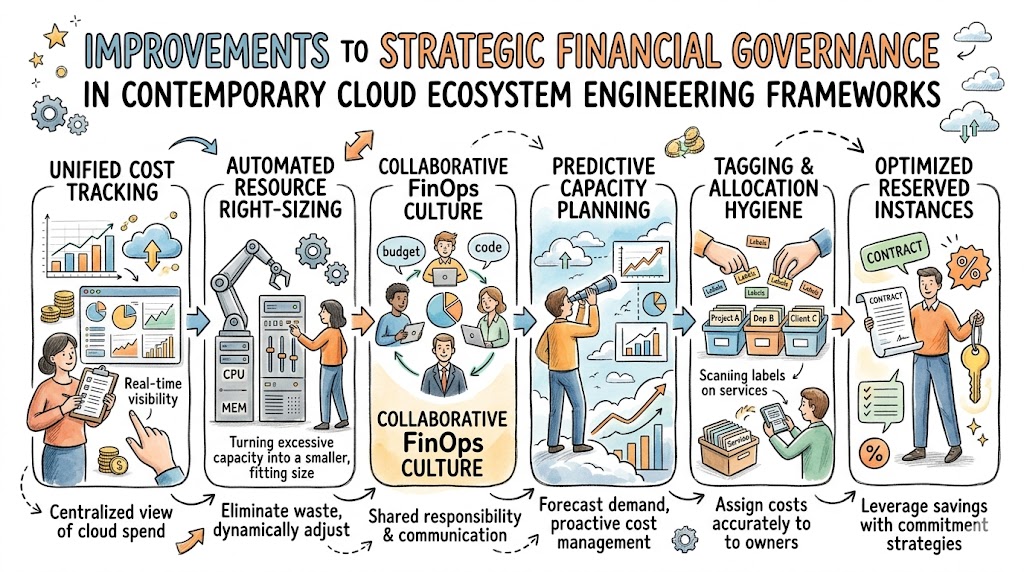
Imagine a sudden, massive system disruption hitting your core corporate platform during peak transaction hours. Your engineering teams scramble to spin up massive compute clusters to absorb the traffic spike, successfully saving the user experience. However, at the end of the month, the finance department receives a staggering cloud invoice that obliterates the quarterly infrastructure budget. This classic operational bottleneck highlights a dangerous disconnect between resource availability and economic accountability.
Modern tech organizations require a unified approach to balance engineering velocity with fiscal discipline. Integrating financial accountability directly into cloud operations ensures that every single microservice deployment remains cost-effective. Consequently, businesses no longer have to choose between lightning-fast feature delivery and profitable bottom-line margins. This systematic synchronization creates a sustainable architecture where infrastructure scales fluidly alongside business value.
This comprehensive guide covers everything you need to know about merging financial optimization with scalable cloud administration. We will explore historical infrastructure bottlenecks, core operational principles, critical performance signals, and proven deployment strategies. Additionally, you will discover the exact implementation paths required to build a highly resilient, cost-aware cloud culture.
To master these complex cloud methodologies, professionals must access top-tier educational materials and structured learning paths. You can accelerate your career and optimize your corporate infrastructure by exploring the specialized training programs available at Finopsschool.
The Origin of Systems Infrastructure
The Early Industrial Bottlenecks
Traditional IT infrastructure relied heavily on fixed, on-premises data centers that required massive upfront capital expenditures. Siloed engineering teams managed physical hardware independently, creating immense communication barriers across the corporate ecosystem. Because procurement processes took months, departments over-provisioned resources constantly just to handle hypothetical usage spikes.
Furthermore, when system demand dropped, expensive servers sat entirely idle, draining electricity and maintenance budgets. Finance teams operated completely in the dark, receiving infrastructure reports long after capital expenditures occurred. This complete lack of visibility made rapid business adaptation virtually impossible.
Moving Toward Unified Workflow Automation
The advent of cloud computing promised to solve hardware rigidity by introducing instantly provisioned virtual resources. However, without strict coordination guidelines, decentralized development teams began launching unmonitored cloud environments at will. This uncoordinated sprawl quickly led to duplicate databases, orphaned storage blocks, and massive operational waste.
To combat this chaotic growth, progressive organizations began unifying operational workflows and breaking down traditional communication silos. Engineers started treating infrastructure as code, which allowed automated systems to manage deployment Lifecycles predictably. This major shift enabled corporate leaders to view technical resources as fluid, dynamic software components rather than fixed physical assets.
Global Expansion Across Commercial Ecosystems
As these unified workflow automation frameworks proved successful, they spread rapidly across large-scale global tech enterprises. Companies realized that operational agility directly dictated market competitiveness and long-term business survival.
Consequently, structured management methodologies evolved from niche startup practices into standard corporate operating procedures worldwide. Today, global commercial ecosystems rely on these standardized frameworks to maintain continuous application availability across multiple cloud zones.
Defining Strategic Operations Management
The Core Operational Structure
The foundational architecture of modern infrastructure relies on a continuous feedback loop between system monitoring and automated remediation. Data flows constantly from edge applications back to centralized observability platforms, providing real-world health metrics.
[Cloud Infrastructure] ---> [Observability Platforms] ---> [Automated Remediation]
         ^                                                            |
         |____________________________________________________________|
This continuous visibility allows software systems to self-heal and adjust allocations dynamically based on real-time traffic changes. By establishing clear data pipelines, organizations ensure that system status information reaches both engineering teams and business stakeholders instantly.
Daily Tasks of Systems Coordinators
Systems coordinators spend their days analyzing telemetry dashboards, refining deployment pipelines, and optimizing resource configurations. They systematically investigate minor performance anomalies before they escalate into major customer-facing outages.
Additionally, these specialists collaborate closely with software developers to ensure new application code meets strict scalability requirements. They also write automated scripts to tear down temporary testing environments, actively preventing unnecessary cloud budget waste.
Localized Control vs. Broad System Architecture
Managing modern cloud infrastructure requires balancing granular component tracking against global, multi-region architectural oversight. Engineers must monitor individual microservices while simultaneously safeguarding the performance of the entire interconnected application ecosystem.
| Metric Type | Focused Component Impact | Enterprise Ecosystem View |
| Local Metrics | Individual container memory usage | Specific microservice resource consumption |
| Global Metrics | Total cross-region data transfer costs | Overall corporate infrastructure financial health |
This dual-lens perspective ensures that optimizing a single localized component does not inadvertently damage or overload a separate downstream system.
The Efficiency Mindset
Transitioning to a modern operational model requires a deep cultural shift that prioritizes long-term stability over temporary fixes. Teams must adopt a mindset focused on continuous incremental improvement, viewing every system failure as an opportunity to harden automation.
Instead of rushing to manually patch a broken server, engineers dedicate time to fixing the underlying configuration code completely. This long-term focus reduces operational friction, eliminates repetitive manual interventions, and keeps infrastructure highly predictable.
The 7 Core Principles of How to Integrate FinOps with Your CloudOps Strategy
1. Embracing Risk and Managing Variability
Perfection in complex, distributed cloud environments remains an mathematical impossibility due to unpredictable network variables. Therefore, modern teams focus on managing acceptable systemic risk rather than chasing unrealistic dreams of absolute zero downtime.
By accepting that components will occasionally fail, engineers build resilient, highly redundant architectures that degrade gracefully during anomalies. This proactive approach allows organizations to innovate rapidly without jeopardizing core operational continuity.
2. Establishing Service Level Objectives (SLOs)
Teams must define clear, measurable targets for systemic success based directly on actual end-user requirements. These quantitative metrics guide engineering priorities by indicating exactly when a system performs acceptably or requires immediate remediation.
User Expectations ---> SLO Targets ---> Error Budget Allocation ---> Release Velocity Control
By aligning technical performance targets with customer satisfaction, businesses avoid wasting money over-engineering unnecessary performance thresholds.
3. Eliminating Toil and Manual Processes
Toil represents repetitive, manual, operational tasks that scale linearly with infrastructure growth and provide no enduring business value. Left unchecked, this manual overhead consumes valuable engineering hours, induces human error, and stalls critical software innovation.
Modern operations strategies actively identify these repetitive burdens and dedicate engineering resources to automating them out of existence. Consequently, highly skilled engineers free up their schedules to focus on building high-value, scalable architecture features.
4. Monitoring & Observability Across the Pipeline
Complete visibility across the entire operational environment prevents dangerous blind spots from hiding potential system failures. Teams deploy advanced tracing, logging, and metrics aggregation systems to observe application performance in real time.
This deep observability allows engineers to track the exact path of a user request across dozens of distinct microservices. As a result, troubleshooting shifts from guessing causes to pinpointing exact lines of failing infrastructure code.
5. Automation Over Manual Coordination
Scaling modern corporate workflows requires smart software solutions that eliminate the need for manual human gatekeeping. Whenever a system requires configuration changes, automated deployment engines execute the modifications safely across the cloud environment.
This reliance on software automation ensures that deployments remain completely consistent, repeatable, and free from human variance. Furthermore, automated systems respond to traffic anomalies in milliseconds, far outperforming human operator intervention speeds.
6. Release Engineering and Deployment Stability
Consistent, predictable, and safe application delivery strategies represent a cornerstone of stable modern cloud ecosystems. Teams utilize advanced canary deployments and blue-green strategies to test new features on small subsets of real traffic.
[Production Traffic] ---> [Router] ---> [90% Traffic: Blue Version (Stable)]
                                    |---> [10% Traffic: Green Version (Canary)]
If the automated monitoring tools detect any elevated error rates, the system instantly rolls back the deployment automatically. This disciplined approach keeps production environments safe while allowing developers to ship innovative features frequently.
7. Simplicity in Network Architecture
Keeping environments clean, minimal, and highly structured directly reduces the overall failure surface of your corporate cloud. Complex, tangled configurations create hidden dependencies that make troubleshooting incredibly difficult during live operational incidents.
Engineers intentionally design modular, decoupled network paths that limit blast radiuses when individual components fail. Simplicity in design ensures that automated monitoring tools can easily track data flows and identify cost anomalies.
Key Operational Concepts You Must Know
SLA vs. SLO vs. SLI — Explained Simply
Understanding performance management requires breaking down the core concepts that define service reliability and user satisfaction:
- Service Level Indicator (SLI): A specific, quantifiable metric that measures real-time performance, such as application request latency.
- Service Level Objective (SLO): The target reliability goal agreed upon by internal teams, defined clearly by an SLI target percentage.
- Service Level Agreement (SLA): The formal external contract with customers detailing financial consequences if the system fails to hit SLOs.
Error Budgets — The Game Changer for Operational Risk
An error budget represents the exact amount of acceptable downtime an application can experience before customers become dissatisfied. For instance, an SLO of 99% uptime leaves a 1% error budget available for engineering experimentation and rapid feature releases.
If a team squanders their entire error budget due to frequent instability, automated policies halt all new feature deployments immediately. Engineers then shift their entire focus toward hardening system stability and optimizing resource efficiency until the budget recovers.
Toil — The Silent Productivity Killer in Infrastructure
Toil acts as a heavy anchor on engineering velocity, slowly draining team morale through mind-numbing, repetitive maintenance tasks. Examples include manually resetting stuck database connections or copying data files across different storage buckets week after week.
To systematically eliminate this drain, organizations track how many hours engineers spend on manual operations versus proactive engineering work. If manual tasks exceed a strict threshold, teams stop development to build automated scripts that handle the work permanently.
Incident Management & Postmortems
When unexpected outages occur, teams must follow structured, blameless incident management protocols to restore services as quickly as possible. Following resolution, engineers conduct thorough postmortems focused entirely on systemic vulnerabilities rather than pointing fingers at individual human mistakes.
By cultivating a blameless culture, team members openly share the exact circumstances that led to the operational failure. This transparent communication allows the organization to implement robust automated guardrails that prevent identical issues from ever happening again.
Capacity Planning
Predictive capacity planning allows modern organizations to forecast infrastructure growth and prepare cloud environments well ahead of demand spikes. Instead of relying on guesswork, engineers analyze historical telemetry data to uncover long-term usage trends and seasonal traffic patterns.
Furthermore, integrating financial data into capacity planning prevents companies from purchasing massive amounts of unneeded cloud reserves. This balanced approach ensures that resources remain completely adequate for future scale without tying up vital corporate working capital.
The Four Golden Signals of Pipeline Performance
To maintain complete awareness of infrastructure health, engineering teams track four fundamental pipeline performance metrics:
- Latency: The precise time it takes for a system to process a specific request from start to finish.
- Traffic: The overall demand placed on the system, measured by network requests per second or concurrent users.
- Errors: The rate of requests that fail explicitly, implicitly, or return incorrect data across the environment.
- Saturation: A measure of system fullness, highlighting exactly how much memory or compute capacity remains available.
Platform Implementation vs. Culture — What’s the Real Difference?
The Philosophy Difference
Technical platform implementation focuses entirely on deploying specific software configurations, automation tools, and cloud monitoring architectures. Cultural methodology, conversely, centers on shifting human mindsets, breaking down operational silos, and establishing shared financial accountability across departments.
While tools provide the data required for optimization, culture dictates whether teams actually act on that information. True infrastructure excellence requires combining robust software platforms with a disciplined human culture that values resource efficiency.
Roles & Responsibilities Compared
- Cloud Operations Specialists: They prioritize system uptime, continuous availability, rapid deployment velocity, and infrastructure scalability.
- Financial Optimization Teams: They focus on cloud cost allocation, budget forecasting, anomaly detection, and contract procurement optimization.
- Cross-Functional Coordinators: They bridge the gap by translating cloud performance metrics into clear business value and economic efficiency.
Can You Have Both Disciplines?
Separate engineering philosophies absolutely can coexist and support each other smoothly within a forward-thinking modern corporate ecosystem. In fact, financial cost optimization and system reliability represent two sides of the very same cloud management coin.
When engineers design highly optimized, simple applications to reduce costs, they simultaneously make those systems easier to monitor and maintain. Consequently, merging these technical disciplines creates an environment where economic efficiency naturally drives superior operational performance.
Which One Should Your Team Adopt?
Choosing the right operational focus depends heavily on your current organizational size, cloud budget, and engineering maturity level. Small startups should prioritize basic cultural accountability and simple monitoring setups to avoid burying early developers under massive process overhead.
| Organization Scale | Primary Operational Focus | Core Implementation Action |
| Early-Stage Startup | High Cultural Accountability | Implement basic resource tagging and simple alerts |
| Large-Scale Enterprise | Advanced Automation Platforms | Deploy automated cost allocation and scaling engines |
As an enterprise scales up and cloud costs grow exponentially, investing in dedicated automated optimization platforms becomes completely non-negotiable.
Real-World Use Cases of Modern Operations
How Tech Leaders Use Operational Metrics
Major global software enterprises track thousands of granular telemetry streams simultaneously to maintain total visibility over their delivery networks. They feed these massive metrics datasets into advanced visualization systems that display real-time system health and cloud spend alongside each other.
By connecting technical performance directly with cost indicators, business executives instantly see the exact financial impact of engineering decisions. This data-driven approach empowers leadership to make highly informed strategic investments across their entire product portfolio.
Chaos Engineering Approaches to Resilient Systems
Progressive tech companies utilize chaos engineering to intentionally inject controlled failures into production environments during regular business hours. For example, automated scripts might randomly terminate healthy microservice instances or simulate network latency between global data centers.
These intentional disruptions allow engineers to verify that automated self-healing systems and cost-management configurations respond perfectly under duress. Uncovering hidden architectural flaws during a controlled test prevents catastrophic real-world outages when actual hardware failures occur.
Handling Reliability at Massive Scale
Distributed microservice architectures handling millions of concurrent global transactions require dynamic, real-time scaling and cost controls. When unexpected traffic surges hit the platform, automated orchestration engines instantly provision additional computing nodes to maintain low latency.
As soon as the traffic subside, the very same automated systems aggressively de-provision those extra nodes to protect the corporate budget. This fluid scalability ensures high availability for global consumers without generating permanent, expensive infrastructure overhead.
High-Availability in Fintech Operations
Financial transaction and digital payment platforms operate with a strict zero-tolerance policy for unexpected application downtime. Because a single minute of outage can cause massive revenue losses, these systems utilize multi-region active-active cloud deployments.
                    [Global User Traffic]
                              |
                    [Smart Traffic Router]
                     /                  \
[Region A: Active Data Center] <---> [Region B: Active Data Center]
Engineers build automated failover paths that redirect user traffic instantly if an entire cloud availability zone goes offline. Simultaneously, financial optimization guardrails monitor these backup zones to ensure redundant resources stay lean and cost-effective.
Scaled-Down but Essential Systems for Startups
Early-stage companies do not possess the massive financial budgets or large engineering workforces of established global technology conglomerates. However, they can still apply core operational principles efficiently by focusing on lightweight, open-source automation strategies.
By setting up basic resource tagging and automated shutdown schedules for non-production environments, startups prevent devastating budget overruns. This disciplined baseline allows small teams to remain agile, innovative, and highly attractive to venture capital investors.
Common Mistakes in Operations Engineering
Mistake 1 — Confusing System Management with Just Being On-Call
Many traditional organizations mistake modern operations engineering for a basic, reactionary on-call rotation support structure. They expect engineers to sit around waiting for alerts to trigger, then manually fix symptoms instead of resolving core issues.
This reactionary approach fails because it leaves underlying systemic bugs entirely unaddressed, causing identical failures to repeat indefinitely. True operations management focuses on proactive software engineering, dedicated to building automated systems that prevent incidents entirely.
Mistake 2 — Setting Unrealistic SLOs
Demanding absolute 100% system availability represents a critical mistake that stalls software feature releases and burns out engineering talent. High uptime requirements increase infrastructure costs exponentially while providing diminishing returns for actual customer satisfaction.
When teams demand perfect performance, developers become terrified of deploying new code, completely killing organizational innovation velocity. Smart leaders establish realistic reliability targets that leave plenty of room for creative experimentation and rapid product evolution.
Mistake 3 — Ignoring Toil Until It’s Too Late
Accumulating massive operational debt happens quietly when teams repeatedly prioritize short-term feature development over eliminating manual toil. As the underlying cloud infrastructure expands, manual maintenance tasks grow until they consume the team’s entire weekly schedule.
Eventually, engineers spend all their time fighting fires and manually provisioning resources, leaving zero room for strategic improvements. Organizations must respect automated maintenance windows to keep their engineering velocity completely unburdened by operational drag.
Mistake 4 — Skipping Blameless Postmortems
When companies punish employees for unintended system outages, team members naturally hide mistakes and avoid taking creative architectural risks. This fear-driven culture ensures that the true root causes of operational infrastructure failures remain completely unaddressed.
Without open, honest discussions about systemic flaws, identical outages will inevitably strike the corporate cloud environment again. Conducting genuinely blameless reviews represents the only reliable method for building long-term organizational resilience.
Mistake 5 — Monitoring Without Actionable Alerts
Flooding engineering communication channels with hundreds of non-critical, informational notifications creates dangerous alert fatigue across the organization. When systems trigger noisy alarms for minor, self-healing events, engineers quickly learn to ignore notifications entirely.
Consequently, when a truly catastrophic system failure occurs, the critical alert gets lost in the massive digital noise. Every single automated alert must point to a specific, well-defined problem that requires immediate, skilled human intervention.
Mistake 6 — Not Involving Operational Engineers in the Design Phase
Excluding operations specialists from early software architectural discussions leads to applications that are incredibly difficult to deploy, monitor, and scale. Developers often design features that perform beautifully on local laptops but fail miserably inside distributed cloud environments.
Bringing operational expertise into the initial design phase ensures that code includes proper logging, tracing, and cost-attribution frameworks. This proactive collaboration eliminates expensive re-architecture work down the line and guarantees smooth production rollouts.
Essential Infrastructure Tools & Technologies
Monitoring & Observability
Maintaining deep operational awareness across modern cloud architectures requires a robust, integrated software monitoring stack. Industry leaders utilize Prometheus to collect high-resolution time-series metrics from containerized applications and dynamic microservices.
Engineers then pair those metrics repositories with Grafana dashboards to create intuitive, real-time visualizations of system performance. For comprehensive enterprise environments, platforms like Datadog and New Relic combine distributed tracing, log aggregation, and infrastructure monitoring into a single unified dashboard.
Incident Management
When critical systems deviate from normal operating parameters, automated alert routing engines must coordinate the engineering response instantly. PagerDuty serves as a vital operational hub, instantly triage notifications and escalating issues to the correct on-call specialist based on pre-defined schedules.
The platform tracks incident lifecycles transparently, helping teams organize communication channels and collaborate efficiently during complex system outages. This structured response management minimizes mean time to resolution and protects core business revenue.
CI/CD & Release Engineering
Automating software delivery pipelines ensures that updates roll out into live production environments safely, consistently, and predictably. Jenkins remains a widely adopted automation server for executing initial code compilation, running comprehensive unit tests, and packaging software containers.
For modern containerized environments, Spinnaker and Argo CD provide advanced continuous delivery workflows that automate complex progressive deployment strategies. These engines monitor real-time health metrics during rollouts, executing automated rollbacks instantly if system instability occurs.
Chaos Engineering
Building truly resilient cloud infrastructure requires specialized tools designed to inject controlled stress into production environments safely. Chaos Monkey, originally pioneered by leading streaming enterprises, randomly terminates cloud instances to verify that software architectures self-heal seamlessly.
By intentionally testing system redundancy under varied operational conditions, teams uncover subtle configuration errors before they cause real-world customer outages. This proactive chaos testing transforms theoretical system resilience into verified, battle-tested engineering reality.
SLO Management
Tracking reliability goals against agreed user thresholds requires specialized software platforms that monitor real-time error budgets continuously. Nobl9 connects directly to existing observability data streams, translating raw performance metrics into clear service level objectives.
The platform provides engineering teams and product owners with continuous visibility into remaining error budgets and long-term reliability trends. This data-driven insight helps cross-functional teams make objective decisions regarding feature release velocity versus infrastructure stability investments.
How to Become an Operations Expert — Career Roadmap
Skills Every Specialist Must Have
Succeeding in the modern cloud engineering landscape requires mastering a diverse blend of software development and systems administration skills. You must develop deep proficiency with Linux terminal commands, shell scripting, and programming languages like Python or Go.
Linux Terminal ---> Scripting (Python/Go) ---> IaC (Terraform) ---> Container Orchestration
Additionally, understanding infrastructure as code tools like Terraform and container orchestration platforms like Kubernetes is completely vital. These technical capabilities allow you to design, deploy, and manage massive distributed systems using automated software principles.
The Professional Learning Path
Your educational journey should begin by configuring simple web applications on basic virtual private servers to understand networking fundamentals. Next, transition into automating those deployments using configuration management scripts and continuous integration pipelines.
Once you master basic automation, focus on learning how to architect highly available, multi-region cloud infrastructures with deep monitoring guardrails. Finally, specialize in advanced financial governance practices to ensure your scalable architectures remain highly cost-efficient.
Certifications Worth Pursuing
Earning industry-recognized professional credentials provides clear, structured validation of your technical infrastructure engineering expertise. Highly valued certifications include the Certified Kubernetes Administrator credential and various professional-level Cloud Solutions Architect tracks.
Additionally, pursuing specialized financial management certifications demonstrates your unique ability to align technical cloud operations with corporate business budgets. These rigorous credentials help you stand out clearly to elite technology recruiters and major enterprise employers globally.
Educational Resources with Finopsschool
Navigating the vast world of modern cloud engineering requires access to structured, high-quality training curriculum designed by real industry practitioners. Aspiring specialists can explore the comprehensive educational offerings available directly through Finopsschool to fast-track their professional growth.
The platform provides hands-on labs, comprehensive video courses, and deep-dive material covering modern resource optimization methodologies. Investing in these structured educational tracks empowers you to solve complex real-world infrastructure challenges confidently.
The Future of Systems Management
AI and Automation in System Optimization
Machine intelligence integrations are rapidly transforming how enterprise organizations monitor, secure, and optimize their complex cloud architectures. Advanced anomaly detection algorithms analyze terabytes of historical telemetry data to identify subtle performance degradations long before human operators notice them.
Furthermore, automated remediation engines leverage predictive models to instantly adjust resource allocations in response to anticipated traffic spikes. This shift from reactionary debugging to proactive AI-driven optimization drastically reduces system downtime and slashes operational waste.
Platform Engineering — The Evolution of Infrastructure
Platform engineering represents a major architectural shift focused on designing internal self-service developer platforms that accelerate software delivery velocity. Instead of forcing developers to configure complex cloud resources manually, platform teams package infrastructure into standardized, secure templates.
[Developers] ---> [Internal Self-Service Portal] ---> [Standardized Cloud Infrastructure]
                                                                |
                                                (Automated Guardrails & FinOps Built-in)
This model provides engineering teams with the exact resources they need instantly while automatically enforcing corporate security and cost guardrails. Consequently, organizations eliminate operational bottlenecks while maintaining absolute control over their distributed cloud environments.
Management in Cloud-Native & Kubernetes Environments
The massive adoption of containerized microservices introduces highly unique orchestration challenges that require advanced dynamic management frameworks. Because containers launch and terminate in milliseconds, traditional static monitoring tools can no longer keep pace with modern environment fluidity.
Future systems management strategies rely heavily on service meshes and automated discovery engines to map internal network paths in real time. Mastering these dynamic cloud-native ecosystems represents an absolute requirement for engineers managing next-generation enterprise applications.
Operational Skills That Will Matter Most
As corporate cloud environments grow larger and more complex, technical skills must evolve beyond basic server configuration and automation scripting. Engineers must develop a deep understanding of cloud cost allocation, corporate financial forecasting, and advanced data observability principles.
The most valuable future specialists will be those who can translate technical system performance directly into business profitability indicators. Cultivating this dual expertise ensures your continued relevance as organizations demand highly efficient, financially sustainable cloud architectures.
FAQ Section
- What is the typical career trajectory for a modern cloud operations specialist?Professionals usually begin as junior systems administrators or software engineers before transitioning into dedicated infrastructure automation roles. With experience, they advance into senior architectural positions, principal systems design leads, or director-level engineering management tracks.
- How do cloud optimization practices directly impact corporate financial bottom lines?By systematically identifying idle resources, eliminating orphaned storage, and optimizing compute allocations, businesses reduce monthly cloud spend significantly. These direct infrastructure savings immediately improve overall corporate profitability margins and free up capital for strategic R&D investments.
- What are the most common entry-level requirements for infrastructure engineering roles?Most employers look for a solid understanding of operating system fundamentals, basic scripting capabilities, and familiarity with major cloud providers. Demonstrating hands-on experience with containerization tools and version control systems through personal project portfolios is also highly advantageous.
- Why are blameless postmortems considered so critical for long-term system reliability?Punishing individuals for complex system failures causes teams to hide mistakes, leaving underlying structural vulnerabilities completely unaddressed within the environment. Blameless reviews focus entirely on fixing the systemic flaws and hardening automation guardrails, preventing identical outages from recurring.
- What average salary trends can qualified cloud management professionals expect?Due to the critical shortage of skilled technical talent capable of managing massive cloud expenditures, compensation trends remain exceptionally strong. Senior specialists and cloud optimization architects frequently command premium executive-level salaries and comprehensive benefit packages across major global technology hubs.
- How often should engineering teams review and adjust their service level objectives?Objectives should be re-evaluated whenever major application architecture changes occur, or when customer satisfaction data indicates a misalignment. Regular quarterly reviews ensure that technical reliability targets stay perfectly synchronized with evolving user expectations and corporate business goals.
Final Summary
Achieving long-term stability and economic efficiency across modern cloud ecosystems requires a disciplined integration of automated technical platforms and shared cultural accountability. By embracing core operations principles, tracking pipeline performance signals, and systematically eliminating repetitive manual toil, organizations build incredibly resilient delivery architectures. Ultimately, balancing engineering velocity with strict fiscal awareness ensures that enterprise infrastructure scales smoothly and profitably. Embracing these advanced performance frameworks empowers modern tech leaders to turn complex operational challenges into sustainable competitive advantages with Finopsschool.