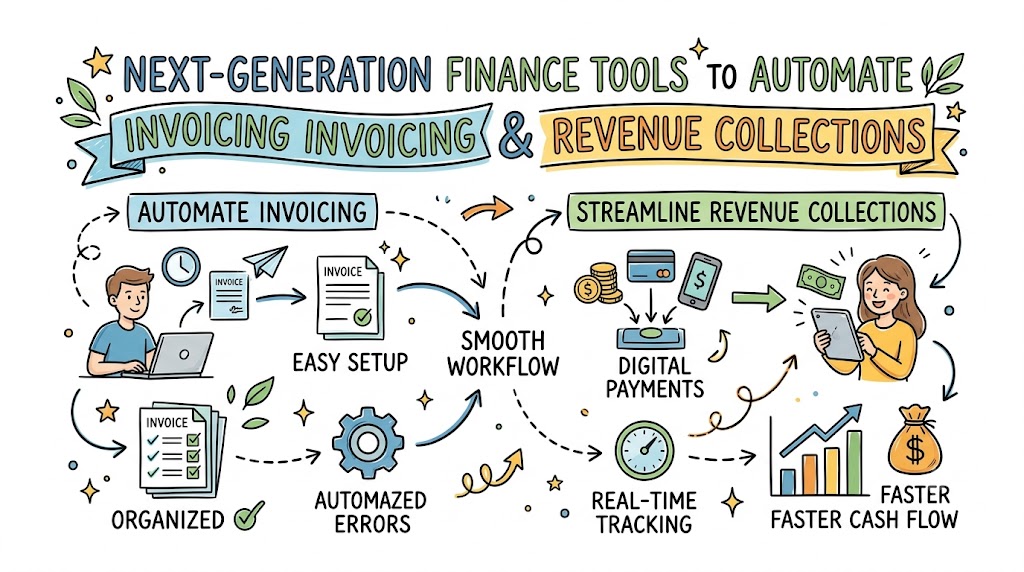
Overview of Modern Financial Workflows
Growing enterprises frequently grapple with disjointed billing systems, manual data entries, and delayed settlements across multiple channels. Operating across disconnected spreadsheets creates financial bottlenecks, increases human error, and inflates administrative overhead. Implementing specialized billing technology resolves these issues by unifying invoice generation, client payment requests, and bank reconciliations under a single dashboard. Consequently, accounting departments maintain absolute control over liquidity while accelerating daily collections. This comprehensive guide outlines how automated financial platforms modernize business operations, enhance data accuracy, and secure predictable cash flow.
Overcoming Bottlenecks in Traditional Invoicing Systems
Outdated payment tracking methods slow down corporate revenue cycles as client volume expands. Manual record-keeping leads to ledger errors, uncollected customer dues, and endless administrative chasing. Transitioning to structured digital workflows guarantees reliable cash flow while eliminating operational friction. Automated billing tools send regular payment notifications, significantly lowering delinquent accounts receivable balances. In addition, real-time transaction oversight equips executives with clear insights into company-wide financial health.
Core Capabilities of Modern Billing Software
Integrated collection tools unite separate accounting tasks into one intuitive management portal. These systems bridge the gap between invoice creation, gateway transactions, and customer communication channels. As a result, finance personnel stop spending hours cross-referencing bank statements against general ledgers. Automated engines immediately notify managers about unpaid bills, impending due dates, and failed settlement attempts. Ultimately, modern billing software converts cumbersome collection tasks into smooth, efficient routines.
Master GST Invoicing with Precision
Navigating shifting tax codes manually exposes businesses to audit risks and expensive compliance penalties. Utilizing dedicated invoicing software tailored for Indian tax rules ensures accurate, automatic calculations for CGST, SGST, and IGST on every bill. Furthermore, these platforms compute itemized discounts, applicable taxes, and sequential invoice numbers without manual intervention. Generating compliant digital records simplifies tax reporting while giving customers transparent, professional billing statements. Complete tax automation removes administrative stress and ensures 100% regulatory accuracy.
Accelerate Payouts Using Instant Payment Links
Relying on traditional bank transfers delays payments because clients must manually enter lengthy bank details. Utilizing dynamic payment request links enables finance teams to send one-click payment options directly to clients. These versatile links support customizable expiration windows, automated follow-up sequences, and flexible partial-payment terms. Moreover, staff can distribute links via email, SMS, or instant messaging platforms for immediate reach. Eliminating friction during the checkout process motivates clients to clear balances faster and boosts working capital.
Elevate Cash Flow Visibility Across All Operations
Lacking live visibility over incoming collections severely limits strategic financial planning and budgeting. Implementing specialized payment monitoring tools gives leadership real-time clarity regarding incoming revenue streams. Teams monitor UPI transfers, card payments, net banking, and digital wallets within a single unified view. Consequently, cash management becomes proactive, empowering executives to allocate resources wisely. Clear visibility helps accounting staff resolve overdue accounts quickly and preserve operational liquidity.
Consolidate Multiple Processing Gateways Efficiently
Businesses routinely integrate multiple payment gateways to offer customer choice and improve authorization rates. However, logging into separate processor portals creates administrative confusion and fragments payment records. Incorporating a multi-gateway collection platform merges transaction data from Razorpay, Cashfree, and Paytm into one central interface. Finance teams no longer waste time navigating separate merchant portals to confirm daily revenue totals. Thus, centralized gateway oversight saves operational time and simplifies transaction auditing.
End-to-End Invoice Lifecycle Tracking
Tracking invoices throughout their entire lifecycle establishes complete audit trails and accurate accounting records. Specialized tracking systems link every incoming payment directly to its parent invoice and customer profile. Finance departments receive immediate updates regarding active payment links, expired requests, and outstanding balances. Furthermore, automated tracking removes guesswork during audits and highlights payment exceptions instantly. Clear status updates foster seamless communication between accounting teams, support staff, and clients.
Scalable Automation for Expanding Enterprises
Manual billing processes restrict operational growth and drive up administrative expenses over time. Automating recurring accounting tasks empowers finance departments to handle larger transaction volumes without increasing headcount. Adopting digital workflows speeds up internal approvals, minimizes processing errors, and strengthens data protection. Additionally, automated systems operate continuously, ensuring invoices reach clients without administrative delays. Leveraging modern automation prepares growing businesses to scale effectively while maintaining high accounting standards.
Eliminate Manual Matching with Automated Reconciliation
Matching daily bank deposits against individual sales records represents one of the most tedious accounting chores. Sophisticated reconciliation software imports settlement files automatically and pairs them with open customer invoices. The system pinpoints mismatched amounts, missing payments, or unexpected gateway fees, flagging them for fast team review. Consequently, staff focus exclusively on resolving exceptions, drastically reducing month-end closing timelines. Automated reconciliation provides finance leaders with dependable, audit-ready data.
Optimize Receivables Management and Cash Flow
Overdue receivables restrict a company’s ability to invest in new opportunities, fund operations, and cover daily expenses. Deploying accounts receivable automation streamlines collection efforts through scheduled reminder notices and flexible payment choices. Automated workflows trigger timely follow-up notices for delinquent accounts while preserving courteous client communication. As a result, average collection periods drop significantly, stabilizing working capital across all business branches. Dependable receivables automation protects corporate liquidity and fuels long-term expansion.
Connect the Entire Invoice-to-Cash Pipeline
The complete invoice-to-cash workflow covers every step from initial invoice drafting to final bank settlement verification. Installing end-to-end automation tools connects these distinct phases into one continuous operational pipeline. System software links digital invoices directly to payment links, processing gateways, and accounting ledgers without double entry. Consequently, administrative friction disappears while collection speed improves across every client touchpoint. Optimizing this entire process creates a high-performing financial structure.
Build a Secure Enterprise Payment Network
Large organizations operating multiple regional branches require centralized executive oversight paired with strict role-based access. Enterprise-grade payment software provides corporate leadership with complete operational oversight while granting branch offices necessary flexibility. Structured approval hierarchies, maker-checker controls, and customizable permissions protect sensitive corporate accounts completely. Furthermore, robust API frameworks connect smoothly with existing ERP systems and accounting software. Centralized governance guarantees consistent quality, full regulatory compliance, and uniform operations.
Capitalize on Live Financial Intelligence
Relying on outdated financial reports leads to inaccurate capital forecasts and faulty business decisions. Real-time payment tracking allows finance managers to monitor cash balances and outstanding receivables as transactions occur. Immediate payment confirmation allows fulfillment teams to release client orders faster, improving customer satisfaction. Moreover, live analytics reveal underlying collection trends, enabling timely adjustments to credit terms. Up-to-the-minute intelligence provides leadership with a distinct edge in competitive commercial markets.
Maintain Stringent Data Security and Compliance
Protecting client payment details and enterprise financial records requires robust data security measures and regulatory compliance. Advanced payment platforms incorporate multi-factor authentication, strong encryption algorithms, and role-based access controls to block unauthorized access. In addition, detailed audit logs capture every invoice edit, link creation, approval step, and settlement event. Adhering to strict compliance rules protects corporate reputation while building lasting trust with clients and business partners. Robust security drastically minimizes operational risks in digital payment environments.
Data Analytics for Strategic Financial Planning
Empirical financial insights enable executives to optimize collection strategies, reduce operational risks, and increase profit margins. Comprehensive payment analytics generate actionable reports covering collection ageing schedules, gateway performance metrics, and client payment trends. Analyzing these core indicators reveals operational bottlenecks, late-paying clients, and inefficient processing channels quickly. Consequently, administrative decisions reflect accurate transactional data rather than subjective guessing. Scheduled analytics reports deliver vital financial summaries straight to management, simplifying strategic planning.
Sector-Specific Solutions for Revenue Operations
- E-Commerce & Retail: Streamlines high-volume online sales, consolidates multi-gateway settlements, and automates refund management.
- B2B Enterprises: Manages complex corporate billing, custom tax setups, dynamic payment links, and partial payment terms effortlessly.
- Subscription Services: Automates recurring billing cycles, sends payment link renewals, and tracks active account statuses smoothly.
- Logistics & Distribution: Attaches digital payment requests to shipping updates, enabling fast field collections across regional hub networks.
Recommended Steps for Optimizing Collection Workflows
Extracting maximum value from modern payment tools requires pairing software capabilities with structured internal accounting procedures. Organizations should implement standardized invoice templates, clear credit terms, and automated follow-up schedules right from launch. Furthermore, connecting processing gateways directly to a central interface removes isolated data silos and manual tracking efforts. Periodically auditing user permissions and reconciliation records guarantees data accuracy and regulatory compliance over time. Following these core steps helps businesses maximize software ROI and maintain strong financial health.
How PayManagerPro Transforms Enterprise Payment Operations
PayManagerPro functions as a comprehensive platform engineered specifically to unify billing, customer collections, and settlement tracking. By combining invoice generation, payment gateways, request links, and receivables management into one hub, it replaces scattered spreadsheets completely. The system allows finance teams to draft compliant GST invoices and distribute custom payment links through diverse communication channels. Furthermore, its consolidated dashboard aggregates data from multiple processing gateways, providing live visibility into incoming cash flow. Native automated reconciliation matches settlement feeds precisely, saving manual effort while maximizing financial control.
Choosing the Ideal Collection Management Software
Selecting the right software requires evaluating technical scalability, system security, and integration options carefully. Organizations must verify that prospective tools support native tax requirements, multi-gateway consolidation, and automated reconciliation workflows effectively. Furthermore, intuitive dashboard layouts and open API architectures ensure quick employee adoption and smooth ERP integration. Choosing a adaptable platform guarantees your financial tech stack scales alongside future corporate growth. Investing in modern collection infrastructure transforms routine financial management into a major strategic advantage.
Frequently Asked Questions About PayManagerPro
- Which primary features does PayManagerPro deliver for business billing?
PayManagerPro handles digital invoice creation, GST calculations, dynamic payment links, multi-gateway transaction tracking, and automated settlement reconciliation.
- How does PayManagerPro handle Indian GST compliance requirements?
The system automatically calculates accurate CGST, SGST, and IGST breakdowns while managing sequential invoice numbering and secure PDF exports.
- Can administrative staff distribute direct payment links to clients?
Finance teams generate versatile single-use or reusable payment links and share them via SMS, email, or instant messaging platforms.
- How does the multi-gateway dashboard streamline transaction monitoring?
The dashboard aggregates incoming payment feeds from Cashfree, Razorpay, and Paytm into a single live administrative interface.
- How does the platform execute automated payment reconciliation?
The platform imports gateway settlement files automatically, matches them against outstanding customer invoices, and flags discrepancies for rapid review.
- Does PayManagerPro allow customers to settle invoices partially?
Yes, operators configure payment links to accept partial payments while keeping invoice balance records updated in real time.
- How does PayManagerPro support multi-branch corporate environments?
The platform delivers granular role-based permissions, maker-checker workflows, and API connections tailored for complex enterprise structures.
- Which payment channels can clients utilize to settle invoices?
Clients clear balances using credit cards, debit cards, UPI, net banking, and various digital wallets seamlessly.
- How does the solution improve accounts receivable performance?
The system automates payment reminders, tracks late client balances live, and provides collection ageing reports to accelerate liquidity.
- Do companies need to replace current banking setups to adopt PayManagerPro?
No, the platform connects directly with your existing payment gateways and banking accounts without disrupting current financial infrastructure.
Summary of Strategic Advantages
Upgrading from legacy accounting methods to an integrated collection platform remains essential for modern enterprise growth. Centralized software simplifies invoice creation, unifies multi-gateway transactions, and automates reconciliation tasks, significantly lowering daily operating expenses. Consequently, corporate finance departments gain sharper accuracy, real-time visibility into outstanding receivables, and faster cash settlement cycles. Deploying unified financial automation strengthens corporate governance while enabling leadership to focus on driving expansion. Re-engineering your end-to-end payment ecosystem today establishes a firm base for lasting financial success.