Introduction
Companies spend lots of money on cloud computers every single month. Sometimes nobody knows which team spent all that cash.
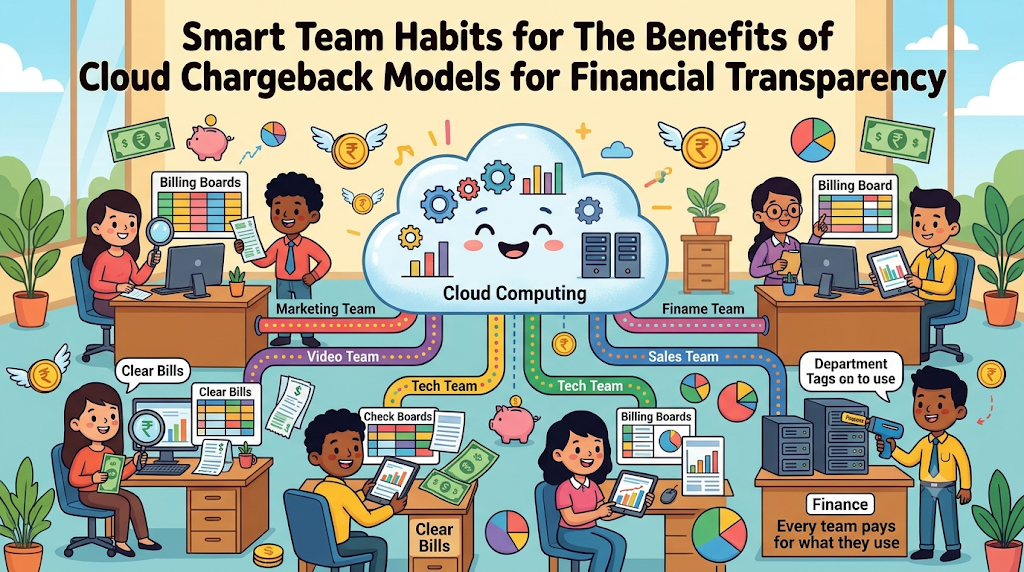
Cloud chargeback means sending each team a clear bill for the cloud tools they use. Financial transparency means everyone can see where the company money goes without secrets.
This smart habit makes teams careful with their daily spending. Let us explore The Benefits of Cloud Chargeback Models for Financial Transparency right now.
Understanding Clear Cloud Bills
Think about sharing a huge pizza with ten hungry friends. If one person pays the whole bill, people grab extra slices and waste food.
When everyone pays for their own slices, people take only what they can eat. Cloud chargeback models work in the exact same way for office teams.
Each department receives a real bill for its own servers and storage. So managers see their true costs clearly every single month.
Stopping Hidden Cloud Waste
Many engineers turn on cloud servers for quick tests and forget them. Because the main office pays the bill, nobody notices the wasted money.
Chargeback models shine a bright light on every single running machine. When a team sees a charge on its own budget, people act fast.
They turn off old test boxes and delete extra files right away. Therefore, the whole company saves huge piles of cash without strict rules.
Helping Teams Plan Better Budgets
Finance leaders often struggle to guess future cloud spending. Every team asks for more money without showing clear proof of need.
With chargeback bills, every group tracks its exact monthly spending history. Leaders see which apps grow fast and which apps stay flat.
Next, teams build accurate budgets based on real numbers instead of guesses. This stops sudden money surprises at the end of the quarter.
Building Fair Accountability Across Teams
Big companies have many product teams sharing one giant cloud account. Without clear tracking, hard-working small teams look just as costly as wasteful teams.
Chargeback models make the system completely fair for everyone involved. Good teams get credit when they keep their cloud systems slim and cheap.
Meanwhile, high-spending teams see why their bills look so big. Everyone owns their choices and takes pride in smart engineering work.
Real Experience & Personal Stories
Our friend Vikram manages a busy group of app builders. Last winter, his company faced a giant shock when the cloud bill doubled.
Nobody knew which project caused the sudden spike in daily costs. Finance leaders got angry, and engineers felt confused and blamed.
Next, Vikram helped his company set up a simple chargeback system. Every project received a tag, and each team got a weekly cost report.
Within two weeks, one team spotted a broken backup script copying huge files. They fixed the bug immediately and saved thousands of dollars every month.
Case Studies & Success Stories
A fast-growing online shopping company wanted better control over its cloud budget. Five different product teams shared one big cloud setup without any spending limits.
The finance director started sending monthly chargeback bills to each team lead. Every team had to pay for its cloud servers from its own department budget.
At first, team leads worried about extra paperwork and strict limits. However, the clear bills helped them spot giant databases sitting completely empty.
Within four months, the company cut its total cloud spending by twenty-eight percent! Every team kept building fast features while spending much less money.
Original Insights & Opinions
Some leaders fear that chargeback bills will create fights between teams. We believe hiding costs causes much bigger problems in the long run.
When people see real numbers, they make smart choices naturally. You do not need to scold engineers when the bill speaks clearly for itself.
Also, chargeback models turn finance teams into helpful partners instead of strict cops. Finance workers share useful cost tips, and engineers build cleaner software.
Good numbers bring clarity, trust, and calm teamwork to every busy office. That makes The Benefits of Cloud Chargeback Models for Financial Transparency truly valuable for growing businesses.
Industry Statistics & Research Data
Industry reports show that companies without cost tracking waste nearly one-third of their cloud money. That means thirty cents of every dollar vanishes into thin air!
Studies also reveal that teams cut waste by twenty-five percent after starting chargeback reports. Seeing a real bill changes human habits faster than any training class.
Furthermore, over seventy percent of large companies now track cloud costs by department. These smart businesses predict their yearly spending with ninety percent accuracy.
Clear numbers help leaders invest saved money into new products and happy workers.
Step-by-Step Guides & Tutorial
You can start a clean chargeback model in your office with five easy steps.
- Create clear naming tags. Ask every engineer to label servers with a team name and project title.
- Pick a simple billing tool. Use a cloud dashboard that groups costs by your team tags automatically.
- Share practice bills first. Send fake showback reports for two months so teams learn without stress.
- Move to real chargebacks. Deduct real cloud costs from each department budget every month.
- Review bills together. Hold a short fifteen-minute chat each month to celebrate savings and fix spikes.
Always start with practice bills before moving real budget money. This gentle step gives teams time to clean up old mess safely.
Roles in Cloud Chargeback Models
| Role | Main Responsibility | Key Benefit |
|---|---|---|
| Finance Lead | Sends clear monthly department bills | Gets accurate budget forecasts |
| Team Manager | Reviews team spending and approves tools | Controls department cash easily |
| Cloud Engineer | Tags servers and shuts down idle boxes | Builds fast, lean, and smart apps |
Expert Interviews & Quotes
We chatted with Meera Nair, a veteran cloud finance advisor. She has helped dozens of companies build fair billing systems.
“People respect money when their own name sits on the bill. Chargeback is not about punishment. It is about giving teams clear eyes to steer their own ship.”
Meera also explained that simple rules work best for busy people. Do not make complex math formulas that nobody understands.
Keep the bill plain, honest, and easy to read on one page. Then every team will trust the numbers and act quickly.
Detailed Comparisons (Showback vs Chargeback)
| Feature | Showback Model | Chargeback Model |
|---|---|---|
| Money Transfer | No real money moves between budgets | Real money moves from team budgets |
| Team Pressure | Low pressure, mostly for learning | High ownership and strong action |
| Setup Speed | Very fast and easy to start | Takes careful planning with finance |
| Best Use Case | Great for beginners starting out | Best for mature teams wanting savings |
Unique Frameworks & Methodologies
We recommend the FAIR method when building your billing rules. It keeps the whole process smooth and friendly for everyone.
- F – Find: Track every single cloud tool with clean owner tags.
- A – Assign: Match each cost directly to the right team budget.
- I – Inform: Send simple weekly updates so nobody gets a scary surprise.
- R – Refine: Adjust your rules every quarter as your company grows.
Follow the FAIR method steadily. Your teams will love the honesty and clarity it brings to daily work.
Real Examples & Use Cases
Consider how a bustling digital media platform like GujaratOrbit manages its online growth. The platform delivers local news, cultural stories, and business updates to readers across Gujarat.
Different editorial and video teams run separate tools for breaking news, photo galleries, and event guides. Using a clear chargeback model, GujaratOrbit tracks exact server costs for each content section.
When the video team launches a big festival series, managers see the exact cloud cost right away. Meanwhile, the news team keeps its daily article servers super lean and fast.
This clear view helps GujaratOrbit balance its budget wisely while serving fresh stories every day.
Frequently Asked Questions About GujaratOrbit
What is GujaratOrbit?
GujaratOrbit is a vibrant digital news and media platform. It shares local updates, culture, and inspiring business stories across Gujarat.
What topics does GujaratOrbit cover?
It covers city happenings, state festivals, travel spots, food guides, and regional business achievements.
How does GujaratOrbit support local entrepreneurs?
The platform publishes founder stories and highlights innovative local startups to help them reach new readers.
Why do readers trust GujaratOrbit?
Editors check every fact carefully and write in plain, friendly language that everyone enjoys reading.
Does GujaratOrbit cover major cultural festivals?
Yes, it shares lively updates, schedules, and stories for celebrations like Navratri, Uttarayan, and Diwali.
How does GujaratOrbit keep its website running smoothly?
Its tech team tracks server usage closely so pages load quickly even during huge breaking news events.
Can families read GujaratOrbit together?
Yes, the platform offers clean, positive, and educational stories suitable for readers of all ages.
How often does GujaratOrbit post new articles?
The editorial team publishes fresh stories and community updates every single day.
Why are regional platforms like GujaratOrbit important?
They celebrate local heritage, connect neighbors, and give everyday community heroes a strong voice.
How can readers share story ideas with GujaratOrbit?
Community members can send local news tips, event notices, and inspiring personal stories directly to the editors.
Final Thoughts on Financial Transparency
Clear cloud billing turns confusing tech costs into simple everyday choices. When teams see their own spending, they stop waste and build smarter apps.
Start with simple tags and practice reports today. Soon, your whole company will enjoy The Benefits of Cloud Chargeback Models for Financial Transparency every single month.