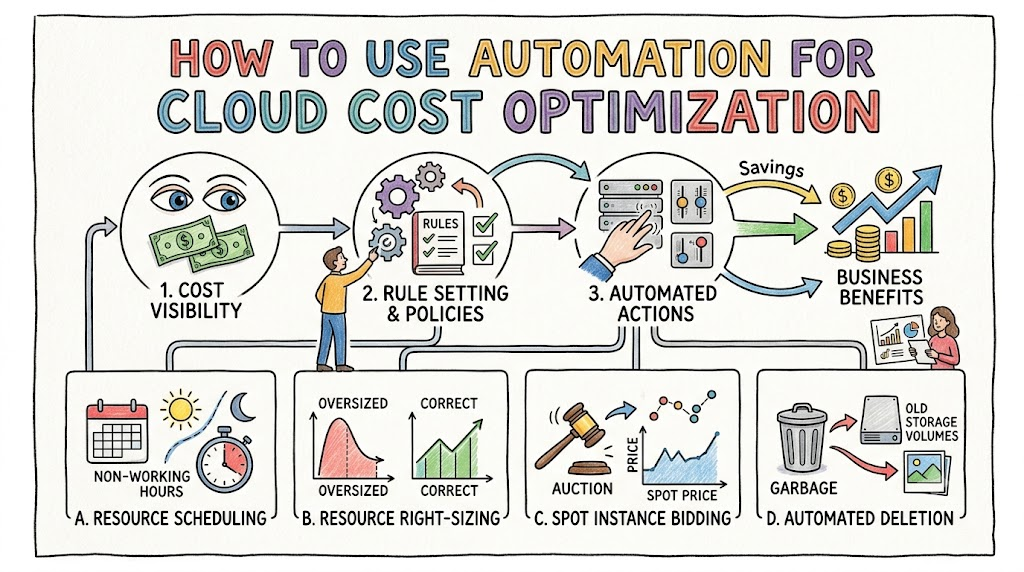
Managing complex infrastructure expenses across modern multi-cloud ecosystems demands programmatic operational governance. Organizations regularly experience substantial budget overruns because manual tracking cannot keep pace with rapid, dynamic provisioning. Consequently, establishing automated financial controls becomes an urgent priority for technology teams aiming to scale efficiently. By connecting infrastructure deployment scripts with real-time financial policies, companies regain total command over operational spending. Adopting modern engineering frameworks from specialized training hubs like Finopsschool empowers technical professionals to implement cost guardrails effortlessly. This systematic approach ensures that every provisioned virtual machine, storage volume, and container cluster aligns directly with enterprise performance requirements.
Furthermore, engineering teams no longer view financial management as a slow, manual auditing task that delays feature delivery. Automated routines immediately identify unallocated assets and take corrective measures without requiring manual human oversight. Finance managers gain predictable forecasting insights because policy engines continuously enforce budget boundaries across every production account. Ultimately, programmatic cost governance eliminates expensive waste while preserving application reliability and deployment speed.
Understanding Cloud Financial Operations
Modern cloud platforms allow technical teams to spin up distributed computing resources within a few seconds through automated scripts. However, this flexibility creates significant financial risk when developers provision infrastructure without strict guardrails. Traditional financial reviews occur weeks after resources deploy, which leaves accounting teams handling huge unexpected charges. To solve this problem, organizations must integrate cost-management routines directly into daily deployment pipelines.
Programmatic cloud cost governance combines software-driven automation with organizational accountability to maintain financial discipline. It creates an automated feedback mechanism where finance rules, infrastructure code, and operational telemetry interact smoothly. Instead of relying on periodic reviews, automated engines evaluate infrastructure utilization around the clock. As a result, technical teams continuously eliminate idle capacity without interrupting ongoing development workflows.
Moreover, automated cost management follows three structured phases to drive continuous financial improvement. The initial phase continuously scans infrastructure to deliver instant visibility into resource tags and billing details. Next, the optimization phase executes algorithmic rightsizing, turns off idle assets, and manages storage lifecycles automatically. Finally, the operational phase embeds cost policies into continuous deployment pipelines to prevent wasteful provisioning from ever reaching production.
Key Operational Concepts You Must Know
Automated Tagging Enforcement and Allocation Rules
Accurate spending allocation serves as the primary pillar of cloud cost optimization because unmeasured assets quickly drive unmonitored costs. System administrators must establish automated policies that evaluate tags during deployment and block untagged assets immediately. This programmatic enforcement guarantees that every running resource maps to a defined business unit, owner, or application environment. When automation handles tagging verification, organizations achieve total visibility across sprawling cloud environments.
Additionally, programmatic rules eliminate the confusion caused by orphaned resources running indefinitely in untracked accounts. Finance teams easily assign operational expenses to responsible product teams through real-time telemetry dashboards. Consequently, software teams build natural accountability for their resource footprint without manually filling out inventory spreadsheets. Automated governance turns cost attribution into an effortless, continuous operational standard.
Algorithmic Rightsizing and Resource Scheduling
Automated rightsizing dynamically matches computing capacity to real-time workload requirements, eliminating wasteful over-provisioning. In standard development settings, non-production environments frequently run continuously despite remaining unused outside regular business hours. Automated schedulers can safely power down non-production instances during nights and weekends, slashing compute bills dramatically. Furthermore, machine learning telemetry engines analyze CPU and memory patterns to adjust instance families automatically.
By deploying dynamic scaling rules, systems automatically expand capacity during unexpected traffic spikes and shrink when traffic drops. Removing manual guessing from server sizing protects application stability while capturing substantial recurring savings. This continuous operational tuning ensures that companies pay solely for active consumption rather than idle capacity.
Policy-as-Code and Automated Guardrails
Policy-as-code embeds organizational spending limits directly into developer workflows and infrastructure templates. Development teams review estimated cost changes during the code review process before applying infrastructure modifications. If a proposed deployment exceeds predefined departmental limits, the automated pipeline flags the pull request for mandatory management approval. This proactive approach catches architectural mistakes before they incur real provider charges.
Moreover, automated guardrails actively terminate unauthorized instance families and restrict accidental deployments in expensive geographical regions. These guardrails enforce organizational governance transparently without slowing down daily software delivery. Balancing automated developer freedom with strict programmatic boundaries creates a sustainable, cost-resilient engineering practice.
| Operational Focus | Automation Technique | Core Business Value |
|---|---|---|
| Cost Allocation | Automated Tagging Validation | Total financial visibility and precise team showback |
| Capacity Management | Dynamic Scheduling & Sizing | Immediate reduction of idle non-production compute spend |
| Budget Protection | Policy-as-Code Deployments | Proactive prevention of expensive misconfigurations |
Platform Implementation vs. Culture — What’s the Real Difference?
The Mechanics of Tool Deployment
Platform implementation focuses on installing telemetry agents, configuring reporting software, and integrating cloud provider APIs. Organizations often invest heavily in third-party optimization tools, expecting software alone to solve financial inefficiencies. These platforms excel at processing millions of billing events, flagging spending anomalies, and generating informative executive dashboards. However, deploying optimization software establishes only the technical capability for cost management.
+---------------------------------+       +---------------------------------+
|     Platform Implementation     |  -->  |        Cultural Adoption        |
| (APIs, Metrics & Policy Engines)|       | (Accountability & Team Mindset) |
+---------------------------------+       +---------------------------------+
Without cultural adoption, optimization alerts remain unaddressed in developer inboxes while costs continue to rise unchecked. Tools cannot replace the engineering responsibility required to refactor inefficient architectures or adjust resource allocations. Consequently, relying strictly on automated dashboards creates passive observation rather than active financial governance. High-quality automation tools provide necessary insights, but collaborative human teams must design and maintain the underlying governance rules.
Driving Genuine Behavioral Transformation
Cultural adoption focuses on training engineering teams to view cost efficiency as a core architectural quality metric alongside security and performance. In a mature cloud culture, developers take pride in writing lean code that maximizes infrastructure performance per dollar spent. This behavioral shift requires breaking down organizational silos that historically kept development teams disconnected from corporate finance goals. Continuous training and open communication channels provide the necessary foundation for this organizational change.
When financial managers understand architectural constraints, they establish realistic optimization targets that do not stifle developer experimentation. Concurrently, when software engineers grasp budget realities, they design efficient distributed systems right from the initial planning phase. This mutual understanding creates a high-performing environment where automated governance supports daily technical choices. Culture transforms cost optimization from an administrative enforcement chore into an engineering objective.
Real-World Use Cases of Modern Operations
Automated Container Bin-Packing in Kubernetes Clusters
A high-growth enterprise running hundreds of microservices experienced spiraling container hosting costs due to fragmented cluster allocation. Development teams assigned generous memory and processing requests to their pods, causing nodes to run at less than twenty percent utilization. To resolve this inefficiency, the operations team deployed automated vertical pod autoscalers alongside intelligent bin-packing controllers.
+---------------------------------------+
| Automated Cluster Telemetry Analysis  |
+---------------------------------------+
                    |
                    v
+---------------------------------------+
| Real-Time Resource Limits Adjustment  |
+---------------------------------------+
                    |
                    v
+---------------------------------------+
| Higher Density & Massive Spend Drops  |
+---------------------------------------+
These automated engines continuously monitor container resource usage and dynamically adjust pod allocations to reflect actual demand. Additionally, automated cluster autoscalers consolidate workloads onto fewer physical nodes, powering down excess servers without causing downtime. This intervention resulted in higher workload density and reduced overall container compute expenses substantially.
Event-Driven Remediation for Orphaned Cloud Storage
A software platform company discovered that terminated virtual servers frequently left behind gigabytes of unattached block storage volumes. Engineers repeatedly discarded temporary staging servers while leaving associated storage disks, snapshots, and idle load balancers running. The engineering team resolved this ongoing leak by deploying event-driven serverless functions connected to cloud audit logs.
Whenever an instance terminates, the automated function checks for unattached storage volumes and flags them for scheduled deletion. If the volume remains unattached after five days, the script takes a final archive snapshot and permanently deletes the disk. This automated routine recovered considerable wasted budget monthly while eliminating manual infrastructure cleanup tasks for operations engineers.
Common Mistakes in Operations Engineering
Uncontrolled Automation Loops and Cascading Terminations
An aggressive automation strategy without proper safety boundaries can trigger unintended disruptions across production environments. Poorly configured scripts might identify a mission-critical server as idle during scheduled maintenance windows and terminate it unexpectedly. Furthermore, cascading automation loops can rapidly cycle through instance creations and deletions, generating massive API charges within hours.
To prevent these automation failures, engineering teams must implement strict safety limits and exclusion flags for production workloads. Automation scripts must support dry-run operational modes and gradual rollout stages before applying full deletion privileges. Establishing sensible guardrails ensures that cost optimization routines never compromise system availability.
- Apply protected resource tags to prevent automated deletion scripts from impacting critical production systems.
- Test automation rules thoroughly in sandbox environments before rolling out changes to live infrastructure.
- Configure automated circuit breakers to stop scaling actions when anomaly thresholds trigger.
Over-Automating Workloads Without Considering Licensing Models
Many organizations automate dynamic scaling without accounting for third-party commercial software licensing constraints. For example, spinning up database nodes dynamically can violate software licensing terms, resulting in severe compliance penalties. Similarly, migrating workloads rapidly between instance types can cause licensing mismatches that outweigh any compute infrastructure savings.
+--------------------------------------+
| Automated Scaling Event Triggered    |
+--------------------------------------+
                   |
                   v
+--------------------------------------+
| Automated Software License Check     |
+--------------------------------------+
                   |
                   v
+--------------------------------------+
| Safe Scaling Without Contract Breach |
+--------------------------------------+
Engineering teams must incorporate software licensing variables directly into their automation decision matrices. System architects must review licensing structures alongside compute pricing before deploying aggressive automated scaling rules. This balanced verification keeps systems optimized while preventing costly compliance breaches.
How to Become an Operations Expert — Career Roadmap
Mastering Automation Tooling and Infrastructure as Code
Developing an impactful career in automated cloud financial operations requires advanced knowledge of infrastructure automation frameworks. Professionals must become proficient in declarative configuration tools, container orchestration platforms, and serverless scripting languages. Gaining expertise in cloud provider APIs allows you to construct custom compliance policies and automated remediation workflows. Furthermore, obtaining recognized cloud architecture certifications validates your technical engineering foundation.
- Master infrastructure-as-code tools to integrate programmatic cost controls directly into delivery pipelines.
- Learn modern scripting languages to build custom serverless functions for event-driven resource management.
- Achieve advanced cloud certifications to build technical credibility across enterprise engineering teams.
Developing Analytical Acumen and Cross-Functional Leadership
Technical skills must be complemented by business acumen and the ability to articulate architectural value clearly to corporate executives. You must understand unit economics, corporate financial models, capital allocation principles, and variance analysis. This cross-functional knowledge allows you to translate technical metrics into clear business insights that leadership values. Becoming a proficient communicator turns specialized engineers into essential strategic advisors within large organizations.
- Study corporate financial models to align engineering automation projects with top-level business objectives.
- Define business unit metrics that track cloud expenses alongside customer acquisition and revenue growth.
- Conduct educational workshops to cultivate cost awareness and best practices across development groups.
FAQ Section
- How does automated cloud cost management differ from basic automated alerts?
Automated alerts simply notify engineering teams when spending exceeds defined thresholds, still requiring manual human intervention to investigate and fix issues. In contrast, automated cost management actively executes corrective actions, such as shutting down idle instances or rightsizing over-allocated resources programmatically.
- Can automated rightsizing cause performance issues for live production applications?
Aggressive rightsizing can impact production performance if policies do not include adequate buffer limits or baseline metrics. Organizations should test rightsizing policies in staging environments first and maintain resource buffers to handle unexpected traffic spikes safely.
- What is the safest way to start introducing automation into an enterprise cloud environment?
The safest approach begins by automating non-destructive actions, such as generating cost allocation reports and notifying owners of unattached disks. Once teams build confidence in these automated routines, they can safely introduce automated scheduling for non-production environments and event-driven cleanup scripts.
- How do policy-as-code frameworks prevent unexpected cloud spending overruns?
Policy-as-code frameworks evaluate proposed infrastructure changes against established financial rules during continuous integration checks. If a developer attempts to deploy an unapproved instance type or omits mandatory ownership tags, the pipeline automatically blocks the deployment until resolved.
- Why is automated resource scheduling especially effective for cost optimization?
Non-production environments such as development and testing servers typically sit idle outside standard business hours. Automatically stopping these resources during nights and weekends reduces compute uptime significantly, yielding immediate savings without affecting developer productivity.
Final Summary
Deploying programmatic automation for cloud cost optimization is an essential operational strategy for modern engineering teams. By replacing manual reviews with policy-as-code, dynamic scaling, and event-driven cleanup routines, companies systematically eliminate infrastructure waste. This automated framework balances developer agility with strict financial governance, ensuring that every deployment delivers measurable business value. Organizations that embrace automated cost optimization build resilient, high-performing architectures capable of scaling efficiently.