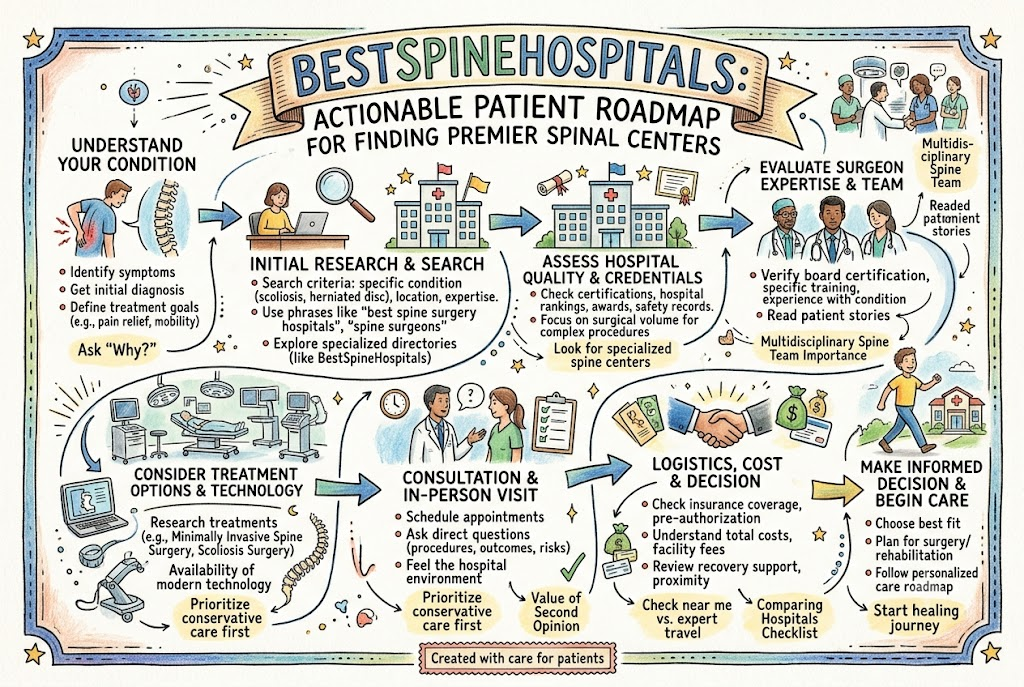
Persistent back stiffness, radiating nerve distress, and restricted movement create immense emotional and physical hurdles for patients every single day. Finding an elite medical facility represents your most crucial milestone toward rebuilding strength and securing dependable, permanent physical relief. Navigating complex diagnostic scans, surgical options, and hospital track records often leaves patients feeling uncertain about their next medical move.
BestSpineHospitals transforms this intricate search by delivering direct, objective evaluations of premier healthcare networks and surgical centers across the globe. Our platform helps you compare safety ratings, explore advanced robotic technologies, and connect directly with top-tier medical specialists so you can guide your personal recovery with clarity and confidence.
Understanding Spine Care Before Choosing a Hospital
Effective spine care follows a structured clinical progression that pinpoints the root cause of nerve and bone issues before anyone considers surgical options. Top-tier medical institutions emphasize conservative treatment pathways first, prescribing targeted physical therapy programs, posture training, core conditioning, and precision fluoroscopic pain injections.
Specialists utilize advanced diagnostic imaging—such as dynamic weight-bearing X-rays and high-resolution MRI scans—to map neural pathways accurately. When non-surgical methods fail to relieve chronic nerve compression, surgical intervention becomes a logical, carefully measured next step. Following this disciplined assessment sequence prevents rushed operations and ensures that your spine receives appropriate, step-by-step clinical attention.
What Makes a Spine Hospital Worth Considering?
Premier medical institutions separate themselves from standard healthcare clinics through uncompromising clinical protocols, low complication rates, and modern technological infrastructure. Specifically, the best spine hospitals maintain dedicated neuro-spine intensive care units, high-definition microscopic surgical suites, and dedicated on-site physical rehabilitation facilities.
Furthermore, leading institutions retain board-certified specialists who demonstrate proven track records in resolving complex spinal conditions. These centers publish clinical success metrics openly, giving you clear visibility into their surgical outcomes and infection controls. Partnering with a fully transparent, high-volume center ensures that you receive high-quality care during every phase of your recovery.
How to Find the Best Spine Surgery Hospitals
Discovering recognized best spine surgery hospitals involves verifying hospital accreditations, procedural frequencies, and authentic patient feedback. Start your research by confirming that the facility maintains rigorous national and international healthcare accreditations that audit patient safety and sanitary protocols.
Moreover, hospitals that perform hundreds of complex spinal reconstructions each year consistently achieve superior procedural precision, fewer unplanned readmissions, and lower infection rates. Independent medical registries and verified clinical outcome reports also show how effectively a clinical team handles challenging structural revisions. Evaluating these critical data points gives you the confidence to select a facility that meets the highest surgical standards.
Choosing the Best Hospital for Spine Surgery
Selecting the best hospital for spine surgery requires aligning your personal diagnosis with an institution’s specific surgical expertise. Certain centers specialize heavily in motion-preserving artificial disc replacements, while other programs lead the field in complex adult scoliosis reconstructions.
| Care Parameter | Sub-Specialized Spine Institute | Standard General Hospital |
|---|---|---|
| Primary Clinical Focus | Treats spine pathologies and neurological disorders exclusively | Manages broad systemic medical conditions |
| Surgical Infrastructure | Features intraoperative 3D CT, robotics, and neuromonitoring | Operates standard general-purpose surgical suites |
| Rehabilitation Services | Employs dedicated spine-specific physical therapists | Provides general occupational therapists |
| Annual Case Volume | Completes a high volume of complex spinal cases | Handles occasional or low-volume spine procedures |
Always check whether the hospital runs multi-channel intraoperative neural monitoring to safeguard your spinal cord and nerve roots during procedures. Advanced surgical suites also deploy 3D robotic arm guidance systems to ensure millimeter-level accuracy during implant placement. These critical technological safeguards minimize surgical trauma and promote rapid post-operative recovery.
Searching for the Best Spine Hospital Near Me
When acute disc extrusion or sudden nerve pain strikes, locating a best spine hospital near me ensures fast clinical evaluation and simplified access to local physical rehabilitation. Choosing a local center eliminates long-distance travel and makes routine follow-up appointments far easier for your care team and family.
Nevertheless, you should never prioritize geographic location over procedural competence. Make sure the local medical center provides around-the-clock emergency neurotrauma coverage and high-resolution diagnostic imaging. If nearby clinics lack full-scale spine surgery hospitals capabilities, travel to a comprehensive regional specialty hospital to protect your future spinal mobility.
Understanding Minimally Invasive Spine Surgery
Breakthroughs in surgical engineering have modernized clinical practice by avoiding extensive muscle cutting and heavy blood loss. When researching the best hospital for minimally invasive spine surgery, seek out surgical teams that specialize in endoscopic decompression, specialized tubular dilation, and percutaneous fixation.
Surgeons access the damaged vertebrae through keyhole incisions, keeping healthy surrounding muscle tissues and ligaments intact. As a result, patients report significantly less post-operative pain, require fewer narcotics, and resume their daily routines within a few short weeks. These micro-surgical options represent an outstanding alternative for eligible individuals seeking swift, low-impact relief.
Finding the Best Hospital for Scoliosis Surgery
Correcting complex spinal curves demands meticulous pre-operative 3D computer planning, exceptional surgical craftsmanship, and specialized post-operative rehabilitation. The best hospital for scoliosis surgery utilizes multi-angle intraoperative imaging, custom surgical navigation guides, and real-time sensory-evoked neural monitoring.
Additionally, top deformity centers assemble dual-surgeon teams that pair seasoned orthopedic specialists with neurosurgical experts. This collaborative approach maximizes structural curve correction while fiercely protecting spinal cord function and postural balance. Dedicated spine therapists then guide patients through targeted core-strengthening exercises to secure lifelong spinal health.
Finding the Best Hospital for Slipped Disc Treatment
A herniated or ruptured disc can compress nearby nerve roots, triggering radiating leg pain, severe numbness, and muscular weakness. Selecting the best hospital for slipped disc treatment means choosing a center that offers both advanced conservative therapies and specialized microsurgical decompression.
Expert clinical teams initially utilize fluoroscopy-guided spinal injections, mechanical traction, and supervised physical conditioning to calm inflamed nerves naturally. If severe symptoms persist, specialists perform targeted microdiscectomy, endoscopic discectomy, or motion-preserving artificial disc replacement. Leading centers customize every step of care to your physical lifestyle, restoring nerve vitality and preventing recurrent herniations.
The Role of Spine Surgeons
Your surgeon’s technical skill and clinical decision-making directly dictate your surgical results and recovery speed. The best spine surgeons complete rigorous, dedicated fellowship training in either orthopedic spine surgery or neurosurgery, mastering advanced reconstructive techniques.
- Fellowship Certification: Completed dedicated sub-specialty clinical training focused entirely on intricate spinal disorders.
- High Procedure Frequency: Performs your designated procedure weekly, maintaining razor-sharp surgical precision and quick judgment.
- Outcome Transparency: Openly shares personal complication rates, fusion success percentages, and typical recovery milestones.
- Active Academic Contributions: Publishes research studies, attends international medical symposiums, and mentors upcoming surgeons.
Skilled surgeons communicate clearly regarding non-operative alternatives, recovery expectations, and realistic post-surgery lifestyle adjustments. Building a relationship with a communicative, expert surgeon gives you confidence throughout your entire healthcare journey.
Why a Multidisciplinary Spine Team Matters
Complex spinal issues demand coordinated insights from diverse clinical specialists rather than an isolated medical opinion. The best spine treatment hospitals build integrated care panels that combine neurosurgeons, orthopedic surgeons, physiatrists, anesthesiologists, and physical rehabilitation therapists.
This collaborative model guarantees that multiple specialists review your diagnostic imaging and clinical history from different viewpoints. A physiatrist might recommend tailored neurological conditioning, while a surgeon evaluates structural alignment and spinal cord decompression. Consequently, this team-based strategy eliminates diagnostic blind spots and creates a balanced, comprehensive recovery plan tailored to your body.
Questions to Ask During a Spine Hospital Consultation
Direct, informed communication during specialist appointments ensures that you take full ownership of your treatment plan. Bring a focused list of crucial questions to your next specialist consultation:
- What exact anatomical pathology causes my primary symptoms?
- How many times have you personally performed this specific procedure?
- What conservative therapy pathways should we exhaust before considering an operation?
- What intraoperative neural monitoring technology will protect my nerves during surgery?
- What specific rehabilitation timeline should I anticipate following discharge?
Record detailed notes during your appointment and bring a family member along to help process clinical instructions. Asking clear questions eliminates misunderstandings and establishes realistic expectations for your recovery timeline.
Why a Second Opinion Can Be Valuable
Spine surgery represents a life-altering healthcare step, making independent verification of your treatment strategy essential. Consulting an independent expert confirms the accuracy of your diagnosis and verifies that your care team explored every non-operative option.
Moreover, different specialists may propose alternative treatments, such as dynamic motion-preserving disc replacement instead of traditional fusion. Securing a second opinion provides peace of mind, confirming that your treatment plan offers the highest probability of pain-free recovery. Reputable surgeons actively encourage second opinions, knowing that well-informed patients achieve smoother surgical recoveries.
Comparing Hospitals for International Spine Treatment
Traveling abroad for medical treatment allows patients to access world-class surgical talent, bypass long procedure waitlists, and significantly lower overall medical expenses. When reviewing international facilities, verify that the hospital holds globally respected healthcare accreditations.
Furthermore, leading international hospitals maintain dedicated international patient departments that handle language translation, medical visa processing, airport logistics, and specialized local accommodations. Ensure that your international clinical team provides structured telemedicine follow-ups once you travel home. Rigorous research into cross-border care allows you to obtain top-tier surgical treatments while keeping healthcare costs under control.
Understanding Hospital Quality
Accurately evaluating hospital quality requires looking past marketing claims to analyze verified clinical performance indicators. Top-rated medical centers maintain low surgical site infection rates, minimal 30-day readmissions, and outstanding long-term fusion success rates.
Additionally, evaluate nurse-to-patient staffing ratios within intensive care units and recovery floors, as attentive nursing care prevents serious complications. Reputable institutions submit their patient outcome data to independent national spine registries for continuous peer review. Analyzing these transparent metrics provides an objective picture of institutional excellence.
Cost Should Be Considered Carefully
Spinal care involves multiple billing components, including surgeon fees, facility charges, implant costs, anesthesia administration, and physical therapy sessions. Request an itemized, all-inclusive financial estimate from the hospital billing department before agreeing to any procedure.
Contact your health insurance provider to verify policy coverage, network agreements, pre-authorization requirements, and out-of-pocket maximums. If you pay privately or travel internationally, ask the hospital for bundled pricing packages that cover the entire episode of care. Direct financial planning eliminates surprise expenses and lets you focus entirely on your physical recovery.
Preparing for a Spine Hospital Visit
Organized preparation streamlines your initial clinical consultation and gives your medical team complete diagnostic context. Assemble all relevant medical documentation, including physical therapy notes, previous surgical summaries, and digital MRI or CT scans.
Compile a comprehensive list of all daily prescription medications, over-the-counter supplements, and known allergies. Furthermore, maintain a detailed symptom diary noting specific body movements or activities that worsen or relieve your pain. Bringing this structured medical history enables your specialist to design a precise, highly personalized diagnostic and treatment program.
Warning Signs That Require Prompt Medical Attention
While many spinal conditions progress gradually, certain severe neurological symptoms require immediate emergency evaluation. Delaying intervention for acute nerve compression can cause permanent motor deficits or irreversible loss of bodily function:
- Sudden Loss of Incontinence Control: Inability to control bowel or bladder function, indicating acute cauda equina syndrome.
- Progressive Motor Weakness: Sudden onset of foot drop or difficulty lifting your arms and maintaining balance.
- Saddle Numbness: Complete loss of sensation across your buttocks, perineal area, or inner thighs.
- Severe Back Pain with Fever: Intense spinal discomfort accompanied by unexplained high fevers, signaling a spinal infection.
If you experience any of these red-flag symptoms, travel immediately to the closest emergency room for urgent diagnostic imaging and surgical decompression.
How BestSpineHospitals Can Support Your Research
Sorting through hundreds of healthcare websites, clinical accreditations, and doctor profiles wastes valuable energy when you are suffering from chronic pain. BestSpineHospitals simplifies this discovery process by consolidating verified information on top spine institutions, surgical innovators, and cutting-edge treatments into an intuitive directory.
Patients can compare facility features, examine minimally invasive surgical approaches, and evaluate specialized programs for complex disc problems or spinal deformities. By presenting transparent medical overviews and comprehensive facility profiles, our platform bridges the gap between complex clinical data and your personal treatment decisions. Utilizing these comparative resources empowers you to select an outstanding medical center that aligns with your recovery goals.
A Practical Checklist for Comparing Spine Hospitals
Use this practical, step-by-step checklist to systematically compare prospective spine centers before confirming your procedure:
- Verify national and international clinical safety accreditations.
- Confirm your lead surgeon’s board certification, fellowship training, and procedural volume.
- Ensure the facility utilizes real-time intraoperative neural monitoring and 3D robotic guidance systems.
- Check for an integrated multidisciplinary team with dedicated on-site physical rehabilitation specialists.
- Review the hospital’s published infection rates and 30-day readmission statistics.
- Obtain a written, itemized cost estimate covering all surgical and post-operative phases.
- Confirm structured telemedicine follow-up options for your recovery period.
Frequently Asked Questions About BestSpineHospitals
1. What distinct advantages does BestSpineHospitals offer to patients?
Our platform organizes comprehensive hospital data, specialist credentials, and procedural comparisons, enabling patients to identify elite spine care centers worldwide efficiently.
2. When does a doctor recommend surgery over conservative treatments?
Doctors recommend surgery when progressive neurological deficits appear or when structured non-operative therapies fail to relieve debilitating pain after several months.
3. What is the difference between an orthopedic spine surgeon and a neurosurgeon?
Orthopedic spine surgeons specialize primarily in structural alignment and deformity corrections, whereas neurosurgeons specialize in delicate spinal cord decompression and neural tumor resections.
4. How can I find out if I qualify for minimally invasive spine surgery?
Your spine specialist determines candidacy based on diagnostic imaging scans, spinal stability, body habitus, and previous surgical history.
5. Why is intraoperative neuromonitoring essential during spine surgery?
This technology continuously monitors electrical signals along your spinal nerves, immediately alerting the surgical team to prevent accidental nerve trauma.
6. What main factors determine the final cost of spinal surgery?
Total expenses depend on surgical complexity, required implant systems, length of hospital stay, geographic location, and insurance coverage terms.
7. How long does recovery take following a spinal fusion?
Solid bone fusion takes several months, though most patients return to light daily activities within four to six weeks under physical therapy guidance.
8. Should I always seek a second surgical opinion?
Yes, getting a second opinion confirms diagnostic accuracy, validates the necessity of the procedure, and introduces alternative surgical techniques.
9. What criteria define a high-quality spine hospital?
Key benchmarks include recognized healthcare accreditations, high annual surgical volumes, low infection rates, dedicated neuro-intensive care, and comprehensive rehabilitation services.
10. How do top hospitals assist international medical travelers?
Top international facilities maintain dedicated patient coordination departments that arrange medical visas, travel planning, airport logistics, and continuous translation services.
Taking Charge of Your Spinal Health and Mobility
Achieving lasting relief from debilitating spinal disorders requires decisive patient advocacy, an accurate diagnosis, and an exceptional clinical team. Whether you manage an acute slipped disc, a complex scoliosis deformity, or chronic spinal stenosis, picking a specialized medical center lays the groundwork for permanent recovery.
Dedicate the necessary time to review hospital credentials, consult with fellowship-trained specialists, and discuss all conservative and surgical alternatives thoroughly. By utilizing structured comparative tools and remaining proactive about your care, you can select a premier medical center that restores your mobility and revitalizes your active lifestyle.