Introduction
Rapid market shifts force executive teams to upgrade their foundational software stacks proactively. When fragile systems throttle delivery speed, engineering morale drops and valuable customer trust erodes. Consequently, visionary executives choose to overhaul their core codebases to safeguard operational momentum. Partnering with seasoned infrastructure specialists enables organizations to dismantle technical bottlenecks and build resilient, automated delivery channels.
Furthermore, authentic modernization demands clear cultural habits, robust cloud systems, and disciplined automation. When technical leaders harmonize measurable business milestones with modern platform practices, teams ship features effortlessly. By eliminating operational drag and streamlining development pathways, forward-thinking enterprises deploy reliable applications quickly while controlling operational expenses.
The Real Challenge: Building Technology That Can Keep Up
Fast-growing platforms inevitably hit architectural bottlenecks as user numbers rise. Technical debt accumulates when teams prioritize rapid feature delivery over solid foundational patterns. As a result, software performance degrades, outages become common, and customer churn increases significantly.
Moreover, engineering velocity drops when legacy monoliths resist rapid code deployment and flexible iteration. To resolve these friction points, organizations must adopt resilient engineering designs that support modular changes without system instability.
- Architectural Rigidity: Tightly coupled code prevents independent module deployments and slows teams down.
- Operational Drag: Manual infrastructure setups drain senior engineering hours and create delivery delays.
- Security Vulnerabilities: Outdated system components expose critical customer data to emerging threats.
AI Is Moving From Experiment to Everyday Business
Artificial intelligence has rapidly shifted from isolated lab experiments into production-grade systems. A dedicated AI Software Development Company builds practical models that directly solve business problems instead of chasing fleeting hype. Furthermore, integrating smart predictive logic inside daily workflows allows teams to automate repetitive tasks and optimize operational decisions.
However, achieving practical AI implementation requires clean internal datasets, strong governance, and robust monitoring frameworks. When organizations prioritize foundational data engineering, their algorithms deliver consistent business outcomes rather than inaccurate outputs. In practice, businesses transition from curious experimentation to sustained commercial advantage.
What Can Generative AI Actually Do for Your Organization?
Many leaders understand that intelligent models boost productivity, yet they struggle to find concrete implementation areas. Professional Generative AI Development Services solve this dilemma by integrating customized large language models, intelligent search, and autonomous agents into business workflows.
Consequently, customer support channels handle complex queries instantly through context-aware agents, while developers speed up routine programming tasks. In addition, intelligent document search unlocks hidden insights buried within enterprise records, slashing turnaround times across operations.
| AI Capability | Primary Business Function | Operational Impact |
|---|---|---|
| Intelligent Search | Enterprise data indexing | 70% faster internal document retrieval |
| Autonomous Agents | Workflow execution | Automated routine ticket triage |
| Contextual NLP | Customer interactions | Real-time multilingual customer support |
Custom Software: When Off-the-Shelf Tools Aren’t Enough
Pre-packaged SaaS software often works well initially, but unique business processes eventually outgrow rigid software templates. A trusted Custom Software Development Company engineers bespoke digital tools tailored directly to distinctive business logic and workflow demands.
Therefore, developing tailored web apps, mobile solutions, and enterprise APIs allows teams to eliminate awkward manual workarounds. Furthermore, custom platforms let organizations own their digital assets, adapt rapidly to market shifts, and avoid costly licensing fees.
- Modular Architecture: Isolating business features into distinct services prevents system-wide disruptions during updates.
- Bespoke Data Models: Structuring database schemas specifically around company logic eliminates awkward data conversions.
- Proprietary Control: Retaining total code ownership guarantees independence from third-party vendor roadmaps.
Building a SaaS Product That’s Ready to Scale
Launching a resilient software service demands careful attention to multi-tenant architectures and data isolation. An experienced SaaS Product Development Company guides founders through product ideation, MVP creation, subscription workflows, and continuous enhancement.
Furthermore, weak initial designs frequently lead to noisy-neighbor issues where one heavy tenant drains shared computing resources. To guarantee uninterrupted performance, engineering teams build modular microservices that scale horizontally on demand.
- Tenant Data Isolation: Enforce rigorous role-based encryption models to keep customer records private.
- Dynamic Subscription Engines: Integrate flexible billing tiers that adapt seamlessly as clients expand.
- Frictionless API Integrations: Facilitate easy connections with major third-party enterprise tools.
Cloud Without the Complexity: What Businesses Should Get Right
Managing modern multi-cloud footprints quickly becomes overwhelming when architectural discipline is absent. Through structured Cloud Consulting Services, enterprises design resilient environments across AWS, Azure, and Google Cloud while avoiding vendor lock-in.
Moreover, unmonitored cloud resources often trigger budget overruns that alarm financial leaders. Implementing infrastructure-as-code and automated rightsizing ensures your applications run lean, resilient, and fully compliant with security mandates.
- Centralized IAM Policies: Eliminate orphaned privileges by enforcing zero-trust access controls across clusters.
- Automated Cost Governance: Terminate idle development environments outside business hours to curb expenses.
- Multi-Region Failover: Maintain high availability during regional provider outages through automated DNS routing.
Faster Releases, Fewer Bottlenecks: Where DevOps Makes a Difference
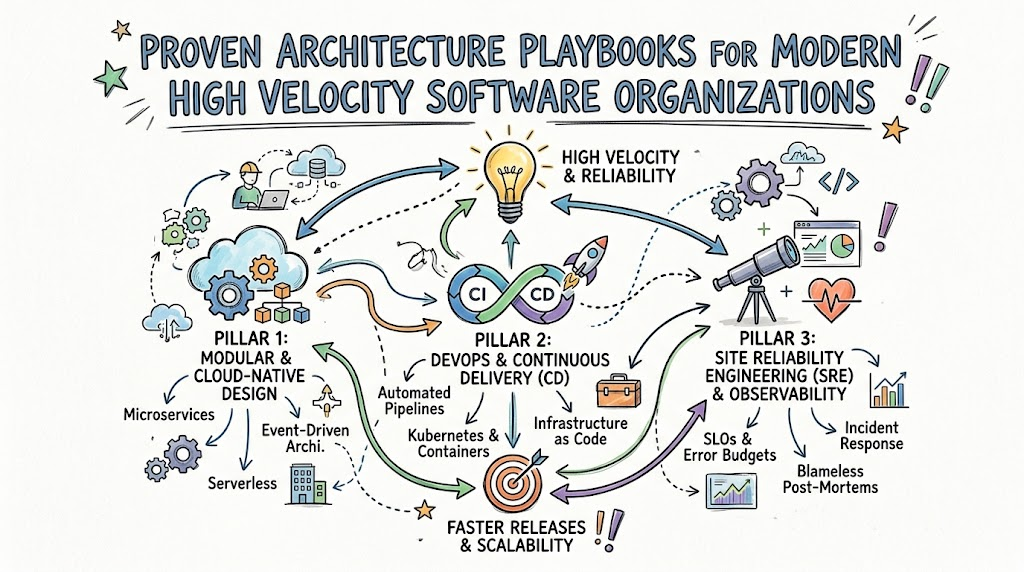
Software releases should represent calm, routine events rather than stressful midnight firefighting marathons. Comprehensive DevOps Consulting Services eliminate delivery bottlenecks by implementing robust CI/CD pipelines, GitOps workflows, and automated Kubernetes orchestration.
Consequently, developers commit clean code with total confidence while automated pipelines test, containerize, and deploy artifacts safely. Furthermore, continuous security testing prevents vulnerabilities from reaching production environments undetected.
- Automated Linting and Testing: Running comprehensive test suites automatically on every pull request stops broken code early.
- Standardized Containerization: Packaging software with isolated dependencies eliminates runtime discrepancies across environments.
- Declarative GitOps Pipelines: Managing cluster states via versioned repositories makes rollbacks rapid and audits effortless.
Reliability by Design: How SRE Keeps Digital Services Running
Uptime requires proactive operational design rather than reactive emergency responses to outages. Experienced SRE Consulting Services establish clear Service Level Objectives (SLOs) and Error Budgets to balance product velocity with platform resilience.
Additionally, structured incident management protocols ensure engineers learn from downtime through blameless post-mortems instead of assigning individual blame. By automating recovery procedures and capacity planning, teams resolve anomalies before real customers experience system degradation.
- Actionable Observability: Focus telemetry dashboards on user-facing indicators rather than noisy background infrastructure alerts.
- Error Budget Governance: Pause risky production deployments whenever error consumption surpasses acceptable operational thresholds.
- Chaos Engineering Audits: Test system recovery proactively by introducing simulated component failures during scheduled drills.
Give Developers a Better Way to Build With Platform Engineering
Developer friction often peaks when engineers must navigate dozens of disconnected deployment tools independently. Modern Platform Engineering Services solve this cognitive overload by designing standardized internal developer portals with self-service infrastructure.
Therefore, engineers spin up secure testing environments within minutes using curated templates rather than waiting for operations tickets. In turn, standardized golden paths boost productivity while guaranteeing organizational security and operational compliance.
| Development Approach | Infrastructure Provisioning | Deployment Velocity | Compliance Risk |
|---|---|---|---|
| Ad-Hoc Ticket Queue | Manual ops approval | Days to weeks | High drift potential |
| Internal Developer Portal | Self-service automated | Minutes | Standardized & secure |
Digital Transformation Without Losing Sight of Business Goals
Technical upgrades produce minimal value if they remain detached from broader commercial objectives. Skilled Digital Transformation Consulting bridges the gap between high-level business strategy and ground-level technical implementation.
Furthermore, seasoned enterprise consultants evaluate organizational workflows, identify legacy drag, and chart clear modernization roadmaps. Consequently, companies modernize their core infrastructure deliberately while keeping operational disruptions to an absolute minimum.
- Strategic Alignment: Map every technical refactoring project directly to clear customer experience metrics.
- Iterative Modernization: Migrate legacy systems progressively using strangler-fig patterns instead of risky big-bang cutovers.
- Cultural Enablement: Train internal teams alongside implementation so new operational practices endure long-term.
Why Your Engineering Team Still Matters in an AI-First World
Automated tools and smart algorithms cannot replace deep human problem-solving and architectural judgment. High-impact Corporate DevOps Training equips internal engineering staff with modern proficiencies in Kubernetes, SRE, generative AI, and platform design.
Moreover, investing directly in workforce upskilling fosters higher retention and empowers developers to master advanced production systems. When teams continuously learn new methodologies, they drive internal innovation and solve complex platform issues with confidence.
Why Cotocus Can Be a Strategic Technology Partner for Growing Businesses
Navigating modern software complexity requires specialized engineering experience across multiple disciplines simultaneously. Cotocus offers integrated expertise across artificial intelligence, enterprise platforms, cloud architecture, and modern DevOps operations.
Furthermore, their engineering teams collaborate closely with internal stakeholders to build scalable digital ecosystems tailored to real operational needs. By combining hands-on technical execution with high-level advisory guidance, Cotocus empowers organizations to scale sustainably.
Frequently Asked Questions About Cotocus
1. Which core technology services does the engineering team deliver?
Specialists build customized enterprise platforms, production AI workflows, resilient multi-cloud architectures, CI/CD automation pipelines, and centralized developer portals.
2. Where does generative artificial intelligence deliver the strongest business value?
Engineers construct autonomous workflow bots, contextual data search pipelines, and automated customer care engines that eliminate manual administrative toil.
3. Which cloud environments do their consultants support?
Architects modernize, secure, and manage enterprise workloads across Amazon Web Services, Microsoft Azure, and Google Cloud Platform.
4. How do their engineers solve SaaS scalability bottlenecks?
Developers design modular microservices, isolate multi-tenant databases, and integrate automated subscription billing that easily handles rising traffic loads.
5. What operational benefits does an internal developer platform provide?
Internal developer platforms supply automated self-service environments that decrease infrastructure wait times from several days to just a few minutes.
6. Which practices ensure high reliability across critical services?
Reliability engineers define strict Service Level Objectives, govern error budgets, configure real-time telemetry alerts, and execute automated failover workflows.
7. Does the company offer upskilling for existing engineering staff?
Certified instructors deliver intensive corporate workshops covering Kubernetes, cloud engineering, automated delivery pipelines, and site reliability practices.
8. Why should companies build bespoke software instead of buying pre-packaged tools?
Custom applications match proprietary operational processes perfectly, giving enterprises full source code control without ongoing third-party licensing expenses.
9. How do their consultants modernize legacy monoliths safely?
Architects use incremental strangler-fig patterns to decouple services systematically, keeping customer-facing features stable and eliminating operational downtime.
10. How can business leaders initiate an engineering collaboration?
Organizations schedule technical discovery calls to arrange architectural audits, staff training programs, managed cloud rollouts, or dedicated sprint cycles.
Final Thoughts
Dynamic digital markets demand proactive leadership, durable architectures, and continuous technical evolution. Sticking with brittle legacy monoliths or uncoordinated cloud tools inevitably cripples operational agility and bloats infrastructure expenses.
Conversely, embracing developer self-service platforms, automated delivery channels, and production-grade machine learning models positions organizations ahead of competitors. By prioritizing foundational engineering quality and fostering ongoing team upskilling today, proactive companies establish a lasting competitive edge.