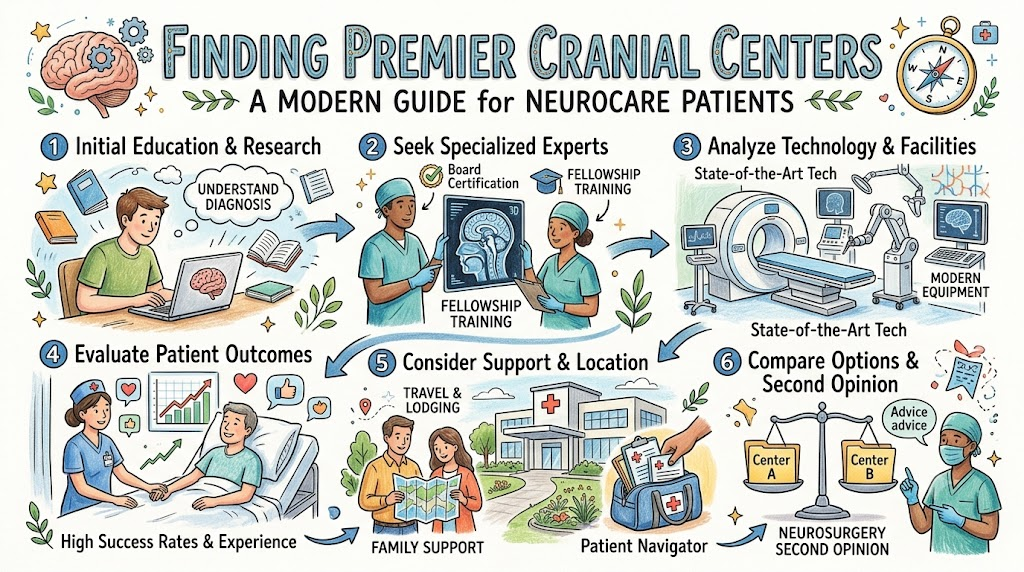
Clinical Compass
Making sound choices during a neurological crisis demands clear, dependable clinical facts. Patients and their loved ones frequently encounter complex medical jargon, unfamiliar surgical strategies, and countless facility choices. BrainSurgeryHospitals resolves this dilemma by delivering direct, structured insights into leading cranial centers, cutting-edge therapies, and respected surgical specialists across the nation.
Thorough research enables families to inspect surgical case numbers, evaluate intensive care capabilities, and review modern surgical options before scheduling any operation. Informed research leads directly to superior operative success and faster physical recovery. This comprehensive roadmap provides the practical direction you need to assess medical centers, select elite surgeons, and pursue optimal health outcomes.
Understanding Neurosurgery and Brain Care
Cranial operations require extraordinary manual dexterity, extensive training, and advanced operating technologies. Specialized neurosurgeons correct severe central nervous system disorders, managing structural, vascular, and oncological challenges with extreme precision.
Surgical experts regularly treat high-stakes brain disorders:
- Primary intracranial malignancies, skull-base meningiomas, and secondary metastatic lesions
- Complex vascular malformations, including arterial aneurysms and arteriovenous defects
- Drug-resistant seizure disorders needing micro-resection or targeted neuromodulation
- Sudden intracranial bleeding, severe hydrocephalus, and complex cranial trauma
Top neurosurgical departments house dedicated neuro-intensive care units where board-certified neuro-intensivists track intracranial pressure and cerebral blood flow constantly. Furthermore, early bedside physical, occupational, and speech therapy accelerates neurological restoration from the very first post-operative day.
How to Research Brain Surgery Hospitals
Evaluating brain surgery hospitals demands a careful analysis of surgical numbers, technological capabilities, and public safety data. High-volume medical centers conduct hundreds of cranial operations annually, driving down complication rates and elevating functional outcomes.
Use these benchmarks to evaluate prospective treatment facilities:
| Core Clinical Standard | Standard Regional Hospital | Elite Neurosurgical Institute |
|---|---|---|
| Annual Cranial Operations | Under 120 procedures | Above 500 complex cranial surgeries |
| Intraoperative Visuals | Standard fluoroscopy/CT | High-field intraoperative MRI and robotic arms |
| Intensive Care Setup | Mixed general surgical ICU | Dedicated 24/7 neuro-intensive care unit |
| Multidisciplinary Panels | Occasional general reviews | Weekly subspecialty tumor and vascular boards |
Leading centers openly publish their surgical success rates, infection statistics, and readmission metrics. Families should discuss these benchmarks directly with patient navigators to ensure the hospital manages complex intraoperative events smoothly.
Choosing Neurosurgery Hospitals and Specialists
Selecting premier neurosurgery hospitals requires partnering with board-certified neurosurgeons and brain surgeons who complete rigorous fellowship training in specific cranial subspecialties. Deep expertise in a targeted field ensures masterful handling of delicate brain structures.
Screen potential surgical candidates using the MASTER criteria:
- M – Multi-modal Tech: Employs intraoperative MRI, neuro-navigation, and dynamic mapping.
- A – Annual Case Count: Demonstrates high operative volume for your specific condition.
- S – Subspecialty Credential: Holds accredited fellowship certifications in cranial subdisciplines.
- T – Transparent Metrics: Shares complication rates and functional preservation outcomes openly.
- E – Empathetic Explanations: Outlines risks, alternatives, and recovery expectations clearly.
- R – Robust Teamwork: Coordinates seamlessly with neuro-oncologists, radiologists, and therapists.
Accomplished surgeons gladly share their surgical statistics and historical case results. Partnering with an experienced, communicative clinician instills deep confidence throughout the surgical journey.
Brain Tumor Treatment and Surgery
Advanced brain tumor treatment removes abnormal growths while protecting essential language and motor pathways. Leading brain tumor surgery hospitals utilize functional brain mapping and intraoperative visualization tools to guide their instruments around healthy neural tissue safely.
Modern tumor resection follows four strategic steps:
- Cortical Tractography: Mapping eloquent speech and motor pathways via functional MRI before operating.
- Fluorescent Visualization: Administering 5-ALA contrast agents that make malignant cells glow brightly under blue light.
- Awake Craniotomy Mapping: Testing language and movement continuously as the surgeon excises tissue.
- Focused Adjuvant Delivery: Administering stereotactic radiosurgery or targeted drug agents to clear surgical margins.
Dr. Julian Vance, an esteemed neuro-oncological surgeon, stresses that pairing maximal tumor resection with customized molecular therapy produces the most favorable long-term survival outcomes. Multidisciplinary cancer care teams ensure patients transition into post-operative adjuvant therapies without unnecessary delays.
Brain Aneurysm Surgery
Neurovascular specialists examine intracranial aneurysms swiftly to decide whether endovascular repair or open microsurgery guarantees superior vascular stability. Surgeons study aneurysm architecture, neck dimensions, and arterial anatomy to determine the safest surgical path.
Clinicians use two primary vascular repair techniques:
- Endovascular Coiling and Flow Diversion: Surgeons steer microcatheters through the arterial system, deploying platinum coils or mesh stents to block arterial flow into the weakened dome.
- Microsurgical Clipping: Surgeons conduct a precise craniotomy to reach the blood vessel directly, fastening a titanium clip across the aneurysm neck to stop blood flow permanently.
Following brain aneurysm surgery, dedicated neuro-ICU clinicians monitor cerebral perfusion continuously to stop vasospasm and ensure healthy arterial circulation.
Epilepsy Surgery
Patients dealing with pharmacoresistant seizures achieve remarkable relief through advanced epilepsy surgery. Detailed diagnostic testing pinpoints the exact seizure focus using continuous video-EEG telemetry, functional mapping, and high-field structural imaging.
Surgeons deploy several specialized methods to halt seizure activity:
- Resective Surgery: Excising the specific, non-critical brain tissue that triggers recurring seizures.
- Laser Interstitial Thermal Therapy (LITT): Ablating seizure foci with pinpoint accuracy through a 3-millimeter scalp entry using MRI-guided laser heat.
- Neuromodulation Implants: Installing responsive neurostimulation (RNS) or deep brain stimulation (DBS) devices to suppress abnormal electrical pulses automatically.
Clinical trials verify that early surgical interventions stop debilitating seizures, safeguard cognitive ability, and restore daily independence far better than continuous medication trials.
Minimally Invasive Brain Surgery
Modern visual optics and micro-instruments make minimally invasive brain surgery a premier choice for deeply located cranial abnormalities. Surgeons travel through natural anatomical corridors or micro-incisions, avoiding large bone windows and excessive brain tissue retraction.
Key minimally invasive strategies include:
- Endoscopic Endonasal Approach: Extracting pituitary adenomas and skull-base lesions directly through the nasal cavity without skin incisions.
- Keyhole Eyebrow Craniotomy: Reaching anterior cranial fossa pathologies through a discreet incision hidden within the natural eyebrow arch.
- Stereotactic Radiosurgery (SRS): Focusing converging radiation beams to destroy deep-seated lesions non-invasively during a single outpatient appointment.
These modern techniques significantly reduce surgical blood loss, ease post-operative pain, and allow patients to leave the hospital within one or two days.
The Role of Diagnostic Testing
Flawless surgical precision begins with thorough diagnostic testing before entering the operating room. Multi-modal diagnostic platforms allow surgical teams to build an accurate 3D model of the patient’s cranial anatomy.
Critical pre-surgical diagnostic evaluations include:
- High-Tesla Structural MRI: Revealing microscopic lesion margins, tumor spread, and tissue swelling.
- Functional MRI (fMRI): Mapping active cortical areas that govern speech production, movement, and comprehension.
- Magnetic Resonance Spectroscopy (MRS): Measuring biochemical compounds to distinguish active tumor tissue from radiation damage.
- Digital Subtraction Angiography (DSA): Delivering dynamic, high-resolution views of intracranial vascular flow.
Surgeons feed these rich diagnostic scans into digital navigation systems, guiding their surgical instruments with sub-millimeter precision throughout the entire operation.
When a Neurosurgery Second Opinion May Help
Obtaining a neurosurgery second opinion is a vital, proactive step for any patient facing an invasive cranial procedure. Independent experts frequently uncover less invasive techniques, clarify ambiguous imaging results, or suggest better treatment timelines.
Seek an independent clinical review when facing these circumstances:
- The proposed plan involves open surgery near eloquent motor or speech areas.
- Pathological interpretations or imaging reads show conflicting or uncertain conclusions.
- The original medical center does not provide minimally invasive, endoscopic, or awake-mapping options.
- The patient requires greater clarity regarding long-term rehabilitation milestones.
Independent surgical evaluations validate treatment plans, confirm diagnostic accuracy, and empower patients to make well-informed healthcare decisions.
Questions to Ask Brain Surgeons and Neurosurgeons
Preparing thoughtfully for surgical consultations guarantees focused, productive conversations with your medical team. Bringing previous scan discs, diagnostic summaries, and a written question list ensures you address every critical matter.
Inquire about these vital clinical details during your consultation:
- How many times do you execute this exact cranial surgery each year?
- What real-time imaging and intraoperative monitoring tools will your team use?
- What specific sensory, motor, or speech risks apply to my condition’s location?
- What percentage of your patients retain complete functional independence after surgery?
- Who directs my post-operative care inside the neuro-ICU immediately after surgery?
- What concrete physical and cognitive recovery milestones should I expect during the first six months?
Comparing these responses across institutions helps families evaluate surgical teams objectively and choose the specialists best suited to their treatment goals.
Preparing for Treatment
Organizing essential logistics prior to hospital admission lowers emotional stress and optimizes surgical recovery. Patients coordinate with surgical teams to adjust medications, complete cardiopulmonary clearances, and build physical endurance.
Essential pre-operative preparation steps include:
- Medication Modifications: Pausing blood thinners, anticoagulants, and unapproved supplements under strict clinical direction.
- Physical Conditioning: Performing gentle breathing routines and light walking to increase lung capacity and stamina.
- Home Adjustments: Preparing ground-floor living spaces and clearing pathways of slip or trip hazards.
- Caregiver Coordination: Designating trusted family members to handle post-operative transport, prescriptions, and daily care.
Addressing these practical tasks early removes daily burdens, letting individuals focus completely on physical healing.
Recovery and Follow-Up
Achieving complete neurological health involves a deliberate, progressive journey supported by rehabilitation experts. Hospital teams track vital signs and intracranial pressures inside the neuro-ICU before transferring patients to post-surgical care floors.
A standard neurosurgical recovery pathway follows these phases:
[Inpatient Neuro-ICU Stage]  -> Constant vital tracking, neurological checks, early bedside mobilization.
[Acute Subacute Rehab]       -> Intensive daily speech, physical, and occupational therapy sessions.
[Home Convalescence]         -> Gradual stamina building, incision care, progressive activity expansion.
[Long-Term Surveillance]     -> Periodic follow-up MRI scans, medication tapering, return to full lifestyle.
Patients must respect physical lifting limits, avoid heavy exertion, and attend every scheduled imaging appointment. Active communication with physical therapists, occupational therapists, and neuropsychologists ensures steady, long-term cognitive and physical recovery.
Using BrainSurgeryHospitals for Healthcare Research
BrainSurgeryHospitals offers a dedicated research directory that simplifies complex healthcare investigations for patients and caregivers. The directory organizes essential facts regarding premier neurosurgical departments, modern operative techniques, and renowned surgical specialists.
The platform provides exceptional healthcare research value:
- Detailed institutional profiles describing advanced operating suites and neuro-ICU facilities.
- Plain-language educational resources explaining complex cranial conditions clearly.
- Step-by-step guidance for organizing medical imaging and requesting second opinions.
- Specialized search filters to identify board-certified surgeons across distinct cranial disciplines.
By uniting scattered clinical details into a single resource, the platform enables families to advocate effectively for the highest standard of neurosurgical care.
Frequently Asked Questions About BrainSurgeryHospitals
- Which specific informational resources does BrainSurgeryHospitals provide?The platform provides in-depth educational overviews covering cranial conditions, surgical options, hospital technologies, specialist credentials, and modern diagnostic tests.
- How can users identify top-performing neurosurgeons through the platform?Users search through detailed provider profiles filtered by surgical subspecialties, annual procedure volumes, board certifications, and advanced facility technologies.
- Does the directory assist individuals in organizing second opinions?The site provides structured checklists that help patients collect imaging files, organize medical summaries, and create focused questions for consulting specialists.
- Does BrainSurgeryHospitals offer direct medical treatment or clinical diagnoses?Every published guide serves educational and research goals only, requiring patients to consult licensed neurosurgical specialists directly for medical care.
- Which major cranial conditions appear across the platform?The directory covers primary and metastatic brain tumors, intracranial aneurysms, arteriovenous malformations, drug-resistant epilepsy, and skull-base disorders.
- How does the platform explain complex minimally invasive procedures?The resource explains modern approaches like keyhole craniotomies, endonasal endoscopic operations, and stereotactic radiosurgery in clear, accessible language.
- Does the platform feature guidance on pre-operative diagnostic tests?Users can explore detailed overviews of functional MRI, CT angiography, magnetic resonance spectroscopy, and intraoperative neuro-monitoring.
- How do caregivers evaluate hospital safety through the directory?The platform highlights vital quality benchmarks, including annual surgery volumes, dedicated neuro-ICUs, nurse staffing levels, and multidisciplinary tumor boards.
- Can caregivers discover resources on post-surgical rehabilitation?The directory outlines recovery timelines, neuro-rehabilitation phases, physical therapy milestones, and home-care adjustments to support families after discharge.
- Do visitors pay any fees to browse the directory?Patients and caregivers access all hospital directories, educational resources, and specialist profiles completely free of charge.
Closing Guidance
Achieving superior neurosurgical outcomes requires meticulous preparation, prompt diagnostic testing, and access to accomplished surgical teams. Modern technological breakthroughs in brain surgery preserve vital cognitive functions and accelerate physical recovery remarkably well. Patients who inspect hospital procedural volumes, confirm specialist subspecialty training, and obtain independent second opinions secure the best clinical pathways. Comprehensive educational resources empower families to navigate difficult choices with steady confidence and achieve optimal long-term health.