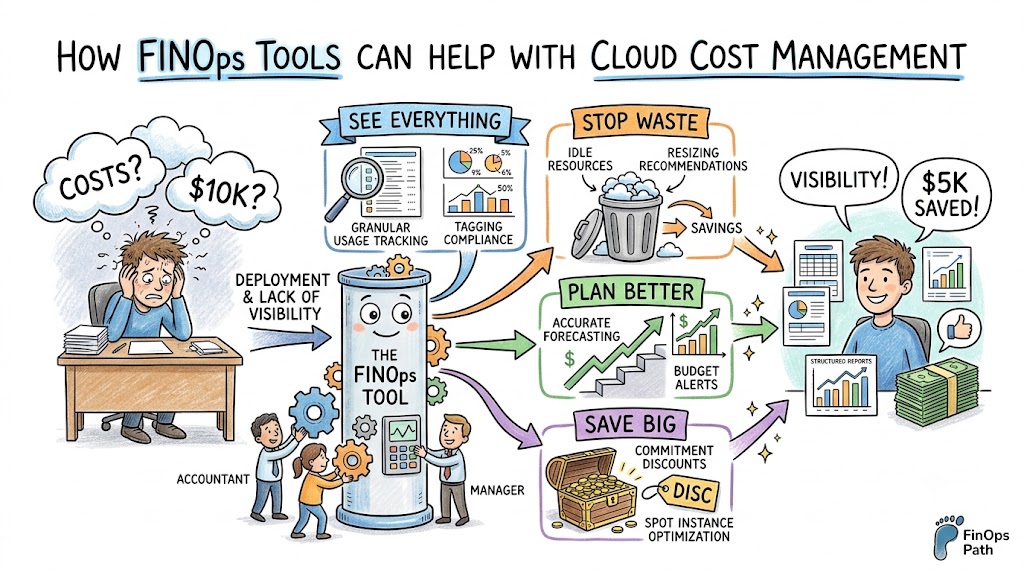
Managing cloud infrastructure requires a balance between engineering velocity and financial accountability. Organizations often scale their cloud environments rapidly, only to face unexpected billing challenges later. This architectural guide explains how to establish visibility, govern spending, and build an automated cloud cost management practice using modern tooling and cultural frameworks.
Consequently, teams can transition from reactive budgeting to proactive architecture optimization. If you want to master these principles systematically, you can explore structured learning paths at Finopsschool to build practical expertise. Let us break down the exact strategies, architectures, and workflows required to control distributed cloud environments at scale.
Key Operational Concepts You Must Know
To manage a distributed cloud footprint effectively, you must first master the fundamental structural pillars that govern modern environments. Cloud spending is no longer a fixed annual capital expense. Instead, it operates as a variable, real-time operational expense driven directly by engineer code deployments.
1. Granular Visibility and Allocation Frameworks
You cannot optimize what you cannot measure. Therefore, creating a rigorous data tagging and resource labeling policy is your absolute first line of defense.
- Cost Centers: Map every single cloud asset to a specific business unit or product line.
- Tagging Compliance: Use automated policies to deny provisioning to any resource lacking mandatory metadata tags like
Owner,Environment, andProject. - Shared Costs: Develop mathematical models to split unallocated platform costs, such as shared Kubernetes clusters or network data transfer fees, across the teams using them.
2. The Cloud Unit Economics Matrix
Evaluating your cloud bill in isolation offers very little business context. Instead, mature operations focus heavily on unit economics, which pairs raw cost data with tangible business metrics.
| Metric Type | Cloud Cost Component | Business Metric Alignment | Operational Goal |
|---|---|---|---|
| Transaction Unit | Database compute and API gateway fees | Total processed customer orders | Decrease infrastructure cost per completed order |
| Delivery Unit | Content delivery network and storage costs | Active concurrent video streams | Optimize data streaming costs per user hour |
| Tenant Unit | Multi-tenant cluster memory and CPU | Total onboarding enterprise clients | Maintain flat infrastructure scale during tenant growth |
3. Continuous Optimization Loops
Optimization is not a one-time quarterly cleanup project. Rather, it must function as a continuous, automated feedback loop integrated into your software delivery pipelines.
First, the system continuously monitors utilization metrics like CPU usage, memory allocation, and network IOPS. Second, analytics engines identify anomalies or over-provisioned assets. Third, automated workflows downsize or terminate idle resources without requiring manual developer intervention.
Platform Implementation vs. Culture — What’s the Real Difference?
Many organizations mistakenly treat cost control as a pure software procurement problem. They believe buying a premium SaaS analytics dashboard will instantly fix their financial leaks. However, tools merely expose the underlying inefficiencies; only human behavioral shifts can permanently resolve them.
       ┌─────────────────────────────────────────────────────────┐
       │             PLATFORM IMPLEMENTATION (The Engine)        │
       │  • Infrastructure Tagging    • Automated Reporting     │
       │  • Budget Alerts & Thresholds • Anomaly Scanners        │
       └────────────────────────────┬────────────────────────────┘
                                    │
                        Feeds Actionable Data To
                                    │
                                    ▼
       ┌─────────────────────────────────────────────────────────┐
       │                 CULTURE FRAMEWORK (The Fuel)            │
       │  • Shared Accountability    • Blameless Cost Reviews    │
       │  • Decentralized Actions    • Continuous Optimization   │
       └─────────────────────────────────────────────────────────┘
The Engineering Paradigm Shift
Platform implementation provides the mathematical telemetry, while culture provides the human accountability. For example, an automated system can easily flag an over-provisioned virtual machine running at five percent CPU utilization.
Nevertheless, if the engineering team feels no personal ownership over their infrastructure spend, that alert will sit unaddressed in a backlog for months. True cultural maturity means developers treat cost as a core architectural constraint, exactly like security, latency, and uptime.
Aligning the Core Stakeholder Personas
To bridge the gap between technical implementation and organizational culture, you must align three distinct pillars of your company.
- Engineering Leads: They focus on feature delivery speed, architectural resilience, and system performance. They need seamless, API-driven cost metrics integrated directly into their existing developer dashboards.
- Finance Officers: They care about predictable budgets, accurate forecasts, and clear return on investment. They require macro-level financial reports, amortized cost views, and variance explanations.
- Product Owners: They bridge the gap by tracking the unit cost of specific application features, ensuring that user growth remains highly profitable.
Real-World Use Cases of Modern Operations
Understanding theoretical frameworks is valuable, but examining concrete, production-grade deployment strategies shows how these concepts operate under heavy load. Let us look at three architectural patterns used to eliminate waste in enterprise environments.
Use Case 1: Automated Lifecycle Management for Dynamic Environments
A global software provider struggled with escalating costs in their non-production environments. Developers regularly spun up complex, multi-tier staging environments for testing but consistently forgot to tear them down before weekends.
To fix this, the team deployed automated scheduling policies combined with aggressive lifestyle tracking. They embedded an expiration timestamp tag into every cloud template.
[Developer Commits Code]
          │
          ▼
[CI/CD Pipeline Provisions Staging Environment]
          │
          ├─► (Appends Mandatory Tag: TTL = 48 Hours)
          │
          ▼
[Automated Cron Engine Scans Active Infrastructure Every Hour]
          │
          ├─► Is TTL Expired? ──► YES ──► [Trigger Graceful Decommissioning Workflow]
          │
          └─► Is TTL Active?  ──► NO   ──► [Allow System to Continue Running]
As a result of this automation, non-production infrastructure expenses dropped by over forty percent within the first month of deployment.
Use Case 2: Multi-Tenant Container Resource Optimization
An enterprise running large-scale Kubernetes clusters noticed that while their cloud provider bills were skyrocketing, actual hardware utilization remained low. Individual application teams were setting massive CPU and memory requests for their containers to handle worst-case scenarios that rarely happened.
The platform team implemented vertical pod autoscaling alongside real-time cluster cost allocation software. The system analyzed historical usage patterns and automatically tuned container resource requests down to realistic operational parameters.
Additionally, they surfaces exact dollar-amount reports for every single microservice namespace. When developers saw exactly how much money their idle configurations were wasting each week, they actively cooperated with the platform team to optimize their deployments.
Use Case 3: Strategic Commitment Architecture and Spot Integration
A data analytics firm processed massive quantities of batch jobs daily. Originally, they ran all workloads on standard, on-demand compute instances, which exposed them to maximum retail pricing models.
They redesigned their compute tier into a multi-layered purchasing model:
- Baseline Layer: They calculated their absolute minimum, non-fluctuating compute usage and covered it with long-term, heavily discounted cloud purchase commitments.
- Variable Batch Layer: They migrated their stateless, fault-tolerant batch processing workloads entirely to spot compute markets, which offered up to a ninety percent discount compared to on-demand pricing.
- Dynamic Auto-Scaling Layer: They reserved standard on-demand pricing exclusively for unpredictable, sudden traffic spikes that exceeded baseline limits.
Common Mistakes in Operations Engineering
Even highly skilled technical teams frequently run into painful traps when attempting to manage distributed cloud budgets. Recognizing these anti-patterns early allows you to build safer, more resilient workflows.
1. Treating Cost Management as a Periodic Incident
Many organizations ignore their cloud invoices until a massive, unexpected billing spike occurs. This sparks a chaotic, reactive scramble where executives demand immediate cuts, forcing engineers to hastily downsize infrastructure without proper testing.
Consequently, this haphazard approach often causes application performance degradation or outright service outages. You must treat financial tracking as a continuous operational health metric, checking it daily rather than treating it as an annual emergency.
2. Over-Automating Destructive Actions
Automation is incredibly powerful, but unchecked destructive automation can cause severe production issues. For instance, writing an unvalidated script that automatically terminates any server running below ten percent CPU can easily bring down your active backup clusters or standby database replicas.
Always build safety guardrails into your systems. Automation should focus primarily on alerting, scheduling non-production environments, and safely modifying non-destructive parameters. Save resource terminations for manual review or highly verified, phased rollouts.
3. Ignoring Data Transfer and Egress Fees
Engineers frequently focus all their optimization energy on compute and storage costs while completely overlooking networking fees. Cloud providers charge heavily for moving data across different regions, zones, and out to the public internet.
       ┌───────────────────────────────┐
       │        REGIONAL BOUNDARY      │
       └───────────────┬───────────────┘
                       │
         Data Sent Across Regions
         (High Egress Tariffs Applied)
                       │
                       ▼
       ┌───────────────────────────────┐
       │   DISTRIBUTED MICROSERVICE    │
       └───────────────┬───────────────┘
                       │
         Unoptimized Database Queries
         (Multi-Gigabyte Payload)
                       │
                       ▼
       ┌───────────────────────────────┐
       │     REMOTE DATABASE NODE      │
       └───────────────────────────────┘
Designing an architecture without considering data pathways can result in networking costs that surpass your actual server costs. Therefore, keep your high-throughput services co-located within the same cloud availability zones whenever possible.
How to Become an Operations Expert — Career Roadmap
Transitioning into a dedicated cloud financial systems architect requires a unique blend of deep software engineering capability, systems infrastructure knowledge, and fundamental business literacy. It is one of the fastest-growing specializations in modern enterprise technology.
Step 1: Deepen Technical Infrastructure Competency
Before you can safely optimize an application, you must know exactly how it handles hardware resource constraints. Focus heavily on mastering container orchestration platforms, serverless architectures, and advanced cloud networking topologies. You need to understand how applications allocate memory, scale horizontally, and interface with distributed databases.
Step 2: Acquire Core Financial Literacy
You must learn to speak the language of corporate finance fluently. Practice analyzing profit and loss statements, understanding depreciation concepts, mapping capital expenses to operational transformations, and forecasting variable consumption curves. This knowledge allows you to translate raw technical metrics into strategic business arguments that executives understand.
Step 3: Master Advanced Analytics Tools
Gain deep, hands-on experience with native cloud command-line interfaces, open-source tracing instrumentation, and enterprise-grade cost analysis platforms. Learn how to write custom query strings to parse massive cloud billing data lakes, compile predictive financial dashboards, and configure sophisticated anomaly-detection mechanisms.
Step 4: Drive Cultural Transformation
Technical skill alone is not enough to succeed at an enterprise scale. You must develop the communication skills required to lead cross-functional workshops, break down operational silos between finance and engineering, and mentor junior developers. True experts don’t just fix individual systems; they reshape how an entire organization values cloud efficiency.
FAQ Section
- What is the difference between cloud cost reduction and cloud cost optimization?
Cost reduction focuses purely on cutting overall expenses by turning off servers or choosing cheaper services, which can sometimes hurt system performance. Optimization focuses on maximizing value, ensuring every dollar spent aligns directly with system efficiency and business growth.
- How do we handle shared cloud infrastructure costs across multiple engineering teams?
You can allocate shared costs by tracking actual usage metrics, such as container resource requests or transaction volume per service. Any remaining unallocated platform overhead should be split proportionally based on each team’s direct cloud spend.
- Are automated resource-downsizing tools safe to run in a live production environment?
Automated downsizing should be handled with extreme caution in production. It is much safer to run these tools in staging environments first, while using automated alerts and recommendations for production systems so engineers can manually review changes.
- How frequently should our engineering teams review their cloud infrastructure spending dashboards?
Core infrastructure and platform teams should monitor cost tracking daily to catch unexpected anomalies early. Individual product development teams should conduct deep-dive reviews during their regular sprint planning or monthly operational retro sessions.
- Should our company purchase cloud savings commitments immediately upon migrating to the cloud?
No, you should avoid buying long-term commitments immediately after a migration. It is best to wait three to six months to gather stable baseline usage data, allowing you to optimize your infrastructure layout before locking in long-term contracts.
- What are the most common causes of hidden cloud billing spikes in enterprise applications?
Unexpected billing spikes are usually caused by unoptimized database queries that transfer massive amounts of data across regions, forgotten orphan storage volumes, or runaway loops in serverless functions.
- How can we encourage developers to prioritize cost management without slowing down software deployment?
Integrate automated financial feedback directly into their existing continuous integration pipelines. Showing developers the exact financial impact of their infrastructure choices during code reviews makes cost management a seamless part of their normal workflow.
Final Summary
Successfully managing cloud costs requires combining precise platform architecture with an open organizational culture. While monitoring tools give you the data needed to spot inefficiencies, true success comes down to your engineering team’s day-to-day habits. By treating cost as a core technical constraint, teams can build highly scalable systems that remain financially sustainable over time.
Furthermore, integrating continuous optimization into your development pipelines prevents unexpected billing surprises. This proactive engineering approach ensures your business can scale its infrastructure confidently while keeping operational waste to a absolute minimum.