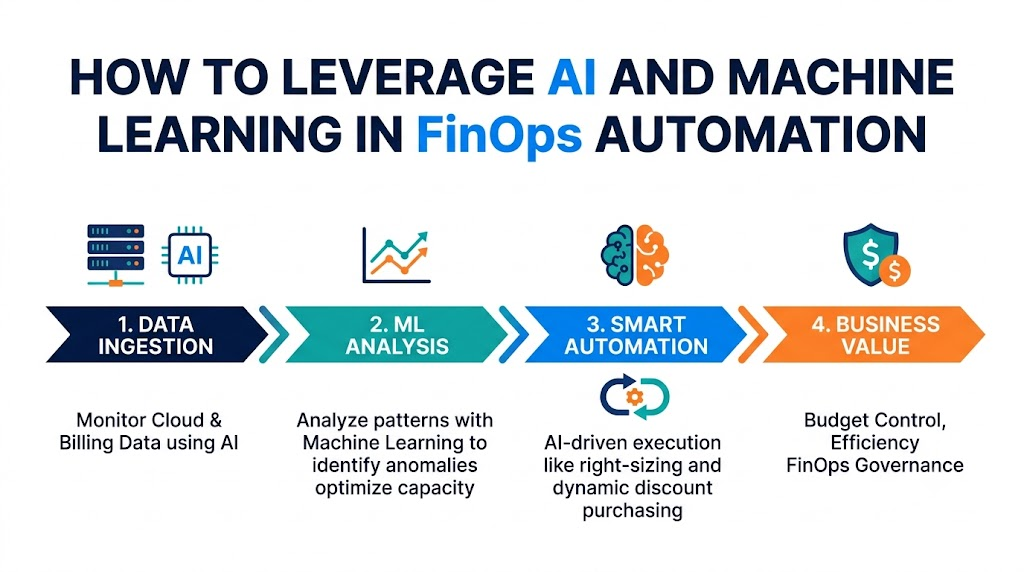
Managing cloud bills by hand is now far too slow for fast-moving tech teams. Today, companies deploy code to the cloud hundreds of times every single week. Because of this speed, engineers can trigger huge spending spikes in seconds without knowing it. To stop budget waste, leaders need smart tools that watch usage patterns all day long. Modern software like artificial intelligence (AI) and machine learning (ML) gives teams instant control over their budgets.
You can learn these exact modern tactics through Finopsschool to master hands-on cloud cost governance.
Next, smart systems can connect your engineering choices directly with financial goals. This helps developers build cool new features without breaking company spending plans. Because machines learn from past data, they spot waste before it turns into a painful billing surprise.
Also, teams gain peace of mind because computers handle the tedious routine checks. The sections below explain exactly how to combine these powerful technologies to protect your bottom line.
Understanding Cloud Financial Operations
Cloud computing allows businesses to rent computing power across the web instead of buying heavy servers. But renting this power means bills change every second based on how much you run. In the past, companies paid fixed fees for hardware once every few years. Now, one tiny mistake in code can leave expensive virtual machines running non-stop.
FinOps brings finance, engineering, and business teams into one shared room. This practice helps everyone take responsibility for the cloud bills they generate. Engineers no longer build things in total isolation from the finance team.
Next, teams look at three steady steps: inform, optimize, and operate. The first step shows you where every dollar goes. The second step shrinks waste by turning off extra resources. The third step turns these smart checks into daily team habits.
+-------------------------------------------------------------+
|                     The FinOps Lifecycle                    |
|                                                             |
|   1. INFORM          -->    2. OPTIMIZE    -->   3. OPERATE |
| (See every dollar)       (Turn off waste)     (Daily habit) |
+-------------------------------------------------------------+
Why Old Cost Tools Fall Short
Traditional cloud management tools rely on fixed rules created by human workers. For example, a person might set a rule to send an alert when spending crosses eighty percent. But these rigid rules do not know if higher traffic comes from healthy customer sales or a broken script.
So, teams get flooded with false alarm emails every single week. When workers see too many false alerts, they start ignoring their email inboxes. By the time someone finds the real mistake, thousands of dollars are already gone.
Manual spreadsheets also slow down decision-making when speed matters most. A finance manager might notice an overspend thirty days after the event happens. Because the money is already spent, you cannot get it back.
Therefore, teams need real-time systems that learn continuously from daily system behavior.
Key Operational Concepts You Must Know
Instant Anomaly Detection
Machine learning algorithms study your past cloud usage to build a normal baseline. They track how your workloads perform during weekdays, weekends, and holidays. So, when spending jumps unexpectedly, the model spots the deviation right away.
Instead of waiting for an invoice, the system catches sudden bugs within minutes. This protects your team from runaway automated scripts that provision too many servers.
Smart Right-Sizing
Many engineers pick giant cloud servers simply to play it safe during peak hours. However, those giant instances often sit idle, wasting huge amounts of money. Machine learning models look at actual CPU, memory, and disk utilization data over time.
Then, the tool tells the engineer the exact server size needed to run the app safely. This step cuts waste immediately without slowing down your live software.
Dynamic Discount Purchases
Cloud providers offer large discounts if you commit to using servers for one to three years. But guessing future needs can trap your company in costly, bad contracts. Machine learning tools solve this by predicting steady baseline demand over long timelines.
Next, these systems automatically buy and trade discount plans to match your actual usage. That way, you always pay the lowest rate without taking big risks.
| Operational Concept | What The System Does | The Big Value |
|---|---|---|
| Anomaly Detection | Spots weird spikes in real time | Stops surprise bills in minutes |
| Smart Right-Sizing | Recommends smaller, cheaper instances | Cuts idle waste instantly |
| Commitment Matching | Buys reserved plans dynamically | Unlocks huge vendor discounts |
Platform Implementation vs. Culture — What’s the Real Difference?
The Mechanics of Tool Deployment
Setting up software tools is the easiest part of your optimization journey. You install agents, turn on API connections, and set up colorful dashboards. These software tools collect raw billing records and draw pretty graphs for your team.
However, an automated dashboard cannot fix bad engineering habits all by itself. If developers ignore the cost charts, spending continues to go up unchecked.
+------------------------------+        +------------------------------+
|     Tool Implementation      |  vs.   |       Cultural Shift         |
|  Dashboards and API charts   |        |  Every engineer cares about  |
|  show where money leaks out  |        |  cost as a key quality metric|
+------------------------------+        +------------------------------+
So, installing a tool is just step one of a complete strategy. You need real people who understand how to act on the data they see.
Driving Genuine Behavioral Transformation
Culture means teaching your engineers to care about cost just as much as speed and security. In a great culture, a developer takes pride in writing lean, efficient code. They do not view cost limits as annoying roadblocks that slow them down.
Instead, they treat financial efficiency as a mark of true engineering excellence. This mindset requires clear praise and support from senior executive leaders.
Also, finance teams must learn to speak the language of software development. When finance understands how software scales, they build flexible budgets that support safe experiments. This partnership creates open trust between tech teams and accountants.
When both groups trust each other, real business growth happens quickly.
Real-World Use Cases of Modern Operations
Taming Artificial Intelligence Training Costs
Large language models and deep neural networks require expensive graphics processing units (GPUs) to run. Without watchful eyes, data science teams can burn massive budgets on idle training clusters.
One large media company used smart automation to track active GPU hours. The tool learned when training jobs finished and turned off the nodes right away.
+-----------------------------+
| Heavy Model Training Job    |
+-----------------------------+
               |
               v
+-----------------------------+
| Smart System Spots Idle GPU |
+-----------------------------+
               |
               v
+-----------------------------+
| Automated Cluster Shutdown  |
+-----------------------------+
Because of this quick change, the company saved forty percent on its monthly training costs. The engineers kept all their performance power while ditching empty bills.
Automated Container Bin Packing
Microservices running inside Kubernetes clusters often suffer from poor resource packing. Developers set generous memory limits on tiny apps, leaving large chunks of hosts empty.
A retail company used machine learning to watch actual container utilization. The model packed containers tightly onto fewer virtual machines without causing bottlenecks.
As a result, the retailer cut hundreds of unused servers out of their infrastructure. The system freed up cash to hire more developers for new product features.
Common Mistakes in Operations Engineering
Letting Automated Bots Make Blind Changes
Allowing automation to make changes without safety checks is a dangerous mistake. An aggressive bot might shut down an active database because it looked idle for an hour. If that server handled quarterly business tasks, your app suffers a bad outage.
Always keep human review loops in place during the early stages of automation. Once your team trusts the recommendations, you can let the machine make small automated adjustments.
+-------------------------------+
| AI Spots Idle Resource        |
+-------------------------------+
               |
               v
+-------------------------------+
| Human Engineer Approves Plan  |
+-------------------------------+
               |
               v
+-------------------------------+
| Safe, Controlled Cost Savings |
+-------------------------------+
Forgetting Orphaned Disks and Storage Buckets
Engineers delete virtual servers every day, but they often leave the hard drives attached behind them. Cloud providers keep billing you for these empty drives every single month.
Because nobody checks the old storage, small fees quietly compound over time into large losses.
- Delete test instances right after you finish your software tests.
- Turn on automated scans to catch and remove unattached storage volumes.
- Archive cold files to cheaper long-term storage tiers automatically.
How to Become an Operations Expert — Career Roadmap
Mastering Cloud Platforms and Telemetry
To become an operations expert, you must start by learning how modern cloud systems work. Learn how virtual machines, serverless functions, and storage systems generate fees.
Earning entry-level certifications from cloud platforms gives you solid technical credibility.
- Study basic cloud architecture to understand computing, memory, and network data paths.
- Practice using query languages to parse raw billing lines and telemetry tables.
- Build basic monitoring dashboards that clearly track infrastructure spend trends over time.
Learning the Language of Business Finance
Technical skills are great, but the best experts can talk directly to business executives. You must understand common business terms like profit margins, capital expenses, and depreciation rules.
This business skill helps you explain technical wins in terms of real company profits.
- Learn key accounting words so you can talk to business managers with ease.
- Practice showing the return on investment for all your engineering optimization work.
- Share clear weekly updates that connect technical savings directly to company revenue growth.
FAQ Section
- What is the simplest way to define FinOps for a beginner?
FinOps is the practice where engineers and finance teams work together to manage cloud costs. It ensures every dollar spent on cloud technology brings clear business value to the company.
- How does artificial intelligence catch cloud waste faster than a human?
AI reads millions of data points across your infrastructure every single minute without getting tired. It spots unusual spending spikes and idle resources instantly, while a human only sees the bill weeks later.
- Can small companies use machine learning for cost control without hiring a huge team?
Yes, small teams can turn on built-in cost tools inside their cloud provider consoles. These native tools already use machine learning to suggest smaller servers and highlight unused drives automatically.
- Will cost automation ever turn off a production server by accident?
It can if you set up rules without proper safety checks and guardrails. That is why smart teams require human approvals for changes until they fully trust the system.
- Why are tags so important for machine learning cost tools?
Tags are labels that tell the machine which team owns each cloud resource. Without clear tags, the computer cannot assign costs to the right department or product team.
Final Summary
Using smart artificial intelligence to manage cloud budgets is no longer a luxury for modern tech companies. By mixing smart machine learning models with strong team habits, you protect your business from painful budget surprises.
Engineers get the resources they need to build fast, while finance teams gain predictable monthly costs. Start small by finding idle servers, and build trusted automated guardrails over time.
With the right strategy, your cloud infrastructure becomes a lean, fast engine that drives business success forward.