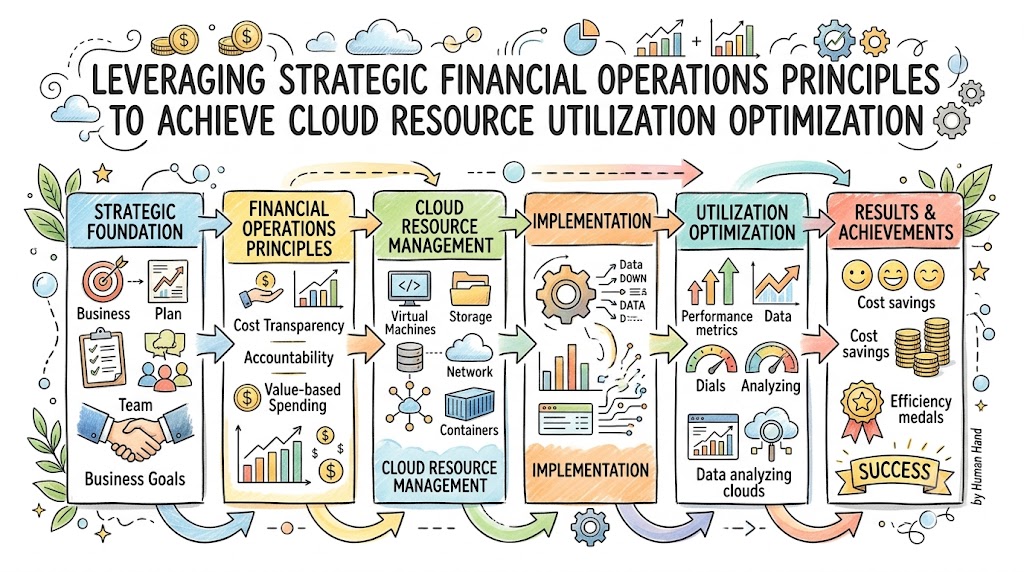
Managing enterprise cloud environments requires a fundamental transformation in how modern engineering teams approach resource provisioning. Organizations routinely encounter escalating monthly bills because infrastructure decisions occur in isolated silos without financial oversight. Therefore, establishing a continuous resource management strategy becomes vital for maintaining sustainable business growth and high operational efficiency. By bridging the gap between technical operations and enterprise financial governance, businesses achieve total transparency over their digital assets. Learning these core principles through a dedicated learning platform like Finopsschool empowers engineers and finance leaders to eliminate architectural waste effectively. This joint accountability ensures that every deployed workload delivers measurable organizational value.
Furthermore, teams shift away from treating cloud spending as an unpredictable operational expense and begin managing it as a strategic growth engine. System architects gain real-time visibility into the financial consequences of their software design choices, which naturally promotes responsible resource consumption. Finance managers can accurately project long-term infrastructure investments because they receive detailed telemetry directly from technical environments. Ultimately, this operational alignment prevents costly over-provisioning while preserving application responsiveness, security, and deployment velocity.
Understanding Financial Frameworks in Cloud Systems
Cloud infrastructure converted fixed capital investments into fluid, variable operational expenditures that scale dynamically with demand. However, this flexibility creates major administrative challenges because technical teams can launch expensive resources within seconds. Developers now control corporate spending power directly through automated scripts, configuration files, and infrastructure code. Without clear financial guardrails and cross-functional visibility, cloud expenditures quickly spiral beyond initial budgetary limits.
To address this ongoing friction, enterprises must introduce a dedicated operational framework designed explicitly for variable consumption models. Financial operations unites technology, business, and finance teams under a shared set of continuous management practices. It establishes a collaborative culture where technical velocity and financial discipline reinforce each other rather than conflict. As a result, the entire organization learns to treat resource optimization as a daily engineering habit rather than an occasional emergency cleanup.
Additionally, this management framework operates through three distinct, repeating lifecycle phases to drive continuous operational improvement. The inform phase delivers total visibility into usage patterns, enabling accurate cost attribution across complex multi-cloud deployments. Next, the optimize phase identifies immediate opportunities for waste reduction, such as downsizing underutilized servers or adjusting storage tiers. Finally, the operate phase embeds financial performance indicators directly into everyday deployment pipelines, ensuring permanent architectural sustainability.
Key Operational Concepts You Must Know
Granular Cost Allocation and Shared Accountability
Accurate resource attribution forms the foundation of modern infrastructure governance because teams cannot optimize unmeasured assets. Organizations must implement rigid tagging strategies and labeling metadata across all virtual servers, storage buckets, and networking components. This practice ensures that every running workload maps directly to a specific product, environment, or department budget. When engineering teams observe the direct financial impact of their deployments, a strong culture of personal accountability naturally emerges.
Moreover, complete allocation eliminates the widespread problem of abandoned or unassigned resources running silently in background environments. Finance directors can easily track which product groups drive spending increases and work directly with relevant project leads. Consequently, developers participate actively in budget management rather than treating cost governance as an unwelcome administrative burden. Shared responsibility turns financial stewardship into a routine engineering priority across the enterprise.
Continuous Right-Sizing and Waste Elimination
Right-sizing requires adjusting compute and storage capacity precisely to match actual operational demands without sacrificing system reliability. Engineering teams frequently provision oversized infrastructure during initial deployments to safeguard against unexpected traffic spikes or performance bottlenecks. However, this protective over-provisioning leaves substantial computing capacity idle while accumulating unnecessary hourly charges. Through continuous telemetry monitoring, automated systems identify these performance gaps and recommend optimal resource specifications.
By analyzing historical usage trends, system administrators can safely downsize oversized virtual machines or migrate workloads to modern processor architectures. Furthermore, discovering and removing detached disk volumes, unused load balancers, and unattached network interfaces yields immediate monthly savings. This systematic waste elimination ensures that enterprises pay strictly for active utilization rather than speculative, unused capacity.
Strategic Capacity Planning and Commitment Discounts
Major infrastructure providers offer deep price reductions to organizations willing to commit to long-term resource usage agreements. Utilizing these savings mechanisms, such as reserved instances or flexible spending plans, demands rigorous analysis of baseline operational demands. Financial engineering teams analyze historical telemetry to determine the core capacity required for continuous baseline operations. Securing these commitments allows enterprises to reduce standard on-demand compute rates dramatically.
However, overcommitting can lead to financial waste if business priorities shift or underlying system architectures undergo major redesigns. Therefore, capacity planning must remain an ongoing collaborative dialogue between software architects, system operations, and financial analysts. Balancing flexible on-demand resources with committed capacity creates a cost-effective, adaptable infrastructure baseline.
| Operational Concept | Primary Focus Area | Key Business Outcome |
|---|---|---|
| Cost Allocation | Metadata & Tagging Schemas | Total financial transparency and department accountability |
| Right-Sizing | Performance Telemetry Analysis | Immediate elimination of idle computing capacity |
| Commitment Discounts | Baseline Usage Agreements | Massive long-term reductions on core compute spending |
Platform Implementation vs. Culture — What’s the Real Difference?
The Mechanics of Tool Deployment
Platform implementation centers on integrating monitoring platforms, configuring API connectors, and building executive financial dashboards. Organizations frequently purchase expensive management software expecting these automated solutions to solve their spending issues automatically. These tools excel at collecting billing data, displaying trend charts, and flagging obvious spending spikes across environments. Nevertheless, deploying tools represents only the technical baseline of a successful cost management strategy.
+---------------------------------+       +---------------------------------+
|     Platform Implementation     |  -->  |        Cultural Adoption        |
|  (Dashboards, Tools & Testing)  |       |  (Accountability & Daily Habits) |
+---------------------------------+       +---------------------------------+
Without human intervention, dashboards simply observe operational waste without executing the necessary remediation steps. Software engineers must evaluate alerts, assess architectural impacts, and manually modify deployment configurations. Relying solely on platform tools creates a passive observation model rather than an active culture of continuous engineering optimization. Software applications provide valuable data visibility, but they can never substitute for proactive human decision-making.
Driving Genuine Behavioral Transformation
Cultural adoption focuses on transforming organizational mindsets so that every employee naturally treats resource efficiency as a primary metric. In an optimized operational culture, software engineers consider resource costs alongside system security, speed, and reliability. Achieving this mindset requires breaking down historical corporate silos that separated engineering groups from corporate finance offices. Regular training, transparent communication channels, and shared metrics serve as the primary drivers for this internal transformation.
When finance managers understand software delivery workflows, they construct realistic budgets that accommodate necessary technical research and development. Simultaneously, when developers comprehend corporate financial goals, they write code that consumes infrastructure efficiently from the outset. This mutual understanding fosters a productive environment where cross-functional alignment occurs naturally during everyday operations. Culture transforms cost control from an external policing effort into an internal point of engineering excellence.
Real-World Use Cases of Modern Operations
Autonomous Auto-Scaling for Variable E-Commerce Platforms
A major digital retail enterprise faced significant traffic fluctuations during peak seasonal sales events throughout the year. Their engineering group historically maintained a massive server footprint constantly to prevent website slow-downs during sudden traffic surges. This defensive architecture resulted in severe financial waste during normal operational periods when server utilization dropped significantly. To resolve this inefficiency, the enterprise deployed automated scaling policies tied directly to real-time user traffic metrics.
By utilizing dynamic scaling triggers, the application infrastructure expands during heavy traffic periods and contracts during low-activity hours automatically. The finance team worked closely with infrastructure architects to purchase baseline commitment discounts for stable core workloads. Consequently, the retailer maintained flawless site availability during major promotional events while cutting overall monthly compute expenses substantially.
Container Cost Optimization in Microservice Architectures
A fast-growing fintech company migrated its core software platform into containerized clusters to accelerate deployment cycles. While this transition streamlined feature releases, it obscured infrastructure visibility, making it difficult to attribute costs to individual services. Multiple engineering teams deployed container pods without defining memory and CPU requests, causing cluster operational costs to escalate. The organization resolved this issue by deploying specialized container telemetry tools to track pod-level resource usage.
+-----------------------------------+
| Continuous Container Telemetry    |
+-----------------------------------+
                 |
                 v
+-----------------------------------+
| Define Precise Resource Limits    |
+-----------------------------------+
                 |
                 v
+-----------------------------------+
| Dramatic Drop in Wasted Resources |
+-----------------------------------+
This granular monitoring enabled management to assign container expenses directly to specific product features and engineering groups. Equipped with precise usage data, developers adjusted their deployment manifests to reflect actual processing requirements accurately. This targeted optimization led to a massive reduction in cluster resource waste without impacting transaction processing performance.
Common Mistakes in Operations Engineering
Ignoring Orphaned Resources and Storage Volume Accumulation
A recurring mistake in modern operations is leaving unattached storage volumes and idle network resources running after deleting compute servers. Developers routinely spin up temporary sandboxes to test software features and later forget to dismantle the underlying components. Over several months, these forgotten assets accumulate quietly, generating substantial charges on the monthly infrastructure invoice. Because these components remain provisioned, infrastructure providers continue billing full rates despite zero operational utility.
To prevent this budget drain, operations teams must implement automated scanning tools that identify unattached components automatically. Establishing automated cleanup routines for unutilized assets left idle for extended periods keeps infrastructure clean and cost-effective. Training also plays an essential role, as engineers must learn to treat environment cleanup as a mandatory step in software lifecycles.
- Decommission experimental environments immediately upon completing testing activities.
- Establish automated alerts for unattached storage blocks left idle over designated periods.
- Audit load balancing configurations regularly to remove unassigned traffic routes.
Over-Reliance on Default Vendor Recommendations
Many organizations implement every optimization recommendation generated by cloud provider consoles without conducting internal technical reviews. While vendor tools offer helpful baseline insights, they lack essential context regarding specific application behaviors and business cycles. For instance, an automated system might advise downsizing a server that appears idle, unaware that it handles crucial batch processing tasks. Executing recommendations blindly can lead to performance degradation or system outages during critical operational windows.
+--------------------------------------+
| Vendor Automated Recommendation      |
+--------------------------------------+
                   |
                   v
+--------------------------------------+
| Internal Engineering Context Review  |
+--------------------------------------+
                   |
                   v
+--------------------------------------+
| Safe, Managed Cost Reduction         |
+--------------------------------------+
Engineers should treat automated vendor recommendations as initial suggestions rather than mandatory operational commands. Cross-functional review groups must evaluate proposed changes against upcoming release schedules and performance requirements prior to execution. This balanced approach protects application stability while systematically capturing genuine, risk-free savings.
How to Become an Operations Expert — Career Roadmap
Mastering Cloud Technology and Telemetry Instrumentation
Building a successful career in infrastructure operations requires a solid grasp of fundamental cloud platform architectures. Professionals must understand how virtual servers, managed databases, serverless functions, and networking configurations generate ongoing costs. Earning professional architecture certifications builds industry credibility and verifies practical knowledge in the field. Furthermore, learning to build custom monitoring dashboards using enterprise telemetry tools is immensely beneficial for career advancement.
- Obtain professional architecture credentials from primary public cloud platforms.
- Master database scaling mechanics and serverless execution billing models.
- Develop strong data querying capabilities to parse detailed billing records efficiently.
Cultivating Financial Literacy and Stakeholder Communication
Technical expertise alone is incomplete; specialists must also speak the practical language of corporate finance fluently. You need to understand operational expenditure models, financial forecasting, capital allocation, and variance reporting practices. This financial literacy allows technical leaders to translate complex system telemetry into clear business outcomes that executives understand. Bridging this communication gap turns technical specialists into indispensable strategic advisors across the enterprise.
- Study corporate accounting principles to comprehend how operational expenses impact corporate balances.
- Practice articulating technical upgrades in terms of financial return and risk reduction.
- Design executive dashboards that highlight key business impact and optimization metrics.
FAQ Section
- What is the key distinction between traditional cost control and modern financial operations?
Traditional cost control operates as a reactive accounting function that reviews expenses after spending occurs. Modern financial operations integrates real-time accountability directly into engineering workflows, enabling proactive resource optimization.
- How often should technical teams analyze their infrastructure spending and telemetry dashboards?
Technical teams should review their primary operational metrics weekly to detect unexpected spending anomalies before they compound. Additionally, incorporating financial data into monthly planning sessions ensures that resource efficiency remains a primary engineering goal.
- Can growing businesses optimize cloud expenditures without purchasing expensive management software?
Yes, organizations can achieve significant efficiency by utilizing native billing and monitoring tools provided by cloud vendors. As infrastructure complexity expands across multiple platforms, companies can gradually adopt specialized external platforms.
- Who should take ownership of a newly created cloud cost management initiative?
An ideal leader possesses a balanced background combining cloud architecture engineering with practical financial management skills. This dual background allows the individual to mediate effectively between software engineering teams and corporate executive stakeholders.
- How do automated tagging policies prevent budget overruns in cloud environments?
Automated tagging policies block the provisioning of any infrastructure asset that lacks proper ownership and metadata labels. This preventative safeguard ensures complete visibility and prevents unassigned expenses from accumulating over time.
Final Summary
Implementing a structured resource management strategy is essential for modern enterprises operating in variable cloud environments. By integrating financial accountability directly into technical workflows, organizations safeguard operational margins while scaling their software systems. This cross-functional alignment empowers developers to innovate rapidly while giving finance leaders complete predictability over expenses. Ultimately, mastering these operational principles transforms infrastructure management into a lean, highly efficient driver of long-term business success.