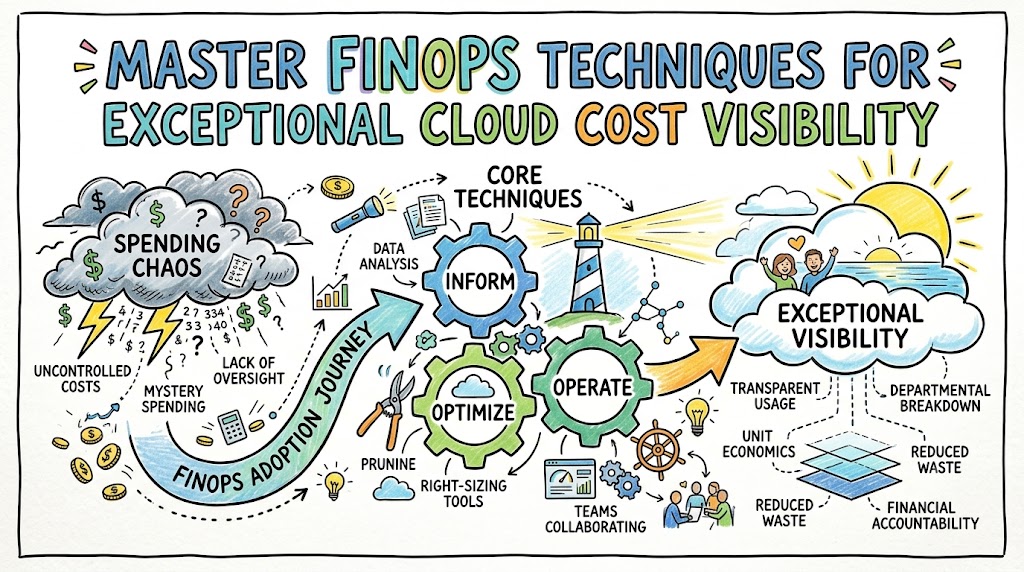
The modern cloud environment offers incredible scaling opportunities for teams everywhere. However, organizations often face massive financial surprises when managing their monthly cloud expenditures without structured governance. Financial Operations bridges the gap between engineering, finance, and leadership teams to ensure absolute transparency across all cloud services. Consequently, businesses can successfully identify wasted resources and optimize their deployment strategies with high precision. By aligning your cloud infrastructure with clear business goals, you gain full control over every single penny spent.
To achieve this level of transparency, organizations frequently rely on specialized educational ecosystems like Finopsschool to train their engineering and finance teams. This educational platform delivers structured frameworks that help professionals master cost allocation, budgeting, and financial accountability in real-time environments. Consequently, teams learn to navigate complex multi-cloud bills and translate chaotic line items into actionable business intelligence. Through comprehensive training, engineers realize that every single line of code they deploy carries a direct financial impact on the company.
Ultimately, cost visibility serves as the foundational pillar of any successful cloud optimization strategy. Without clear visibility, you cannot accurately measure the return on investment for your digital products. Therefore, implementing structured operational frameworks allows you to track resource consumption dynamically down to the exact microservice. This comprehensive guide will walk you through the essential methodologies required to master cost visibility and drive financial accountability across your entire engineering enterprise.
Key Operational Concepts You Must Know
Shared Responsibility Model in Cost Management
The concept of shared accountability means that both financial analysts and cloud architects share the responsibility of monitoring cloud infrastructure expenses. Traditionally, engineers deployed resources without worrying about the bill, while accountants analyzed the invoices weeks after the actual spending occurred. Now, this modern approach forces development teams to track financial metrics directly during the initial architecture design phase. Consequently, organizations can eliminate unexpected billing spikes before they impact the monthly budget negatively.
Furthermore, this collaborative framework requires clear communication channels between departments that historically spoke completely different professional languages. Engineers must comprehend unit economics, while finance professionals need to grasp basic cloud architecture components like compute instances and storage buckets. Therefore, continuous training bridges this gap and ensures that everyone evaluates cloud efficiency using identical key performance indicators.
Granular Cost Allocation Strategies
To achieve true cost visibility, you must implement a robust tagging policy that assigns every single cloud resource to a specific business owner. This process involves defining strict metadata standards across your entire multi-cloud ecosystem to categorize workloads by project, department, or environment. Therefore, when an unexpected cost spike happens, your monitoring tools can instantly trace the anomaly back to the precise engineering team.
Moreover, untagged resources represent a significant blind spot that distorts your overall financial forecasting and budget planning. Organizations must deploy automated compliance policies that automatically terminate or isolate any cloud resource lacking proper identification tags. Consequently, this strict automation forces developers to maintain clean metadata hygiene across all testing and production environments consistently.
Continuous Real-Time Monitoring Mechanics
Static monthly financial reviews are no longer sufficient for dynamic cloud environments that scale up and down within seconds. Instead, you need real-time monitoring tools that continuously analyze billing APIs and detect anomalous spending patterns the moment they surface. This immediate feedback loop allows operations engineers to shut down accidental database leaks or misconfigured clusters before they accumulate massive fees.
Additionally, real-time dashboards empower engineering teams by giving them instant visibility into the financial consequences of their architectural decisions. When a developer sees a live cost graph rise after deploying a specific update, they can immediately optimize the underlying code. Therefore, continuous monitoring transforms financial management from a reactive post-mortem exercise into a proactive operational habit.
Platform Implementation vs. Culture — What’s the Real Difference?
| Operational Element | Platform & Tooling Implementation | Cultural & Behavioral Transformation |
| Primary Focus | Deploying automated SaaS dashboards, metric collectors, and cloud native billing APIs. | Changing engineering mindsets so everyone owns the financial impact of their code. |
| Execution Method | Configuring automated alerts, budgeting scripts, and infrastructure tagging tools. | Conducting regular workshops, establishing open metrics, and breaking down team silos. |
| Speed of Results | Quick deployment that provides immediate visibility into current infrastructure waste. | Slow, iterative process that requires continuous leadership support and education. |
| Long-Term Value | Provides the raw data and analytical infrastructure needed for financial tracking. | Ensures sustainable cost optimization habits even as the cloud architecture evolves. |
The Automation Pitfall
Many organizations mistakenly believe that purchasing an expensive cloud management platform will instantly solve their financial inefficiencies. While automated software tools generate beautiful charts, they cannot fix flawed human behaviors or poorly designed engineering workflows. For example, a tool can highlight an underutilized database, but it cannot force a reluctant developer to reconfigure it. Therefore, relying solely on technology without addressing team culture creates an expensive layer of ignored dashboards.
Fostering Accountability
True transformation occurs when engineering squads view cost optimization as a core non-functional requirement, similar to security or system performance. This cultural shift requires leaders to celebrate cost-saving innovations just as much as they reward the release of new software features. Consequently, developers begin competing to build the most financially efficient architectures, driving down overall company expenses. When financial awareness becomes a core cultural value, organizations experience consistent and sustainable cloud savings automatically.
Real-World Use Cases of Modern Operations
Optimizing E-Commerce Scaling Architectures
A major retail platform experienced massive traffic surges during holiday sales, leading to uncontrolled cloud expenditure due to over-provisioning. By applying advanced financial engineering principles, they configured automated scaling policies matched tightly with predictive machine learning forecasting tools. Consequently, the system automatically scaled down compute resources during low-traffic night hours without sacrificing the end-user shopping experience.
- Infrastructure Engineers: They designed dynamic auto-scaling groups that strictly aligned with real-time consumer transaction volumes.
- FinOps Practitioners: They analyzed historical purchase data to purchase matching commitment discounts for predictable baseline traffic.
- Finance Leaders: They established clear cost thresholds for individual product categories to measure exact profit margins.
Managing Big Data Analytics Pipelines
A financial services firm ran massive daily data processing jobs that routinely exceeded their cloud budget due to inefficient storage practices. To address this issue, they transitioned their pipeline to utilize spot instances and automated data lifecycle storage rules. This strategic adjustment ensured that cold data moved to cheaper archival storage tiers automatically after thirty days of inactivity.
- Data Engineers: They refactored processing jobs to gracefully handle potential spot instance interruptions using state checkpoints.
- Cloud Architects: They implemented object storage lifecycle policies to eliminate redundant data duplication across test environments.
- Business Analysts: They adjusted query schedules to run during off-peak hours when cloud computing rates dropped significantly.
Streamlining Microservices in SaaS Environments
A fast-growing software provider struggled with untamed cloud costs because hundreds of isolated containers ran continuously without clear ownership. They implemented an automated cluster governance strategy that mapped container resource limits directly to specific customer application features. Therefore, the company could easily identify which product modules consumed the most cluster memory and optimize them immediately.
- DevOps Teams: They configured precise resource requests and limits on every single container deployment manifest.
- Product Managers: They utilized the resulting cost data to restructure subscription pricing tiers based on actual infrastructure consumption.
- System Administrators: They deployed open-source tracking tools to monitor internal cluster networking costs across cloud zones.
Common Mistakes in Operations Engineering
Relying Solely on Vendor Recommendations
Many engineering teams blindly accept the default cost-optimization suggestions provided by cloud native advisors without validation. While these automated tips offer a decent starting point, they lack the specific context of your unique business applications. For instance, a vendor tool might recommend shrinking a server that experiences brief, necessary utilization spikes during weekly updates. Consequently, following advice without manual architectural review can cause unexpected performance bottlenecks during critical business operations.
Neglecting Untagged and Orphaned Resources
Another frequent blunder involves leaving abandoned storage volumes and unattached network interfaces running after terminating the main application servers. These isolated resources do not show up on active project dashboards, yet they quietly accumulate massive expenses over time. Therefore, teams must implement automated cleanup scripts that hunt down and eliminate these forgotten infrastructure remnants every week. Maintaining a pristine environment prevents small, hidden fees from compounding into devastating financial surprises at the end of the month.
Ignoring Variable Pricing Nuances
Failing to understand the complex variations in cross-zone data transfer fees can lead to massive network billing overages. Developers often design multi-region architectures for high availability without mapping how much data moves between those distinct cloud locations. Because cloud providers charge premium rates for outbound data transfers, inefficient routing designs can quickly bankrupt an otherwise great project. Teams must educate themselves on specific network pricing structures to build cost-effective architectures from the start.
How to Become an Operations Expert — Career Roadmap
Step 1: Master the Core Cloud Essentials
Begin your professional journey by acquiring a deep technical understanding of fundamental cloud computing architectures and primary vendor services. You must feel completely comfortable navigating cloud consoles, configuring basic virtual networks, and deploying standard database services. Additionally, focus heavily on understanding how cloud providers structure their basic billing mechanisms and API usage costs. Building this strong technical foundation ensures you can converse confidently with core infrastructure developers later in your career.
Step 2: Acquire Dedicated Financial Governance Training
Once you understand basic cloud infrastructure, you must dive deep into specialized cloud financial management methodologies. This phase involves learning how to build complex budgeting templates, analyze cost anomalies, and implement corporate tagging frameworks. Enrolling in structured training paths, such as those provided by specialized schools, will accelerate your understanding of industry best practices. Consequently, you will learn to translate raw infrastructure metrics into clear business value reports for executive stakeholders.
Step 3: Implement Practical Automation Strategies
True experts do not manage cloud budgets using manual spreadsheets or static financial documents. Therefore, you must learn to write automation scripts using languages like Python or infrastructure-as-code tools to govern environments programmatically. Practice building automated dashboards that consolidate billing data from multiple cloud accounts into a single, comprehensive view. Mastering these automation skills allows you to protect massive enterprise environments from cost overruns without requiring constant human intervention.
Step 4: Develop Cross-Functional Leadership Skills
The final stage of your career roadmap requires mastering the art of organizational communication and cultural diplomacy. Remember that financial engineering is just as much about managing human relationships as it is about configuring cloud code. You must learn to pitch cost-saving initiatives to busy engineering teams without making them feel like you are restricting innovation. By positioning yourself as a helpful mentor who unlocks business value, you can successfully lead lasting corporate transformations.
FAQ Section
- What is the primary goal of implementing FinOps in an organization?The main objective is to establish absolute financial accountability and visibility across all cloud engineering processes. This framework helps teams balance speed, cost, and quality effectively so that cloud investments directly drive measurable business growth.
- How often should teams review their cloud billing dashboards?Engineering teams should look at their cost dashboards daily to catch anomalies before they escalate into major financial issues. Meanwhile, executive leadership teams can conduct deeper strategic budget reviews on a weekly or monthly basis to align long-term plans.
- Can small startups benefit from cloud cost visibility practices?Yes, startups must implement these financial practices early to avoid burning through their venture capital on unoptimized infrastructure. Establishing healthy resource tagging habits from day one ensures the architecture scales efficiently as the business grows rapidly.
- What is the difference between cloud cost optimization and FinOps?Cost optimization is a reactive, one-time engineering effort focused purely on cutting down immediate infrastructure waste. In contrast, FinOps is an ongoing operational culture that continuously unites finance, engineering, and business teams for long-term value creation.
- Why do cross-zone data transfers cost so much money?Cloud providers charge additional fees for moving data across different geographic data centers to cover private fiber network maintenance costs. Therefore, architects must design localized system components to minimize unnecessary data journeys across regional boundaries.
Final Summary
Embracing cloud cost visibility is no longer an optional luxury for modern technology enterprises operating in competitive global markets. By breaking down communication barriers between financial analysts and software developers, organizations unlock unprecedented operational agility and efficiency. Implementing automated tracking systems ensures that every department takes full ownership of its virtual infrastructure footprint. Ultimately, mastering these modern governance methodologies transforms your cloud budget from an unpredictable corporate expense into a powerful engine of sustainable innovation.