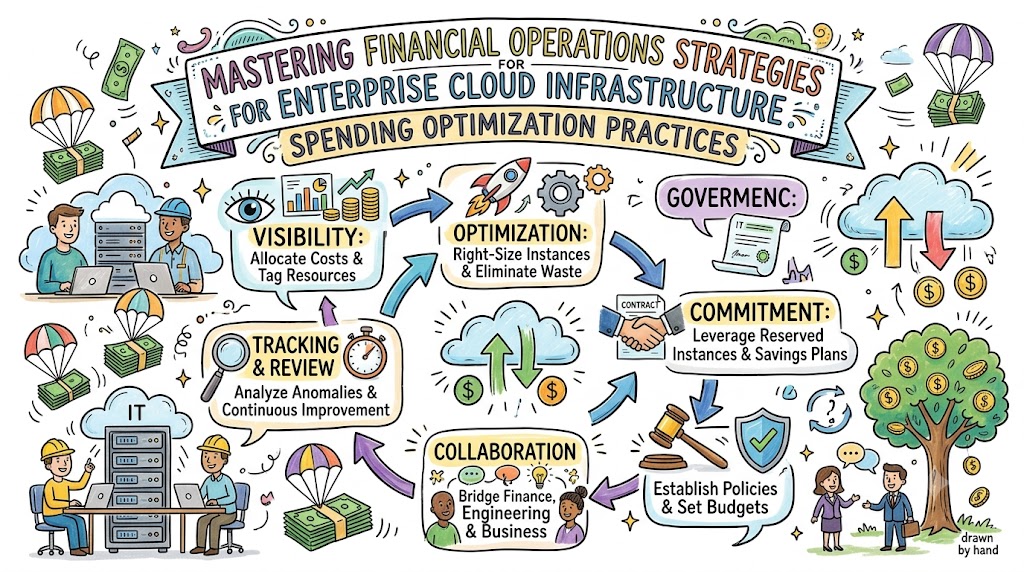
Managing infrastructure spending across multi-cloud environments requires a clear framework and dedicated cultural commitment. Modern organizations frequently struggle with unpredictable monthly bills because engineering teams deploy resources without immediate financial feedback. Therefore, establishing transparent financial practices across cross-functional teams is essential for long-term operational success. By bridging the gap between developers, finance leaders, and management, businesses build a predictable cost structure. Enrolling in top-tier educational tracks at Finopsschool empowers tech professionals to master scalable cost optimization principles directly. Consequently, organizations eliminate wasteful over-provisioning while maintaining rapid product development velocity.
Achieving cloud cost optimization through FinOps involves aligning technical decision-making with measurable corporate business metrics. Engineers gain real-time visibility into the financial impact of their infrastructure choices, which encourages natural accountability. Meanwhile, finance teams receive accurate usage telemetry to build precise forecasting models and eliminate budget surprises. Ultimately, this collaborative operational model converts cloud spending into a controllable driver for corporate growth.
Key Operational Concepts You Must Know
Granular Cost Allocation and Shared Accountability
Accurate cost allocation builds the core foundation for any successful cloud cost optimization initiative. Organizations must enforce strict resource tagging strategies alongside clean namespace labeling across every deployment pipeline. This systematic approach ensures that every running container, server instance, and storage volume directly links to a specific department or product team. When developers observe the direct monetary cost of their architecture decisions, a healthy culture of shared ownership quickly emerges.
Furthermore, comprehensive cost attribution eliminates unallocated overhead expenses that traditionally confuse executive decision-makers. Finance managers can easily analyze spend variations across different business units and hold team leads accountable for unexpected budget deviations. As a result, software engineers actively participate in daily financial governance rather than treating budget limits as an external constraint. This transparent ownership converts passive spend tracking into proactive financial management.
Continuous Right-Sizing and Waste Elimination
Right-sizing requires matching active server capacity directly with actual workload demands to prevent excessive operational waste. Many development teams routinely over-provision hardware resources during initial deployments to cushion against unexpected traffic spikes. However, maintaining idle CPU cores and unallocated memory reserves burns valuable corporate capital continuous hours every day. By leveraging real-time metrics, engineering teams can continuously recalibrate instance sizes without threatening application availability.
Through ongoing performance telemetry analysis, cloud architects safely downscale underutilized nodes or migrate workloads to modern, energy-efficient instance families. Furthermore, identifying and removing unattached block storage drives or idle elastic IP addresses creates immediate savings. This relentless elimination of operational waste ensures that companies pay strictly for consumed resources rather than idle buffer capacity.
Strategic Capacity Planning and Commitment Discounts
Major public cloud providers offer deep pricing discounts to enterprises willing to commit to steady infrastructure utilization over fixed time horizons. Leveraging savings plans and reserved instances allows organizations to significantly lower their hourly compute rates compared to standard on-demand pricing. However, committing to long-term usage models requires precise historical analysis and confident future growth forecasting. FinOps specialists analyze baseline usage patterns to balance flexible on-demand compute with committed capacity.
Overcommitting compute capacity creates financial risk if business requirements suddenly pivot or application architectures change dramatically. Conversely, undercommitting leaves the organization exposed to expensive on-demand billing during periods of heavy platform traffic. Therefore, infrastructure teams and financial analysts must maintain ongoing communication to adjust commitment strategies as product roadmaps evolve over time.
| Operational Concept | Primary Focus | Key Business Impact |
|---|---|---|
| Cost Allocation | Comprehensive Tagging | Complete accountability across product teams |
| Right-Sizing | Capacity Matching | Immediate reduction of idle resource costs |
| Commitment Discounts | Reserved Instances | Significant savings on baseline compute usage |
Platform Implementation vs. Culture — What’s the Real Difference?
The Mechanics of Tool Deployment
Platform implementation focuses on installing dedicated analytics software, configuring billing APIs, and building automated reporting dashboards. Companies often purchase expensive monitoring tools expecting software alone to instantly resolve complex infrastructure overspending. These platforms excel at aggregating multi-cloud billing files, detecting cost anomalies, and displaying visual spending charts for management teams. Nevertheless, software deployment forms merely the technical infrastructure for a broader financial governance system.
+---------------------------------+       +---------------------------------+
|     Platform Implementation     |  -->  |        Cultural Adoption        |
|  (Dashboards, Tools & Testing)  |       |  (Accountability & Daily Habits) |
+---------------------------------+       +---------------------------------+
Without dedicated human intervention, these dashboards merely report financial inefficiencies without resolving underlying architectural root causes. Developers must review generated alerts, evaluate system performance requirements, and manually execute necessary configuration updates. Therefore, relying solely on automated platforms builds a passive monitoring environment rather than an active cost optimization culture. Advanced tools deliver crucial spending data, but human decision-making remains irreplaceable.
Driving Genuine Behavioral Transformation
Cultural adoption focuses on shifting organizational mindsets so that developers naturally consider financial metrics alongside security and availability. In a mature financial culture, engineers evaluate the cost efficiency of an architectural design during initial planning phases. Achieving this shift requires breaking down long-standing structural silos that traditionally separated engineering departments from financial decision-makers. Regular cross-departmental workshops and transparent communication channels accelerate this essential cultural evolution.
When finance professionals understand engineering complexity, they build realistic budget models that accommodate necessary platform experimentation. Similarly, when developers grasp corporate financial metrics, they design naturally lean systems that optimize resource consumption. This mutual understanding creates a collaborative environment where cross-functional alignment happens naturally every day. Culture elevates financial stewardship from an administrative task into an core engineering discipline.
Real-World Use Cases of Modern Operations
Autonomous Auto-Scaling for High-Traffic Applications
A major global e-commerce enterprise experienced dramatic customer traffic variations during holiday promotional campaigns throughout the operational year. Their operations team historically provisioned massive server clusters continuously to maintain application speed during unexpected traffic spikes. Consequently, the company paid for enormous unused capacity during off-peak periods when customer site traffic dropped significantly. To resolve this inefficiency, the team deployed automated horizontal scaling rules tied directly to real-time application load metrics.
By establishing automated scaling triggers, the cloud infrastructure dynamically expands during heavy traffic windows and contracts during quiet hours. Furthermore, finance leaders secured flexible compute commitments to cover the persistent baseline server workload at discounted rates. Consequently, the enterprise maintained flawless application performance for online shoppers while slashing overall annual infrastructure expenditure by nearly forty percent.
Container Resource Optimization in Kubernetes
A software company migrated its core SaaS products into a complex Kubernetes environment to accelerate development release cycles. Although this containerized architecture simplified feature rollouts, it completely obscured spending visibility across individual microservices. Several development teams requested oversized container resource allocations without setting proper limits, causing total cluster node costs to escalate rapidly. The organization addressed this challenge by implementing granular container-level cost tracking software.
+-----------------------------------+
| Continuous Container Telemetry    |
+-----------------------------------+
                 |
                 v
+-----------------------------------+
| Define Precise Resource Limits    |
+-----------------------------------+
                 |
                 v
+-----------------------------------+
| Dramatic Drop in Wasted Resources |
+-----------------------------------+
This telemetry enabled management to assign container expenses directly to specific application features and product owners. Armed with precise usage data, developers right-sized their pod deployment specs to match true processing demands accurately. This targeted optimization significantly reduced cluster node waste without impacting application performance or release velocity.
Common Mistakes in Operations Engineering
Ignoring Orphaned Resources and Detached Storage
A frequent operational mistake involves leaving unattached storage drives and unassigned elastic IPs running after terminating virtual machines. Engineers routinely launch temporary test environments to evaluate software patches and subsequently forget to destroy the underlying storage volumes. Over time, these forgotten assets accumulate silently, generating substantial recurring fees on the monthly cloud invoice. Because these resources stay active, cloud vendors continue billing full rates despite zero operational usage.
To eliminate this hidden drain on company capital, operations teams must build automated scanning scripts that flag unattached assets daily. Implementing automated cleanup routines for resources left inactive for several days ensures a lean cloud environment. Furthermore, ongoing team education reinforces the importance of complete resource decommissioning following project completion.
- Decommission temporary sandboxes immediately after completing technical validation tests.
- Configure automated alerts to detect orphaned block storage volumes promptly.
- Audit load balancers regularly to eliminate idle network routing rules.
Uncritical Acceptance of Vendor Recommendations
Many organizations blindly follow every optimization proposal generated by native cloud provider advisory tools without internal technical review. While vendor dashboards offer useful baseline suggestions, they lack context regarding upcoming product launches or unique application traffic patterns. For instance, an automated system might advise downsizing a server that appears idle, unaware that it processes heavy batch jobs during specific weekend intervals. Following automated recommendations without analysis risks introducing unexpected performance degradation during critical business operations.
+--------------------------------------+
| Vendor Automated Recommendation      |
+--------------------------------------+
                   |
                   v
+--------------------------------------+
| Internal Engineering Context Review  |
+--------------------------------------+
                   |
                   v
+--------------------------------------+
| Safe, Managed Cost Reduction         |
+--------------------------------------+
Engineering teams should treat automated vendor tips as valuable starting points rather than absolute implementation mandates. Cross-functional review groups must assess recommendations against future feature roadmaps and system stability requirements before execution. This balanced review framework protects application performance while capturing genuine, low-risk spending reductions.
How to Become an Operations Expert — Career Roadmap
Mastering Cloud Architecture and Telemetry Systems
Building a successful career in cloud financial operations requires a thorough understanding of modern distributed software architectures. Aspiring professionals must learn how compute services, database clusters, serverless functions, and networking components accrue costs in major cloud environments. Earning recognized technical certifications from leading public cloud providers establishes foundational credibility and demonstrates technical proficiency. Additionally, developing expertise in building real-time telemetry dashboards using open-source monitoring tools is essential.
- Obtain advanced architecture certifications from primary cloud service providers.
- Study serverless spending structures and database pricing models in detail.
- Master SQL querying techniques to analyze complex billing datasets efficiently.
Developing Financial Acumen and Executive Communication
Technical knowledge alone is insufficient; successful specialists must also speak the language of corporate finance comfortably. You must grasp key accounting concepts like capital expenditures, operating expenses, depreciation schedules, and variance analysis. This financial literacy allows technical leaders to translate raw usage data into meaningful business metrics that resonate with executive stakeholders. Bridging the gap between engineering teams and financial leadership positions you as a strategic business advisor.
- Learn basic corporate finance principles to understand operating expense accounting models.
- Practice translating engineering data into clear business value metrics.
- Design concise executive dashboards that highlight measurable return on investment.
FAQ Section
- What is the main difference between traditional cloud cost management and a FinOps practice?
Traditional cost management operates as a reactive function where finance teams review invoices after spending occurs. Conversely, a FinOps practice embeds continuous financial accountability directly into daily engineering workflows, enabling proactive cost optimization.
- How often should engineering teams review their cost allocation data and spending dashboards?
Engineering teams should inspect their primary financial dashboards weekly to detect unexpected spending spikes before they escalate into major budget overruns. Furthermore, incorporating financial metrics into standard sprint planning sessions keeps cost optimization top of mind.
- Can an enterprise optimize cloud expenses without purchasing expensive third-party tools?
Yes, organizations can successfully launch their cost optimization journey using built-in, native vendor budgeting utilities. As infrastructure complexity increases over time, teams can gradually adopt specialized external monitoring platforms to handle multi-cloud tracking.
- Who should lead a newly formed cloud financial operations team within an enterprise?
An ideal leader possesses a hybrid background combining deep cloud architecture knowledge with solid corporate financial literacy. This dual expertise enables the leader to mediate effectively between software engineering teams and finance executives.
- How do automated tagging policies prevent unexpected cloud budget overruns across accounts?
Automated tagging policies prevent developers from deploying unallocated infrastructure resources that lack required ownership labels. This automated gatekeeping ensures total spending visibility and prevents untagged resources from generating unallocated monthly expenses.
Final Summary
Achieving sustainable cloud cost optimization requires a balanced combination of cultural transformation, technical discipline, and strategic alignment. By integrating financial awareness directly into engineering workflows, organizations build transparent cost control systems that support rapid software delivery. This unified approach empowers technical teams to innovate freely while providing financial managers with complete spending predictability. Ultimately, adopting structured financial operations turns unpredictable infrastructure costs into a competitive business advantage.